
A radiation therapist at 14 weeks of pregnancy has formally declared her pregnancy and has a fetal dose of 0.3 mSv recorded for the past month, with shielding in place and the monthly badge readings verified. Which reference limit should this month's fetal dose be judged against?
Select an answer to reveal the explanation.
Short Explanation
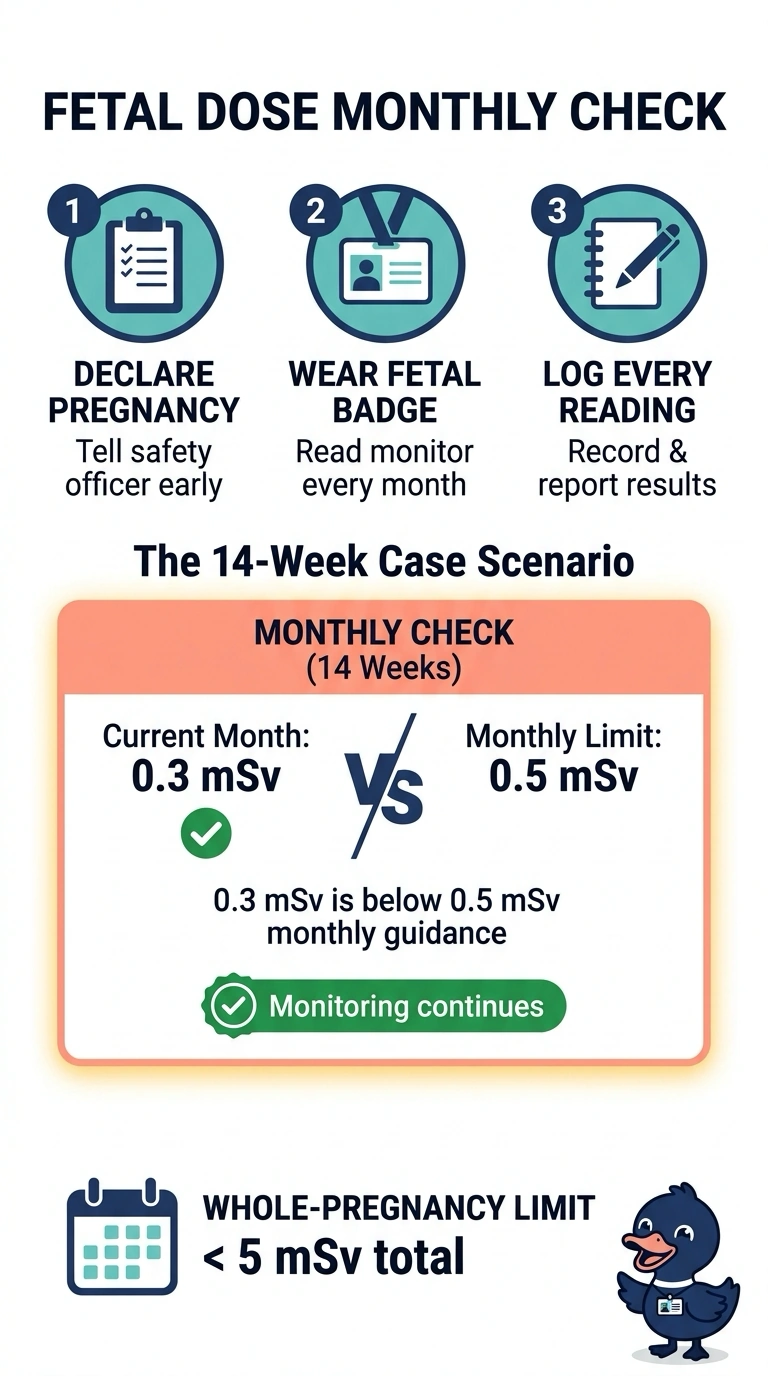
For a declared pregnancy, you compare this month’s 0.3 mSv reading with the 0.5 mSv monthly fetal guidance, not the limits for workers or the public. It’s like checking a monthly budget: the reading is below the monthly guide, so monitoring and documenting the trend continue.
Full Explanation
The correct reference is the 0.5 mSv monthly fetal-dose guidance for a formally declared pregnant worker. The recorded 0.3 mSv is assessed against that monthly value, and the verified badge readings and shielding support continued monitoring; the monthly check does not replace tracking the cumulative dose over the pregnancy. The 50 mSv annual occupational limit is a genuine general limit for occupational exposure, but it is not the specific reference for the embryo or fetus of a declared pregnant worker and does not resolve the monthly fetal-dose question. The 1 mSv annual public limit is also a recognized radiation-protection limit, but it applies to public exposure, not this worker’s declared-pregnancy monitoring; using it as a conservative benchmark does not make it the applicable reference. The 5 mSv limit over the pregnancy is relevant to the total gestational dose, but relying on that total alone omits the separate monthly guidance. A common exam caveat is that fetal-dose limits and recommendations, their legal status, and local implementation may differ by jurisdiction, so distinguish the stated guidance from enforceable limits. In practice, confirm the declaration date, the correct fetal dosimeter placement and results, the reporting period, and the institution’s applicable regulatory and radiation-safety instructions.