
During a lung treatment the patient signals through the intercom that they are suddenly very short of breath, and when you enter the room you find them coughing hard, pale, and slightly blue around the lips with about half of the fraction delivered. You are trained in basic life support. Which immediate response should the therapist take when breathing distress appears mid-fraction?
Select an answer to reveal the explanation.
Short Explanation
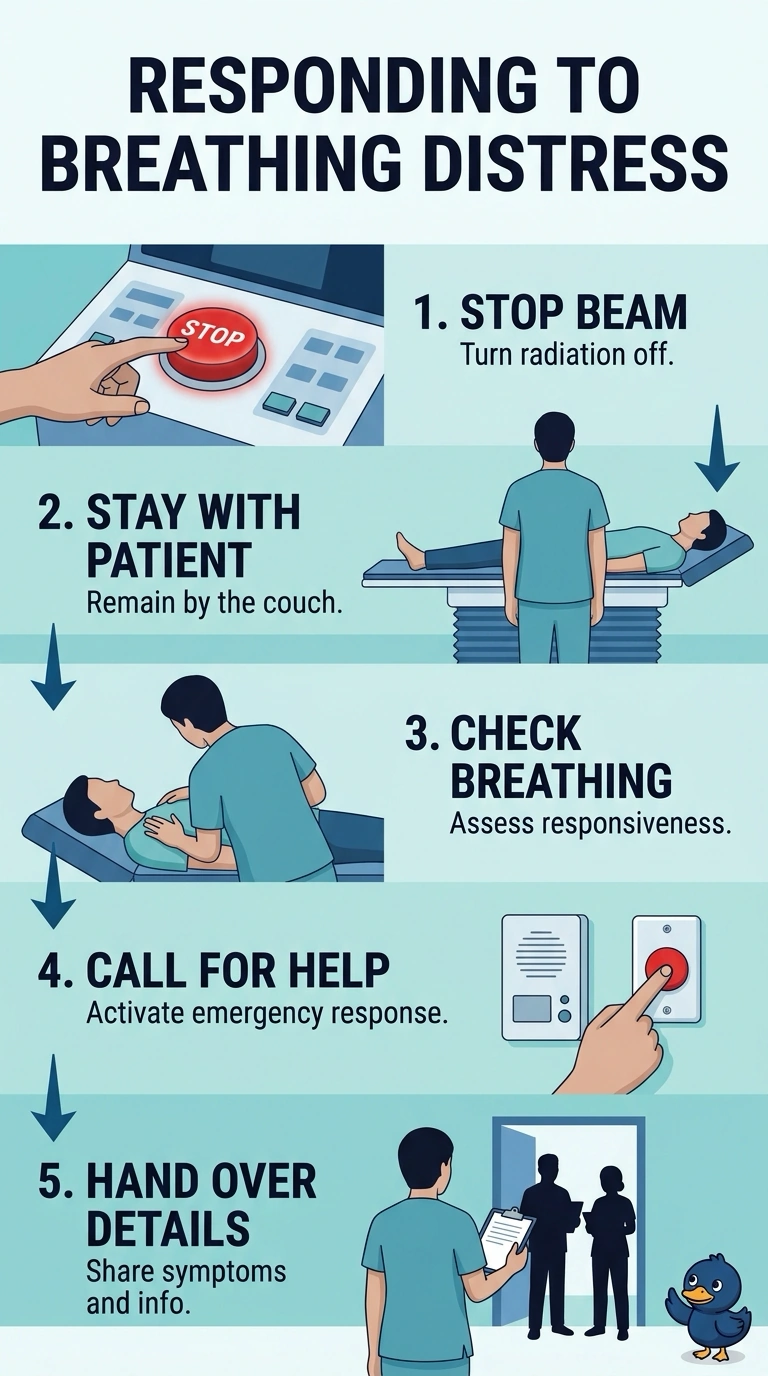
Breathlessness, pallor, and a blue tinge mid-fraction require stopping treatment and promptly activating the department’s emergency response. Stay with the patient, assess their breathing, and provide care within your training while help arrives.
Full Explanation
The correct response prioritizes immediate safety: stop irradiation, remain with the patient, assess breathing, and activate the department’s emergency response. Sudden severe breathlessness with pallor and blue lips may indicate a time-critical deterioration; the therapist should not assume symptoms will resolve or resume treatment. Monitoring pulse oximetry is useful, but it does not replace a direct assessment of breathing, including its rate, effort, and effectiveness. That proposed approach therefore omits a required immediate assessment, even though the other steps are appropriate. Having a colleague remain with the patient while the therapist meets responders can help direct the team, but the therapist should stay with the patient and continue observing and assessing them rather than leaving that responsibility. Calling an on-call clinician may be appropriate for less urgent concerns, but waiting for advice before activating the emergency response risks delaying help in a patient with signs of serious respiratory compromise. Exam caveat: follow local emergency protocols and your basic-life-support training; do not delay escalation to complete a detailed assessment or obtain equipment. Practical check: confirm the beam is off, summon help using the department’s emergency process, and continue observing the patient’s breathing and responsiveness until responders take over.