
A patient returns for simulation after breast-conserving surgery. The operative note records titanium clips around the cavity, pathology reports a 2.6 cm tumor with clear margins, and the preoperative film lists a 12 o'clock lesion. Which record element should guide identification of the boost target volume on the planning CT?
Select an answer to reveal the explanation.
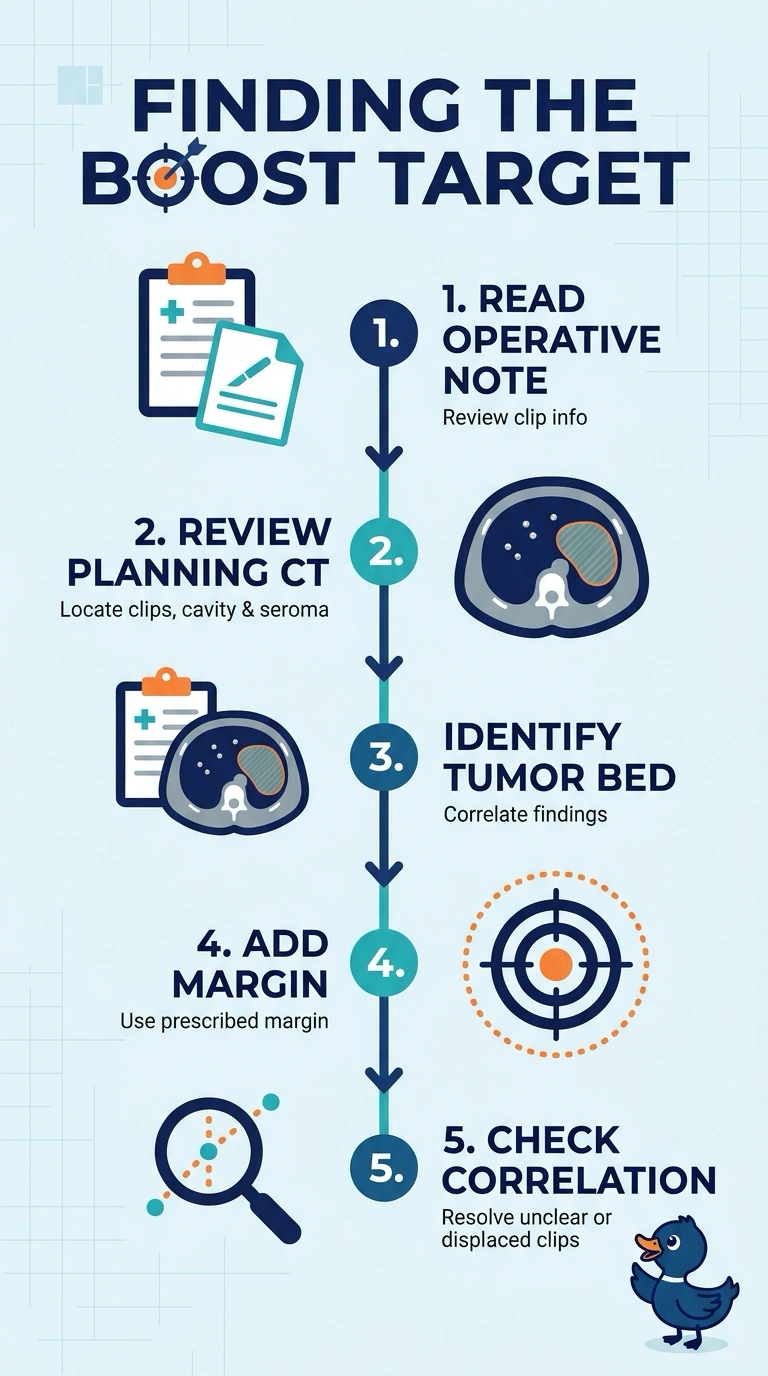
Short Explanation
Use the operative clip information with your planning CT to locate the tumor bed, checking for a visible cavity or seroma too. The clips are breadcrumbs that help you find the bed; pathology describes the tumor and margins, not where the bed sits after surgery.
Full Explanation
The operative clips are placed around the excision cavity and therefore provide an important anatomic reference for locating the tumor bed on the planning CT; a visible cavity or seroma can further help define it. The preoperative mammographic location is useful background, but breast position and tissue geometry change after surgery, so the lesion’s clock-face location and scar alone may not reliably identify the bed on the postoperative CT. Pathologic tumor diameter describes the excised tumor, not the dimensions or shape of the residual bed, so it should not be converted into a matching contour around the cavity. Clear margins indicate that tumor was not present at the assessed specimen edges; they do not prescribe a geometric expansion or boost boundary. A boost target is determined from the surgical bed and relevant imaging, with margins and dose shaped according to the clinical plan—not from tumor size or margin width alone. Exam caveat: clips can be absent, displaced, or clustered and should not be interpreted in isolation; reconcile them with the operative report and imaging rather than assuming they define the entire volume. Practical check: review the operative note and planning CT together, confirm that clip positions are anatomically consistent with the cavity or seroma, and resolve discrepancies with the surgeon or treating team before contouring.