
A patient in week 2 of a three-week palliative course says the knee cushion and arm cradle used at simulation are uncomfortable, so they have been lying without them. They insist the skin marks still line up, so the setup is fine. Which counseling point best reinforces daily setup reproducibility?
Select an answer to reveal the explanation.
Short Explanation
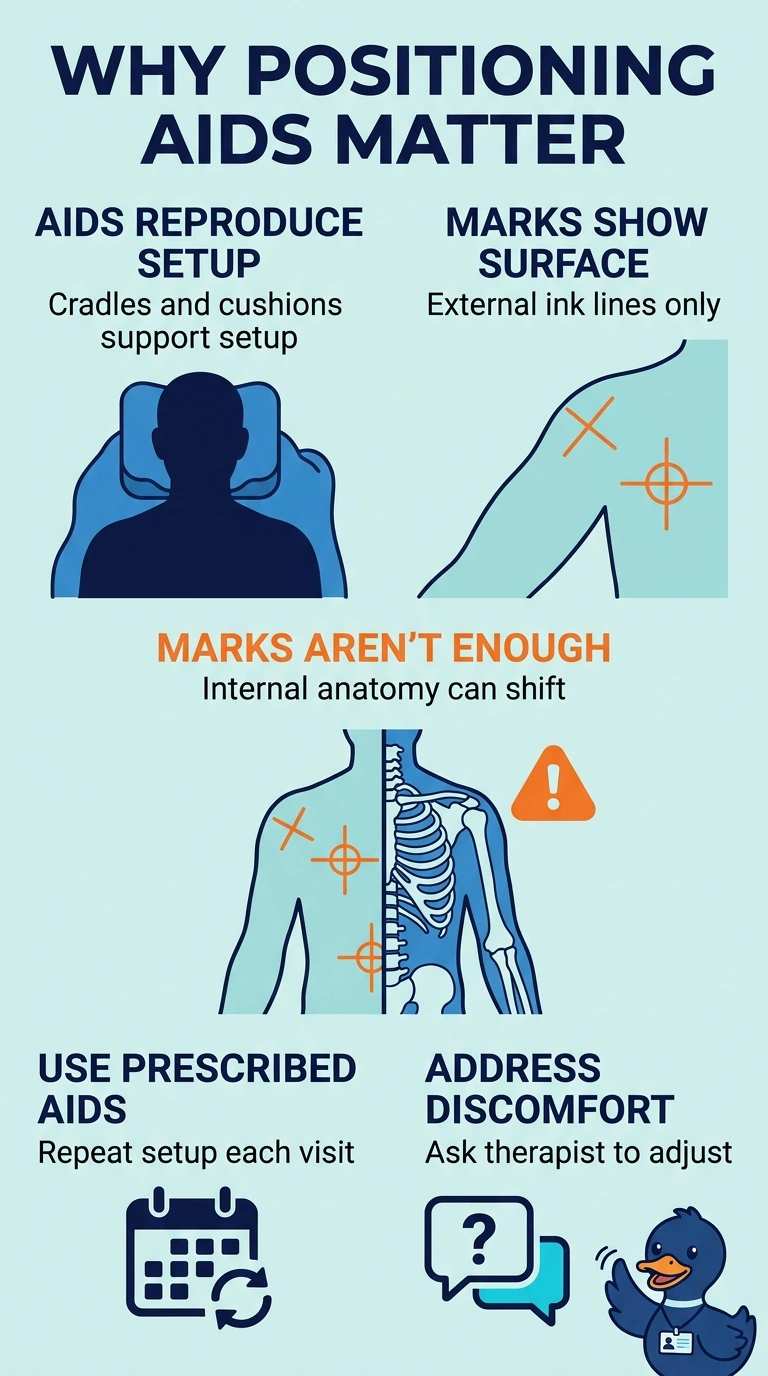
Your skin marks are like dots on a map—they show the surface, not whether everything inside is lined up. Your positioning aids help you recreate the setup used for planning, so let your therapist know if they’re uncomfortable and they can assess or adjust them.
Full Explanation
The correct counseling point links the prescribed knee cushion and arm cradle to reproducing the position used for simulation, while correcting the patient’s assumption that matching skin marks prove the internal anatomy is positioned appropriately. External marks are useful setup references, but they cannot show the location of internal structures or confirm that the planned geometry has been recreated. A repeat simulation in a tolerable position with review of the existing plan is a reasonable response to persistent discomfort, but it does not directly reinforce the daily role of the prescribed aids; any change also requires the team to determine whether the plan remains suitable. Daily image guidance can verify internal anatomy and may support a consistent alternative arrangement, but presenting it as a reason not to use the prescribed aids misses their role in reproducing the simulated setup and may depart from the approved positioning workflow. A standardized alternative setup with daily imaging is likewise a recognized image-guided approach, yet it does not teach that the prescribed aids help reproduce the original simulation position; imaging should not be treated as a blanket substitute for that setup instruction. Exam caveat: image-guidance protocols and the need for repeat simulation vary by treatment site and department, so do not infer that marks or imaging alone authorize a setup change. Practical check: ask the patient to demonstrate the planned setup, identify which aid causes discomfort, and relay the concern to the radiation therapy team for assessment before modifying supports.