
A patient with known metastatic disease develops new leg weakness and urinary retention over two days, and MRI shows a mass pressing the spinal cord at T10 with vertebral height preserved. Pain is controlled with medication. Which radiation indication and timing best match this presentation?
Select an answer to reveal the explanation.
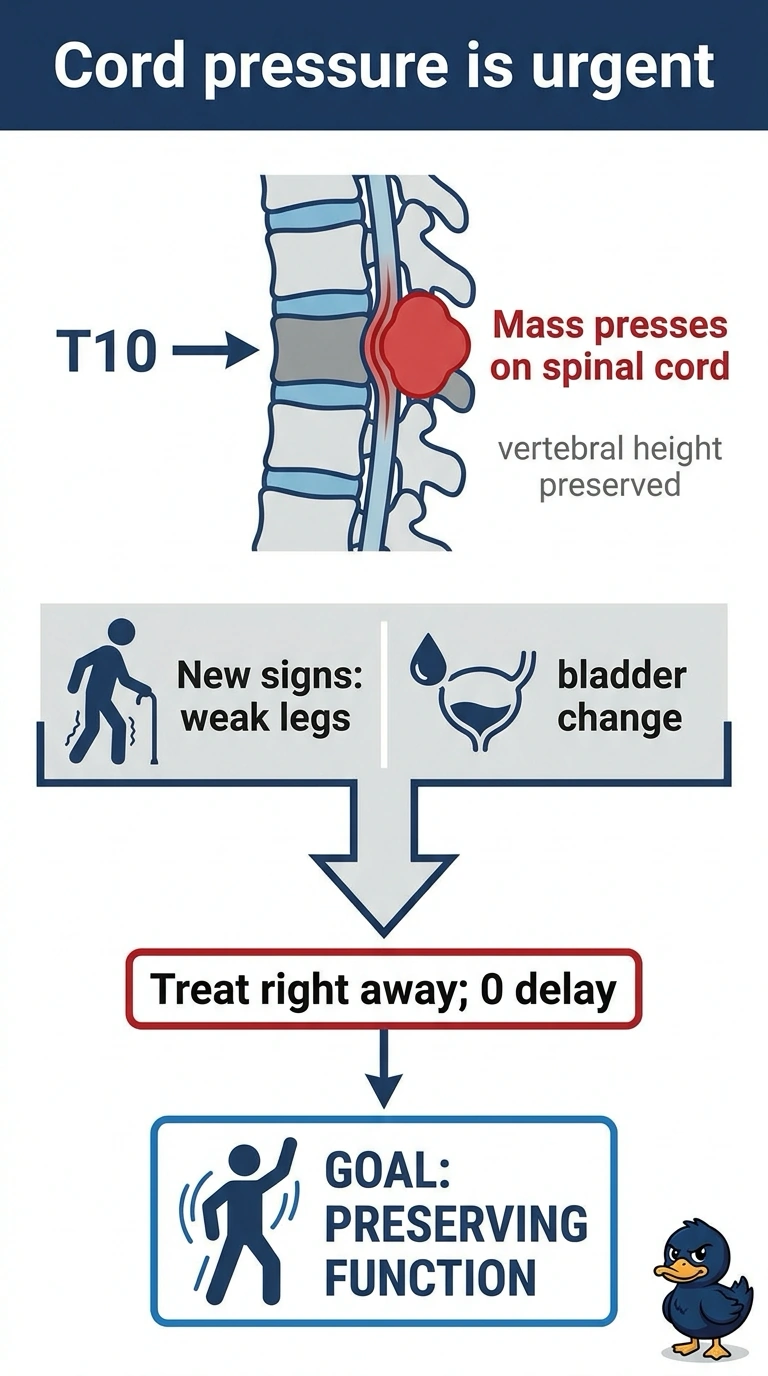
Short Explanation
Your new leg weakness and urinary retention with a mass pressing on the spinal cord mean you need urgent treatment to protect nerve function. Waiting for pain to worsen would be like waiting for a smoke alarm after the fire has started.
Full Explanation
Spinal cord compression with new weakness and bladder changes is an oncologic emergency because it can cause permanent neurologic injury, so it requires urgent assessment and treatment. The fracture-prevention route sounds urgent but rests on a fact this case does not support: preserved vertebral height means the bone has not collapsed, and impending fracture is not the stated problem. The pain-palliation schedule fits a stable lesion with controlled discomfort, yet it misses the progressive neurologic deficits that change the timeline. Localizing the emergency to the cauda equina respects that bladder changes demand speed, but it misreads the anatomy: the conus ends near the top of the lumbar spine, and the stated T10 lesion compresses the cord above it. Exam caveat: recognize the emergency from the deficits and imaging level, and match timing to the clinical situation. Practical check: confirm the level, the onset of weakness, and the radiology wording before committing to a schedule.