
A patient on thoracic radiation reports painful swallowing and has begun skipping meals, so the therapist counsels briefly before the fraction. Guidance must maintain calories and fluids, avoid foods that irritate the raw throat, keep food temperature mild, and be recorded with any change reported to the nurse. Which dietary counseling plan meets all four requirements?
Select an answer to reveal the explanation.
Short Explanation
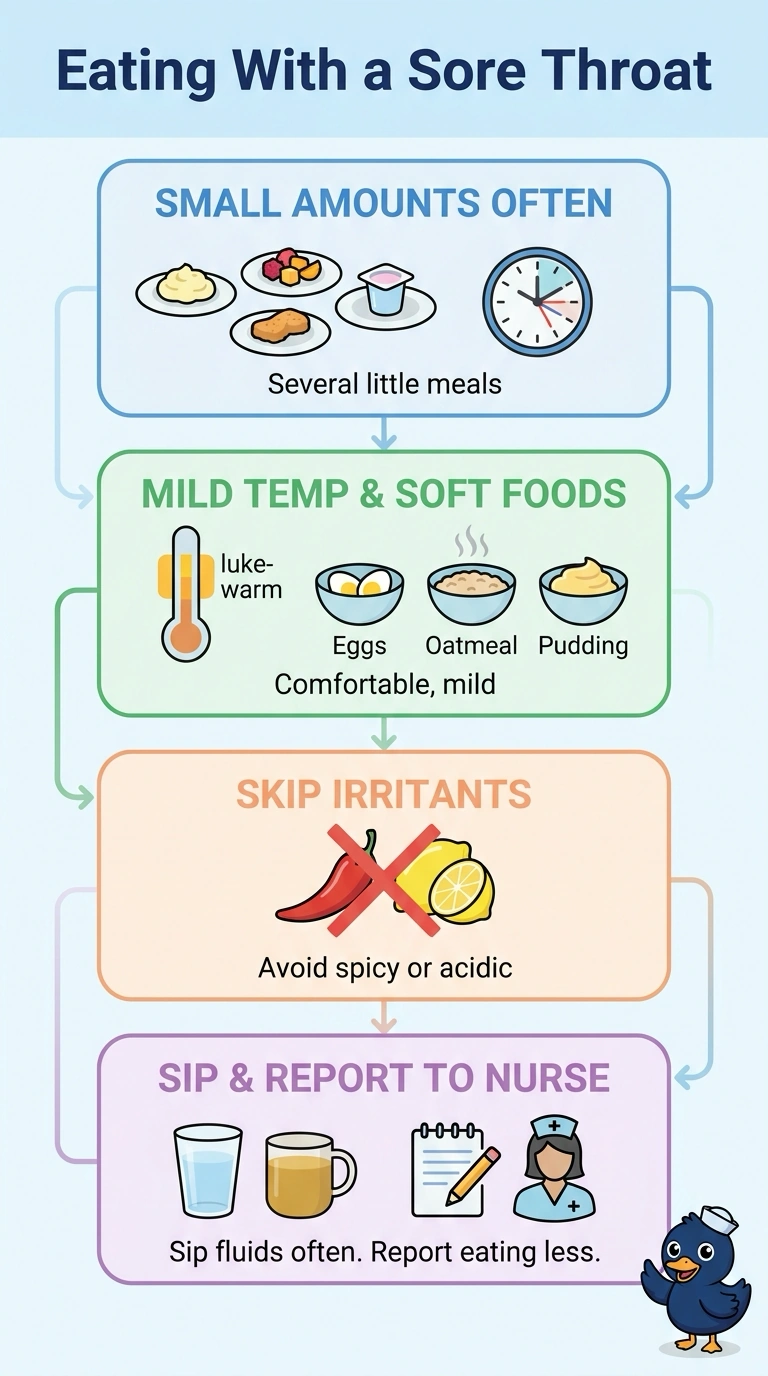
When swallowing hurts, small frequent bland meals and nourishing drinks can help you maintain calories and fluids without irritating your throat; lukewarm foods also avoid temperature extremes. Be sure you document and report the plan and any change to the nurse, so the nurse can respond.
Full Explanation
The plan with small frequent bland meals and nourishing drinks, avoidance of acidic or spicy foods, lukewarm food, and documentation with any change reported to the nurse addresses all four needs. Small frequent meals and nourishing drinks help maintain calorie and fluid intake when swallowing is painful; avoiding acidic or spicy foods reduces irritation; lukewarm food avoids temperature extremes; and recording the advice while reporting changes to the nurse supports continuity of care. A plan that uses the same dietary and temperature guidance but only documents it in the chart does not ensure that a change is reported to the nurse, as required. A plan that includes tolerated citrus drinks or mild spices still conflicts with the instruction to avoid acidic or spicy foods, because these may irritate the inflamed throat even if the patient might tolerate them. A plan that serves foods chilled misses the specified lukewarm temperature guidance; cool foods may soothe some patients, but that does not meet this scenario’s instruction. Exam caveat: symptom-management advice is individualized, but a generally accepted strategy does not override a specific requirement in the question. Practical check: ask what foods and drinks the patient can swallow, reinforce the agreed plan, document it, and promptly tell the nurse about any change in intake or symptoms.