
During week three of pelvic treatment, a patient reports four loose stools a day, cramping, little appetite for solid food, and a dry mouth by late afternoon. The therapist is documenting the daily side effect assessment and wants guidance that fits this bowel reaction. Which dietary advice should be recorded and given to the patient?
Select an answer to reveal the explanation.
Short Explanation
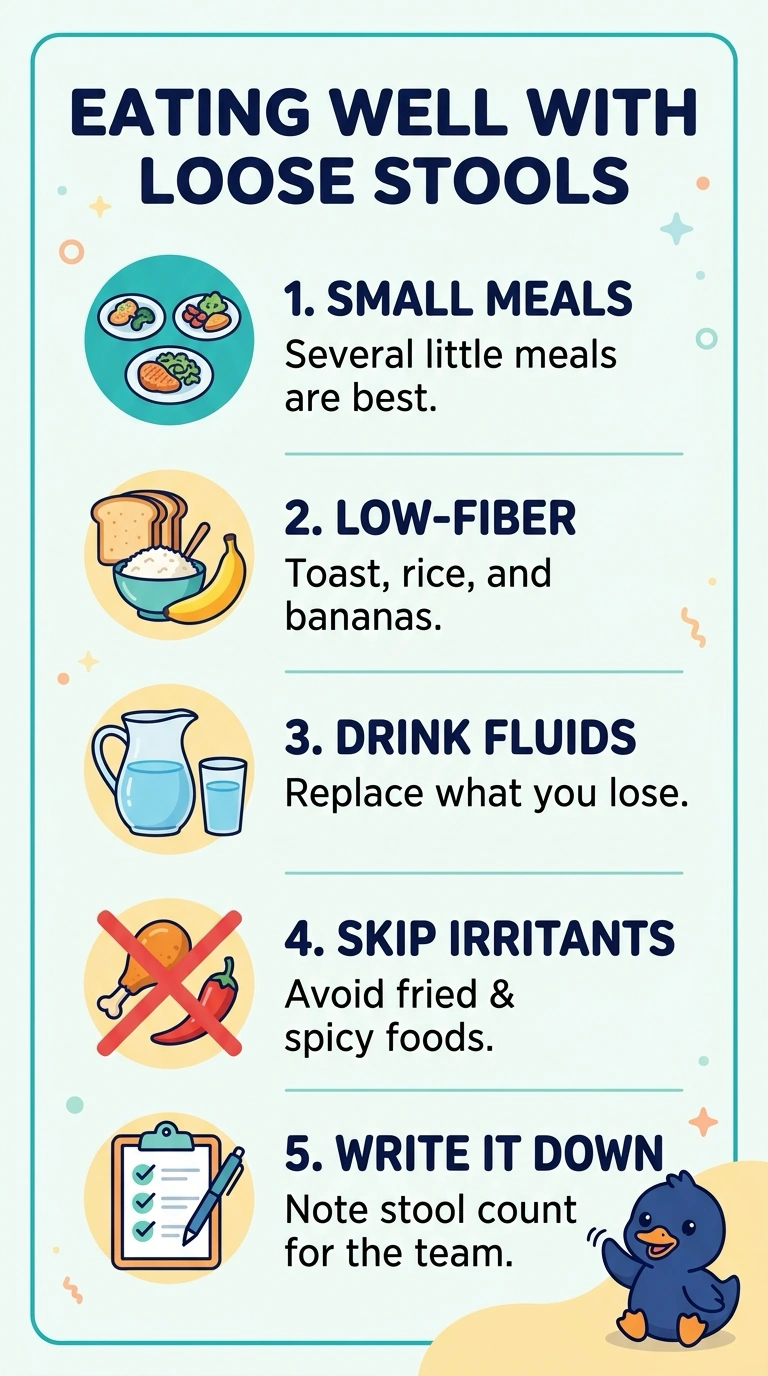
With loose stools, offer small, frequent low-fiber meals and encourage plenty of fluids to replace what you’re losing, like topping up a tank. You’ll also want to document the stool pattern so the physician and dietitian can follow the trend.
Full Explanation
Radiation to the pelvis can irritate the bowel and contribute to loose stools. A low-fiber or low-residue diet and small, frequent meals may help manage symptoms when a patient is having diarrhea and struggling with solid food. Loose stools can cause fluid loss, and the reported dry mouth makes fluid intake important to discuss; persistent or worsening symptoms should be reported to the care team. Recording stool frequency, cramping and intake in the daily assessment helps the team monitor the side effect and respond as needed. Milk and whole-grain foods are not suitable blanket recommendations for this patient: higher-fiber foods may aggravate symptoms, and some people have worse diarrhea with dairy. A bland low-residue menu without fluid guidance does not address possible fluid loss. Reassurance without documenting or reporting the symptom pattern leaves the team without a record to monitor. Dietary counseling supports the plan of care and does not replace reporting persistent or severe symptoms. Document stool frequency, fluid intake and weight trend, and flag a persistent or worsening pattern for the care team.