
A 52-year-old with a 3 cm biopsy-proven tumor confined to the primary site and regional nodes meets the surgeon, radiation oncologist, and medical oncologist at a multidisciplinary clinic, and each recommends a different approach. Which statement correctly describes the reach of surgery, radiation, and systemic therapy for this disease?
Select an answer to reveal the explanation.
Short Explanation
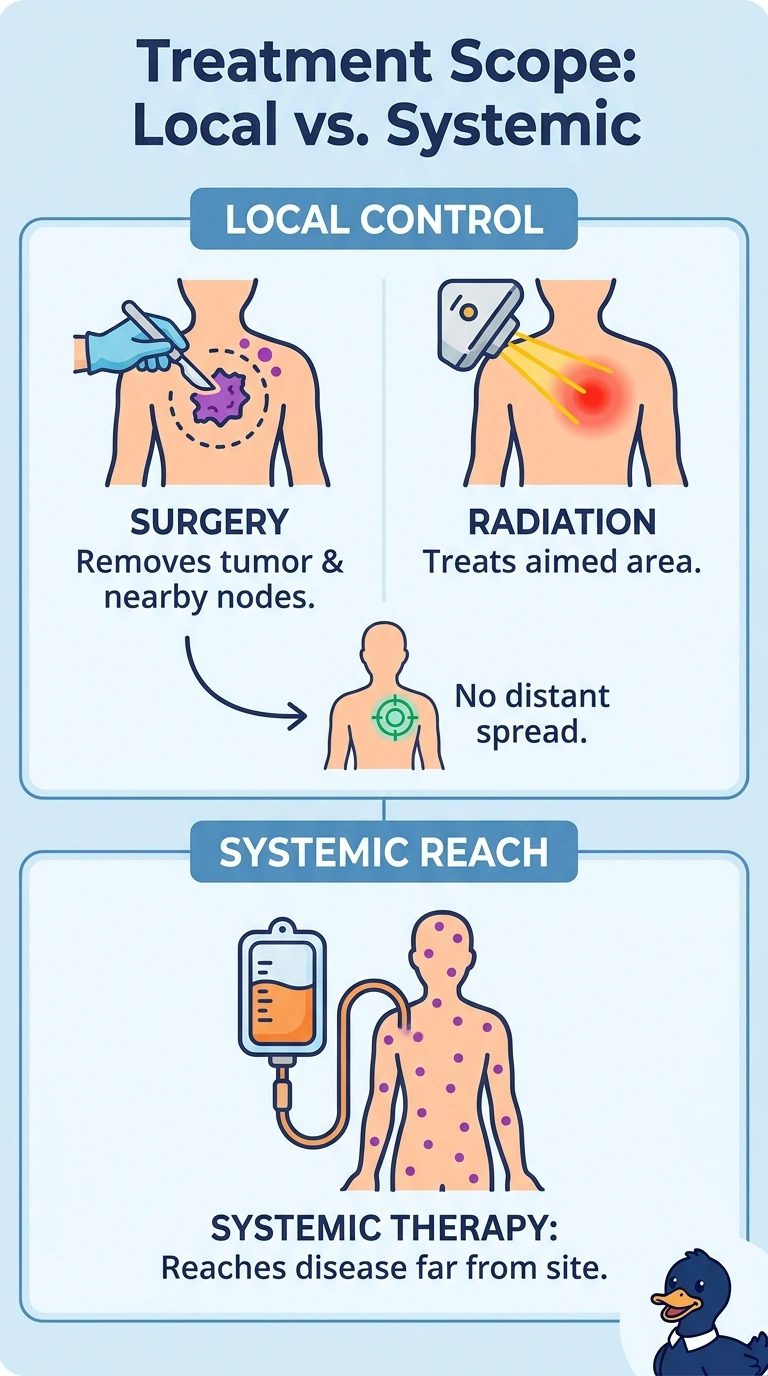
The dividing line is scope: surgery and radiation work where they are aimed, while drugs circulate to wherever cells have traveled. Your local pair controls the primary and the nearby nodes. It's systemic therapy that reaches disease beyond that field.
Full Explanation
The distinction that separates the three options is scope of action: surgery removes tissue in one place, radiation deposits energy inside a defined treatment volume, and systemic therapy is absorbed into the bloodstream so it reaches cells anywhere tumor has traveled. With disease confined to the primary and regional nodes, surgery and radiation are the local tools, while systemic therapy is reserved for disease that has escaped that field or for situations where hidden spread is a concern. Treating radiation as if it circulates confuses external beam therapy with an infused drug, since the beam only affects tissue along its path. Saying surgery reaches only the primary overlooks lymph node dissection and sentinel node sampling, which are routine parts of the surgical approach. Limiting systemic therapy to after local treatment fails ignores neoadjuvant and adjuvant use, where drugs are given before or after local control to improve outcomes. Exam caveat: intent and tumor type change which option is preferred, so the question supplies stage and patient factors. Practical check: when you read a plan, confirm which modality addresses the primary and which addresses everything beyond it.