
A bottle of a chemical used in your department breaks open on the floor, and the label is soaked and unreadable. Two therapists are about to start cleaning it up with absorbent pads. Which source of hazard information should guide their actions before cleanup begins?
Select an answer to reveal the explanation.
Short Explanation
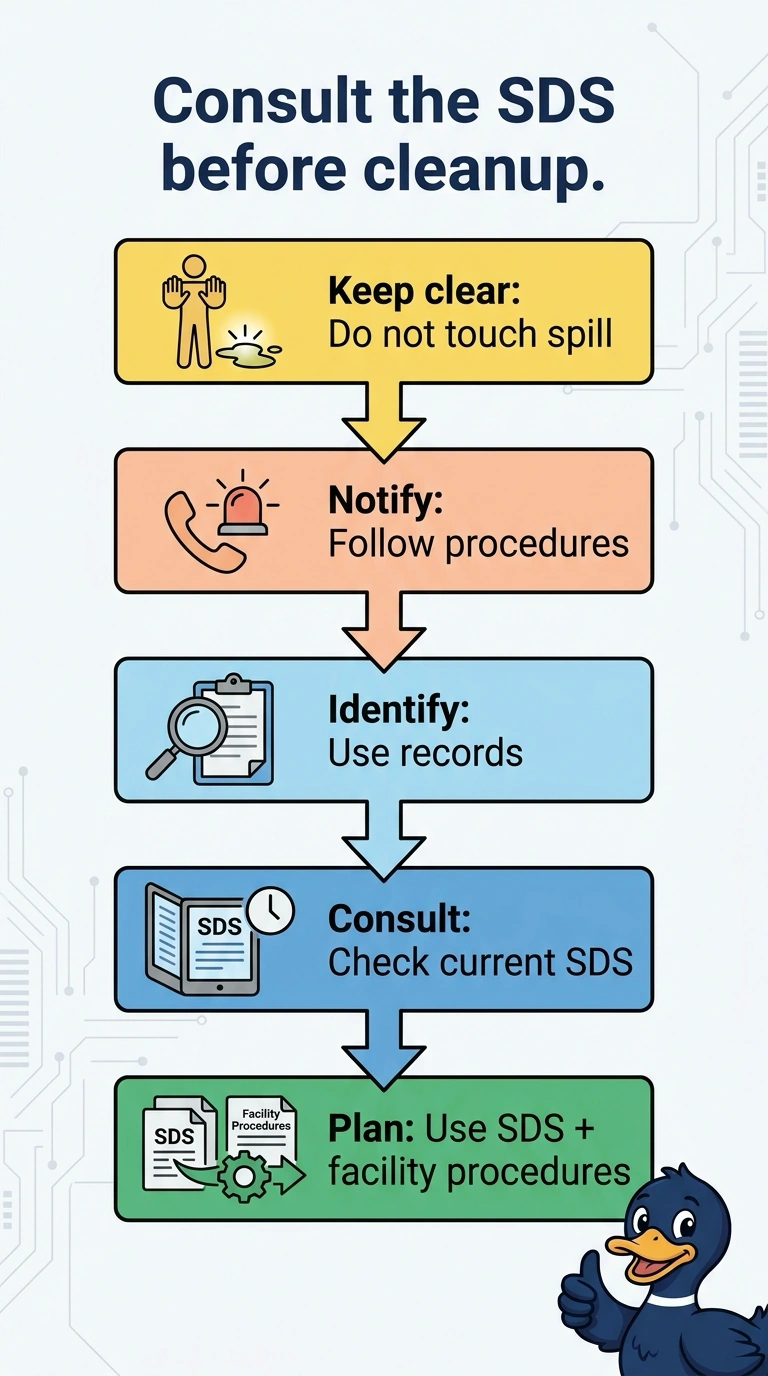
Consult the safety data sheet (SDS) before anyone approaches or handles the spill. Also follow your department's spill-response procedures; do not begin cleanup until the chemical and appropriate response are established.
Full Explanation
The current safety data sheet (SDS) is the appropriate source because it provides product-specific hazard information and guidance needed before cleanup, including suitable PPE, spill-response measures, and disposal precautions. With the label unreadable, the therapists should not assume that absorbent pads are safe or appropriate; they should identify the chemical and consult its current SDS before acting, following the workplace’s spill procedures as well. A department spill-response plan is useful for general steps such as restricting access and notifying others, but it does not establish the particular chemical’s hazards or required controls. The inventory can help identify a likely product or where it is stored, but those details alone do not provide the hazard and cleanup instructions needed for this spill. A manufacturer’s technical data sheet may describe product properties and handling, yet it is not a substitute for the current SDS’s workplace hazard, PPE, response, and disposal information. Exam caveat: an inventory or spill plan may be the right first resource for identifying a product or coordinating a response, but neither replaces the SDS for chemical-specific decisions. Practical check: confirm the product identity against the container or inventory, then verify that the SDS is current and matches that product before selecting PPE or beginning cleanup.