
A patient admitted with a swollen face, distended neck veins and breathing discomfort is found to have a large mediastinal mass compressing the superior vena cava. The oncology team calls the department to arrange treatment today. Which treatment approach reflects the emergency intent of this referral?
Select an answer to reveal the explanation.
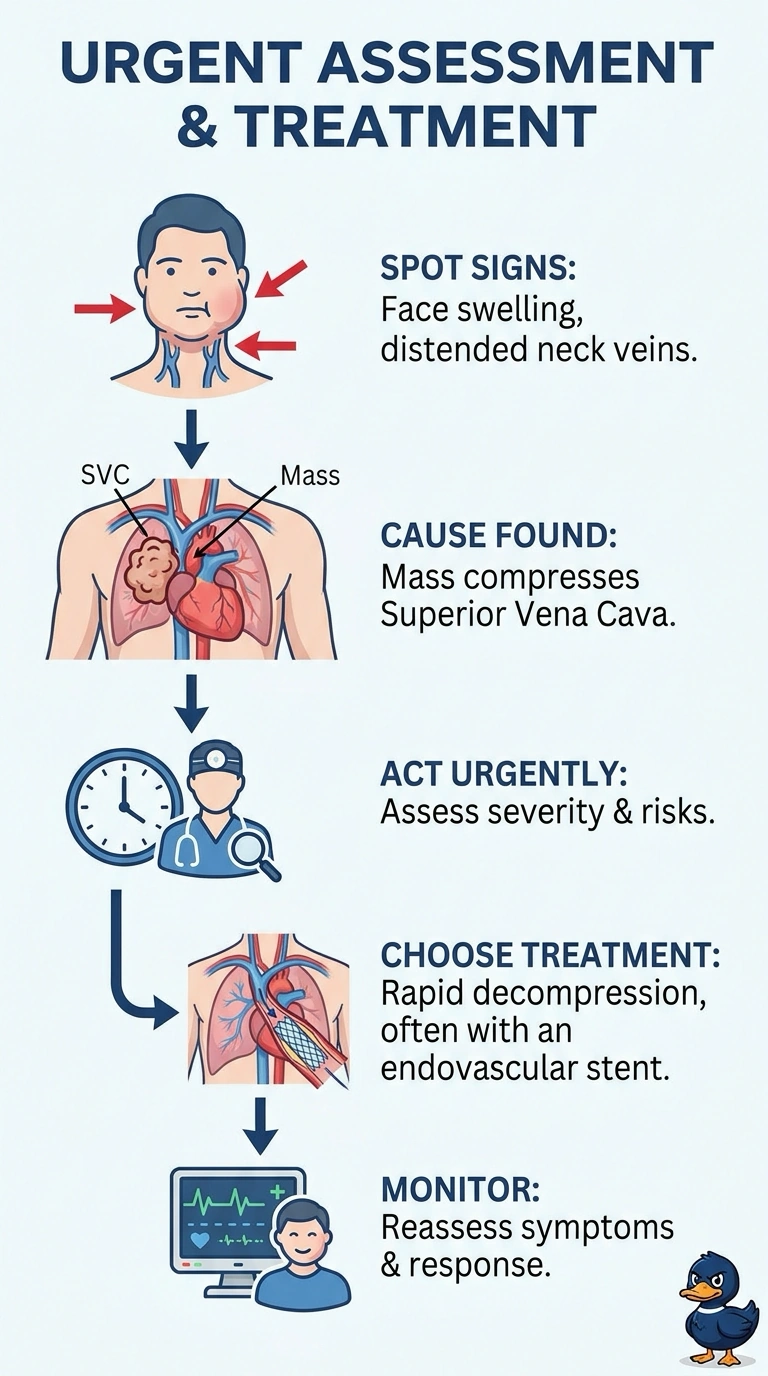
Short Explanation
When a mass blocks blood flow like a traffic jam, you’ll want to treat this as an emergency if breathing or other serious symptoms are present. You should arrange urgent assessment; an endovascular stent can quickly relieve the blockage when needed, while radiation or systemic therapy depends on the cause and your patient’s condition.
Full Explanation
The referral signals a potentially time-critical obstruction: facial and neck venous congestion with breathing discomfort warrants prompt assessment, and treatment may need to restore SVC flow quickly. Endovascular stenting can provide rapid decompression when clinically indicated; the choice depends on severity, anatomy, cause, and the multidisciplinary assessment, rather than automatically applying the same intervention to every patient. Starting radiotherapy the same day is a credible tumor-directed approach, but radiation generally does not relieve venous obstruction as promptly as stenting, so relying on a developing tumor response can miss the need for immediate decompression. Obtaining tissue before choosing definitive cancer therapy is often valuable, but making stenting wait for histology may impose an avoidable delay when urgent relief is needed; diagnosis and stabilization can sometimes proceed in parallel. Systemic therapy can be highly effective for chemosensitive malignancies such as lymphoma or small-cell lung cancer, but the mass’s histology is not given, and empiric treatment may not rapidly relieve a symptomatic mechanical obstruction. Exam caveat: SVC syndrome varies in severity, and not every patient needs a stent; stable cases may be managed with cause-specific therapy after assessment. Practical check: promptly evaluate airway and respiratory status, neurologic symptoms, hemodynamic stability, and imaging-defined obstruction, while coordinating oncology and interventional expertise.