
At the end of an evening shift, a therapist checks the treatment area's charge report before the midnight billing cut-off. Three fractions were delivered and documented, but the report shows one fraction posted twice and one fraction missing. Which reconciliation step best resolves these charge-capture errors?
Select an answer to reveal the explanation.
Short Explanation
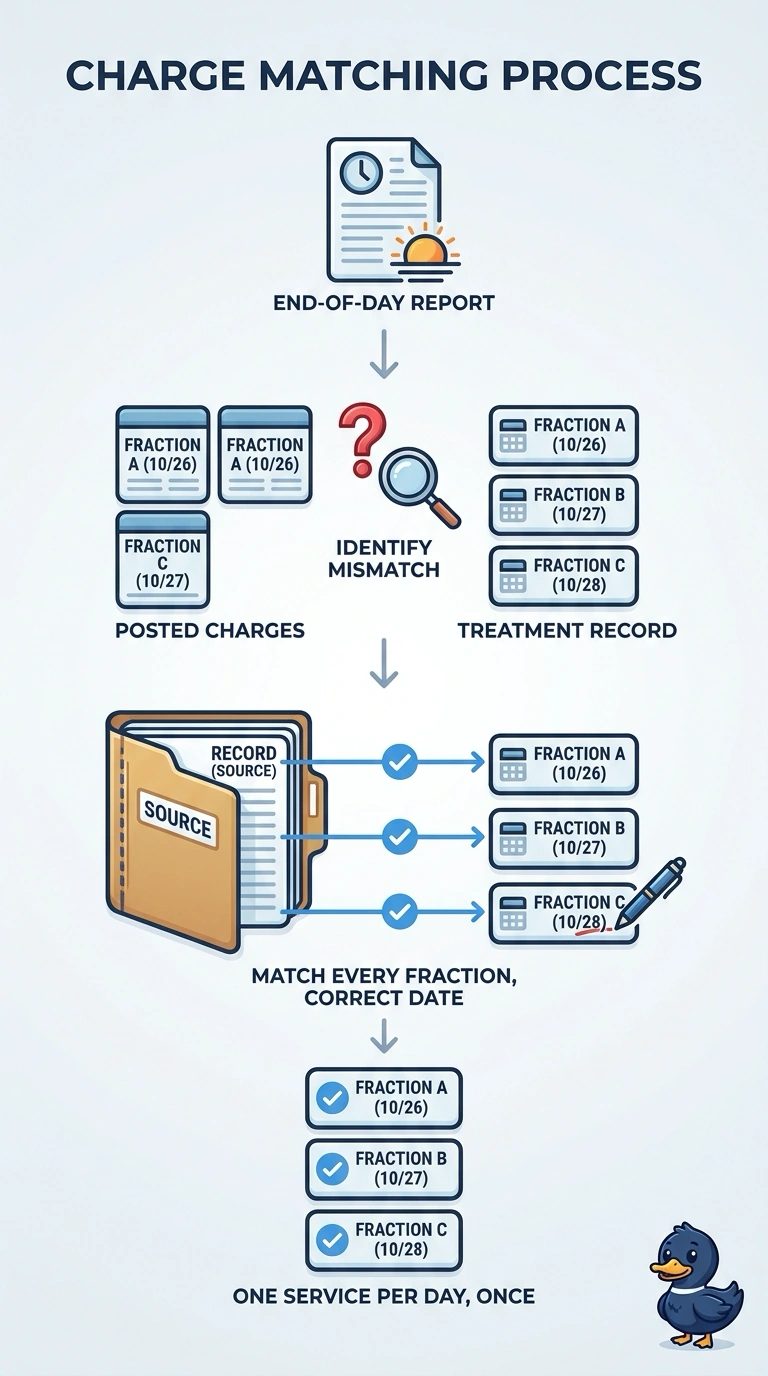
Your documented treatment record is the source of truth, so each charge has to line up with what you actually delivered. Match the report line by line and make sure every fraction appears once on its own date of service. It's much cleaner to fix tonight than to untangle after the claim goes out.
Full Explanation
The correct reconciliation is performed at the individual-fraction level against the treatment record: each charge must correspond to a fraction actually delivered, appear once, and carry its own date of service. That resolves both errors rather than merely making the total look right. Entering the missing fraction on the date the report is corrected uses the correction date in place of the service date; those dates may differ, so the charge would remain inaccurate even though the duplicate was removed. Holding the missing charge for the next daily batch may be a routine way to manage nonurgent corrections, but it does not resolve the known omission before the stated midnight billing cut-off. Matching only the three-fraction total and releasing the batch skips line-level reconciliation: one duplicate and one missing entry can cancel numerically while leaving both charge details wrong. A useful exam caveat is that a correct aggregate count does not establish that each service was billed once on the right date. In practice, verify the treatment record’s delivered fractions and service dates against the charge lines, then confirm the corrected report shows one charge per delivered fraction before the batch is released.