
A 6 MV beam is planned for an isocentric pelvic treatment at 100 cm SAD, with the target centered 9 cm deep at the isocenter, and the skin surface sits at a different distance for each patient. The physicist needs a depth ratio that holds no matter where that surface sits. Which dose ratio should express the depth effect for this isocentric geometry?
Select an answer to reveal the explanation.
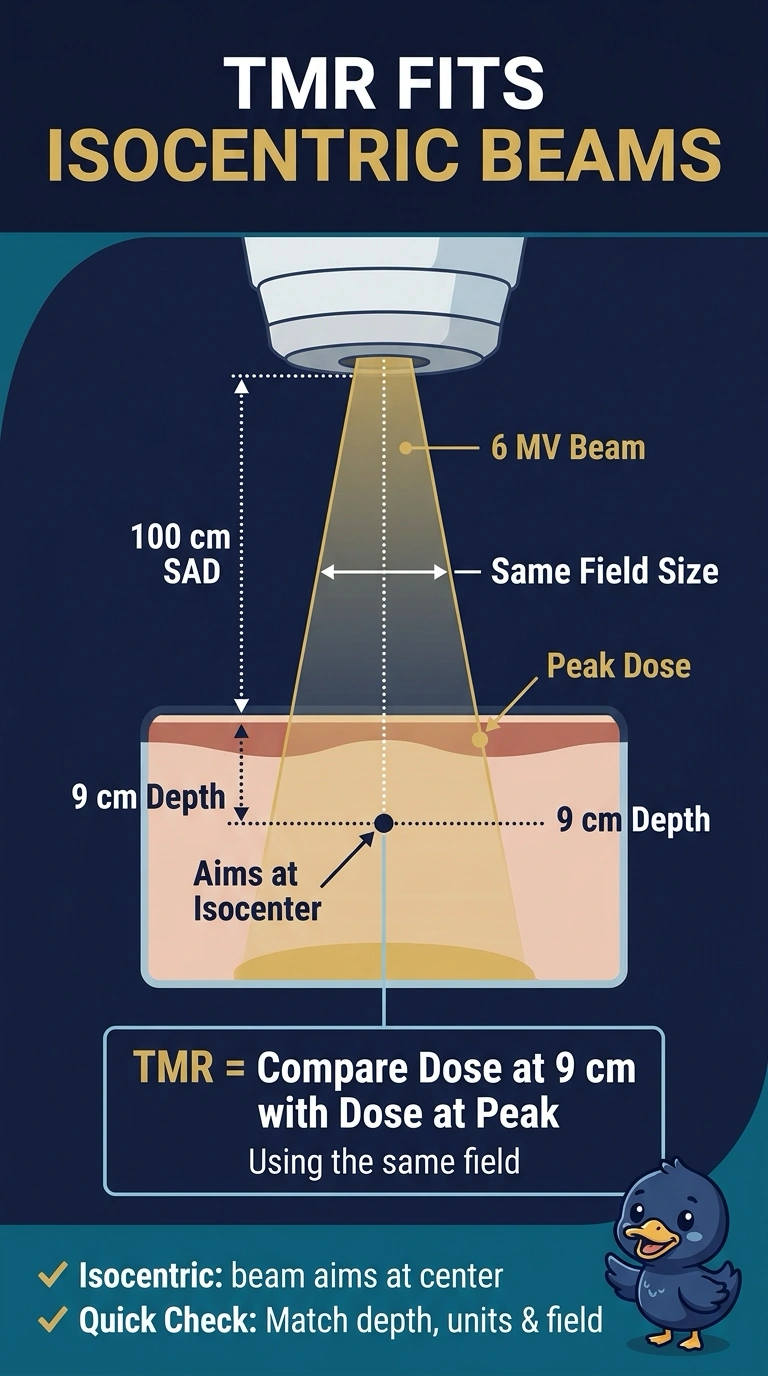
Short Explanation
For an isocentric setup you need a ratio that doesn't depend on where the skin lands, and that's the tissue maximum ratio. Percentage depth dose is referenced to a fixed SSD, so it cannot be applied directly without accounting for the actual SSD. Tissue air ratio references dose in air at the same point, while output factors describe field-size effects rather than depth.
Full Explanation
In an isocentric technique the beam pivots around a fixed point while the surface-to-source distance changes with patient thickness, so the ratio needed compares dose at depth with dose at the depth of maximum dose in the same beam and field size. That is the tissue maximum ratio, developed so isocentric calculations do not depend on where the skin happens to sit. Percentage depth dose is measured at a fixed SSD, so applying it directly to an isocentric plan requires accounting for the actual SSD. Tissue air ratio compares dose in the phantom at a point with dose in air at the same point; obtaining the in-air measurement is less convenient for megavoltage beams. Phantom scatter and head output factors account for field-size effects on machine output, rather than the target's depth. The caveat is that a TMR table is tied to a machine, energy and calibration, so it must come from the commissioned data. A practical check: confirm depth, field size at the isocenter and units before you trust the number.