
A patient receiving abdominal SBRT uses an abdominal compression plate because free-breathing motion was 14 mm at simulation. Marks, couch index, and isocenter were all set with compression at the recorded plate setting. At fraction one, the therapist aligned the tattoos to the lasers before applying compression, and the pre-treatment image showed the target 6 mm off. Policy requires imaging to serve only as confirmation of the setup. Which change to the abdominal compression setup sequence should be made first?
Select an answer to reveal the explanation.
Short Explanation
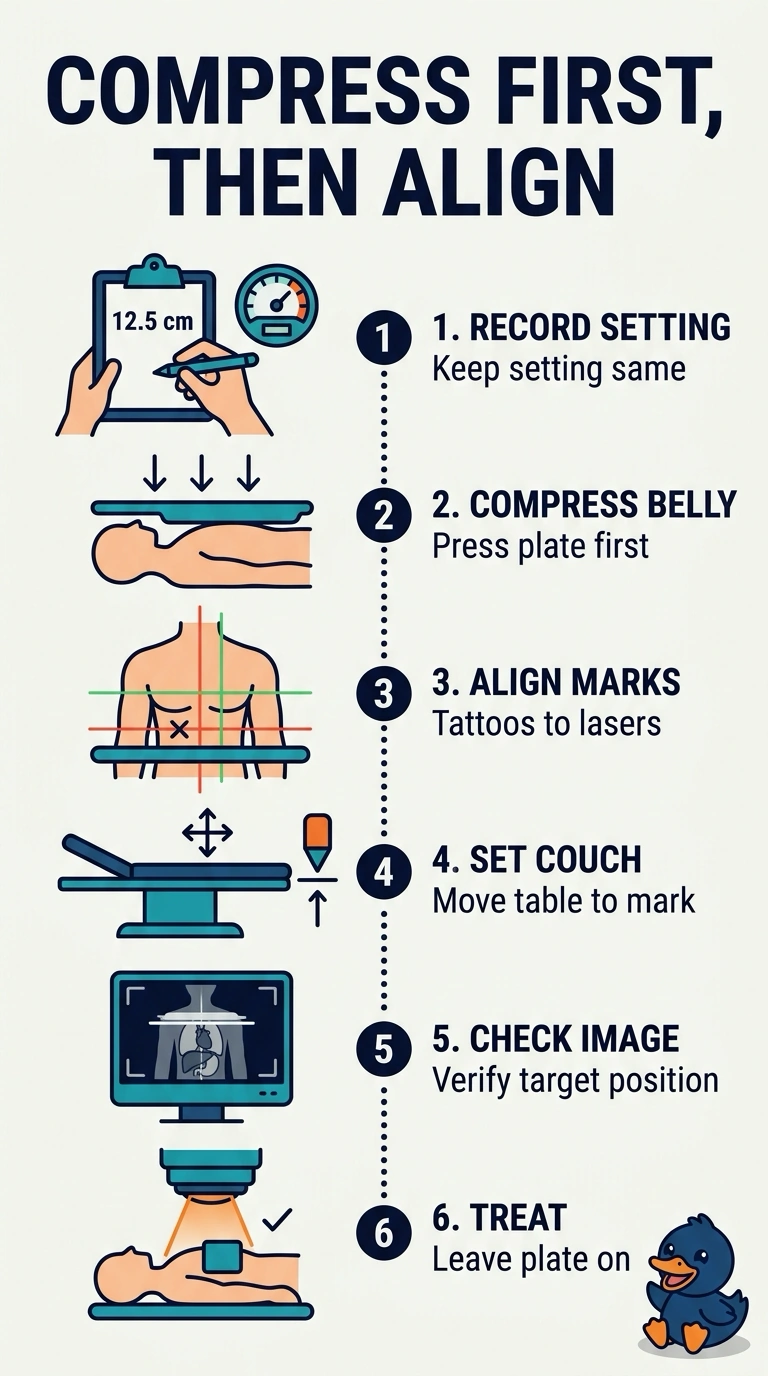
Your marks and isocenter were drawn with the plate pressing in place, so the anatomy you line up has to be in that same pressed state. Compress first, then align, and the image can confirm the planned setup, like checking a pencil trace while the paper is still held flat. It's the setup order that fixes the mismatch.
Full Explanation
The compression plate can reduce abdominal motion and alter the position of anatomy, so the setup used at treatment should reproduce the device and recorded setting used at simulation. Applying compression first means the tattoos and laser alignment are performed with the patient in the planned compressed setup; the couch index and planned isocenter should also be reproduced. Re-simulating without compression changes the planned motion-management setup and would require reassessment and replanning rather than preserving the existing plan. Using the daily image-guided shift to correct an offset treats imaging as a correction tool rather than a confirmation step, contrary to the stated policy. Raising the plate pressure changes the planned compression setting and may alter the anatomy's position. Devices and the way their settings are recorded vary by department, so the principle is to reproduce the simulation setup rather than rely on a specific measurement. Practical check: confirm the plate setting matches the simulation record before aligning and imaging.