
During CT simulation for a pelvic plan, the radiation oncologist places a reference point in the middle of the target on the axial images. The patient will be set up daily with room lasers, and that point must be reproducible at every fraction. How should the therapist transfer the reference point and document it?
Select an answer to reveal the explanation.
Short Explanation
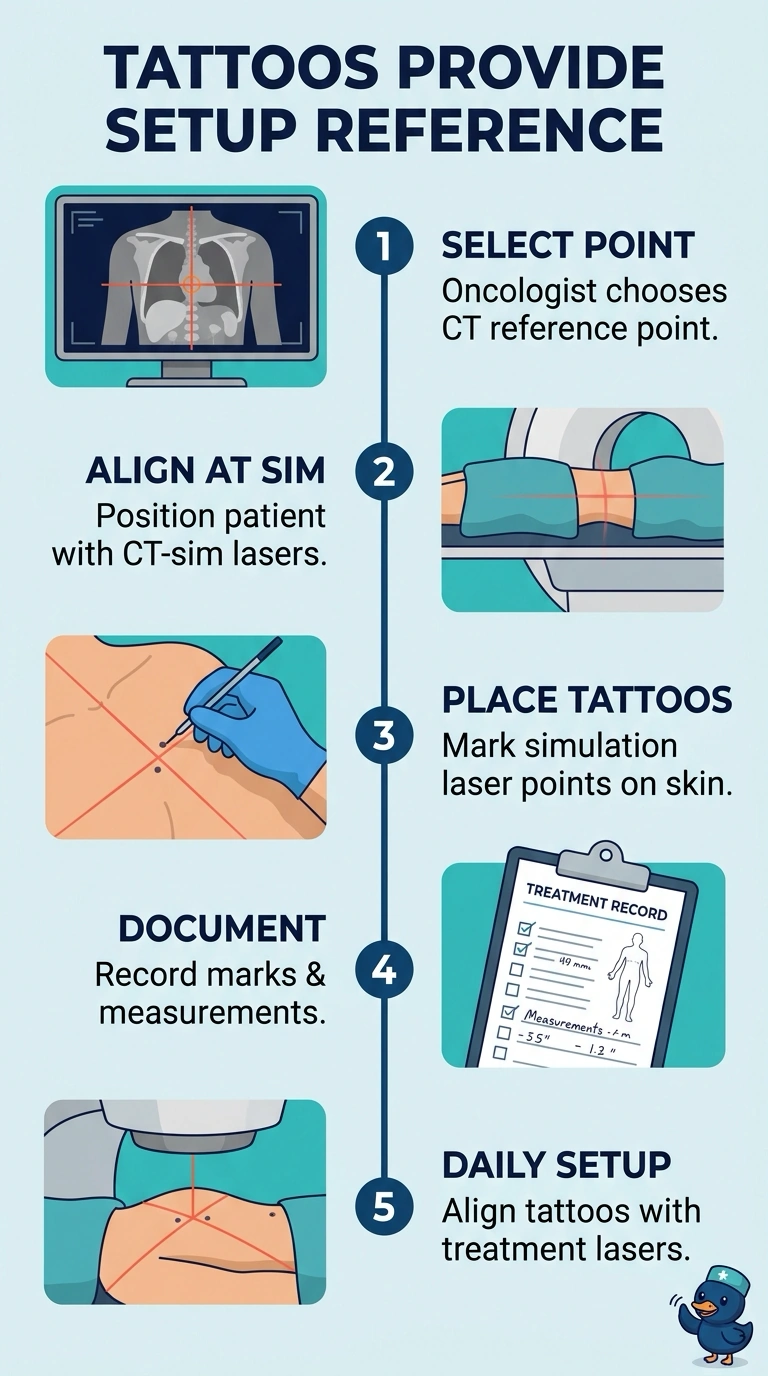
You’ll place permanent tattoos at the CT-simulation laser marks, giving you a lasting outside reference for daily setup. Record their locations and the setup measurements on the treatment record; the marks help you reproduce positioning but don’t by themselves confirm the internal target is at isocenter.
Full Explanation
The CT reference point must be transferred to a reproducible physical setup reference: tattoos at the CT-simulation laser marks let you align the patient to the room lasers at each fraction. Recording both tattoo locations and setup measurements on the treatment record makes the planned setup available to the treatment team. Keeping measurements only in the simulation note separates essential daily setup data from the treatment record, where it is needed during delivery. Durable skin marks protected with transparent film may initially be visible and the relevant information may be recorded, but skin marks can fade or be lost; they do not provide the permanent reference specified for repeat setup. Tattoos and measurements documented only in the patient’s imaging record place the information outside the treatment record, so the prescribed setup may not be available in the workflow used during treatment. Exam caveat: tattoos are placed at the laser marks on the skin, not directly over the internal target; the documented setup geometry relates those external marks to the planned target position. Practical check: before the first treatment, verify that the tattoos are visible and align with the documented laser setup, and confirm the setup measurements are present in the treatment record.