
Before today's fraction, a patient on concurrent chemotherapy and pelvic radiation has labs showing white cells down from last week, platelets unchanged, hemoglobin steady at the patient's usual baseline, and a normal BUN. The patient now reports a sore throat and chills. Which result should be escalated to the oncology team right away?
Select an answer to reveal the explanation.
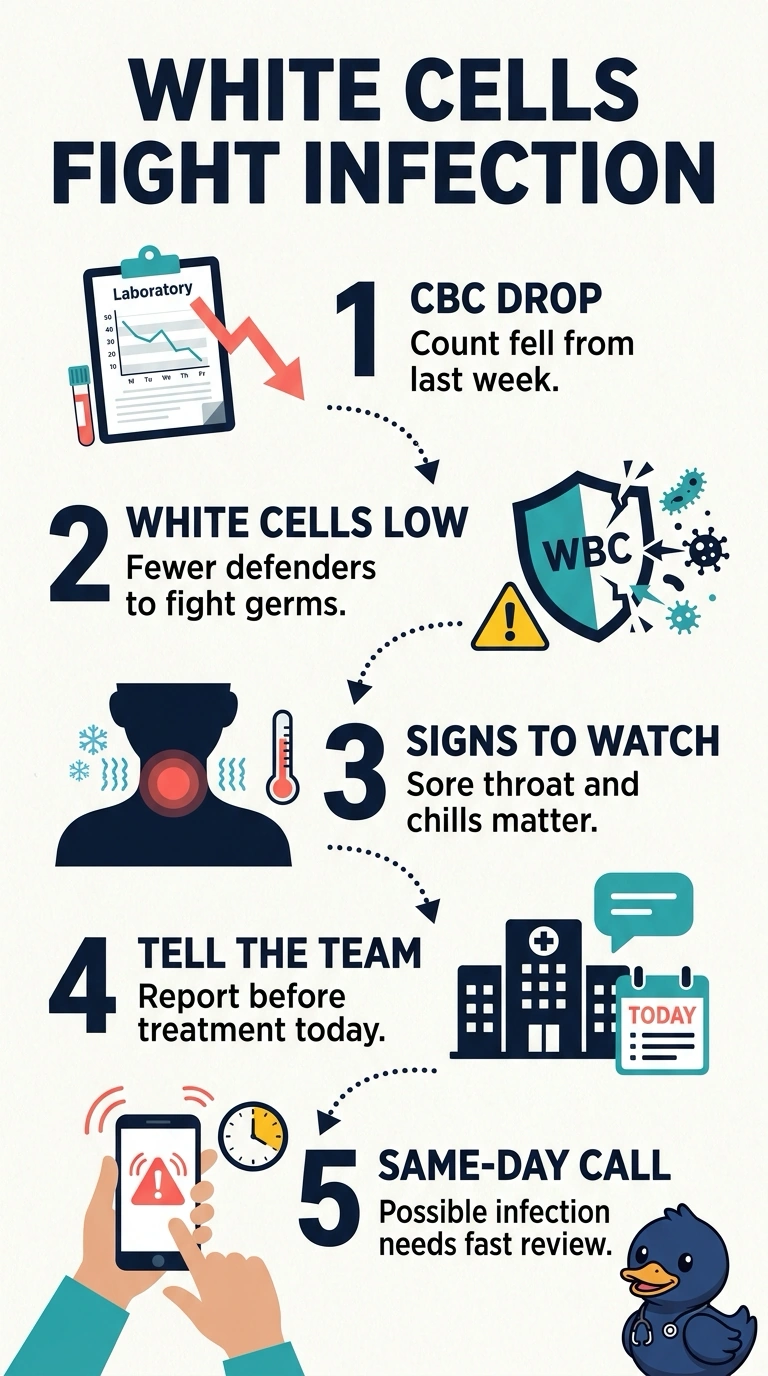
Short Explanation
Your white cells are the infection crew, so a drop paired with a sore throat and chills is the red flag you're reporting right now. Platelets, hemoglobin, and the BUN all matter too, but the falling count with those symptoms points straight at neutropenia.
Full Explanation
The falling white cell count together with sore throat and chills warrants prompt contact with the oncology team: during concurrent chemotherapy and pelvic radiation, a declining count may reflect neutropenia, and new symptoms can signal infection requiring timely assessment. Confirming the absolute neutrophil count (ANC) is clinically useful, but waiting for a differential before escalating is the wrong sequence here; the symptoms and falling count already justify notifying the team. Checking temperature and applying a fever protocol are also appropriate parts of assessment, but chills without a recorded fever do not make this situation safe to defer; the team should hear about the symptoms now. Reviewing platelet count against treatment thresholds and assessing bleeding can guide treatment decisions, but an unchanged platelet count does not address the potentially urgent infection concern raised by the white cell trend and symptoms. Exam caveat: neutropenic infection may occur without a documented fever, so absence of fever does not rule out urgency. Practical check: promptly relay the CBC trend, symptoms, and measured temperature, and confirm the ANC when available, following the oncology service's escalation protocol.