
A patient with confirmed Clostridioides difficile infection has an episode of watery diarrhea that soils the treatment couch and floor partway through a fraction, and another patient is due in that same room shortly. Which pair of actions breaks the chain of C. difficile transmission before that next setup?
Select an answer to reveal the explanation.
Short Explanation
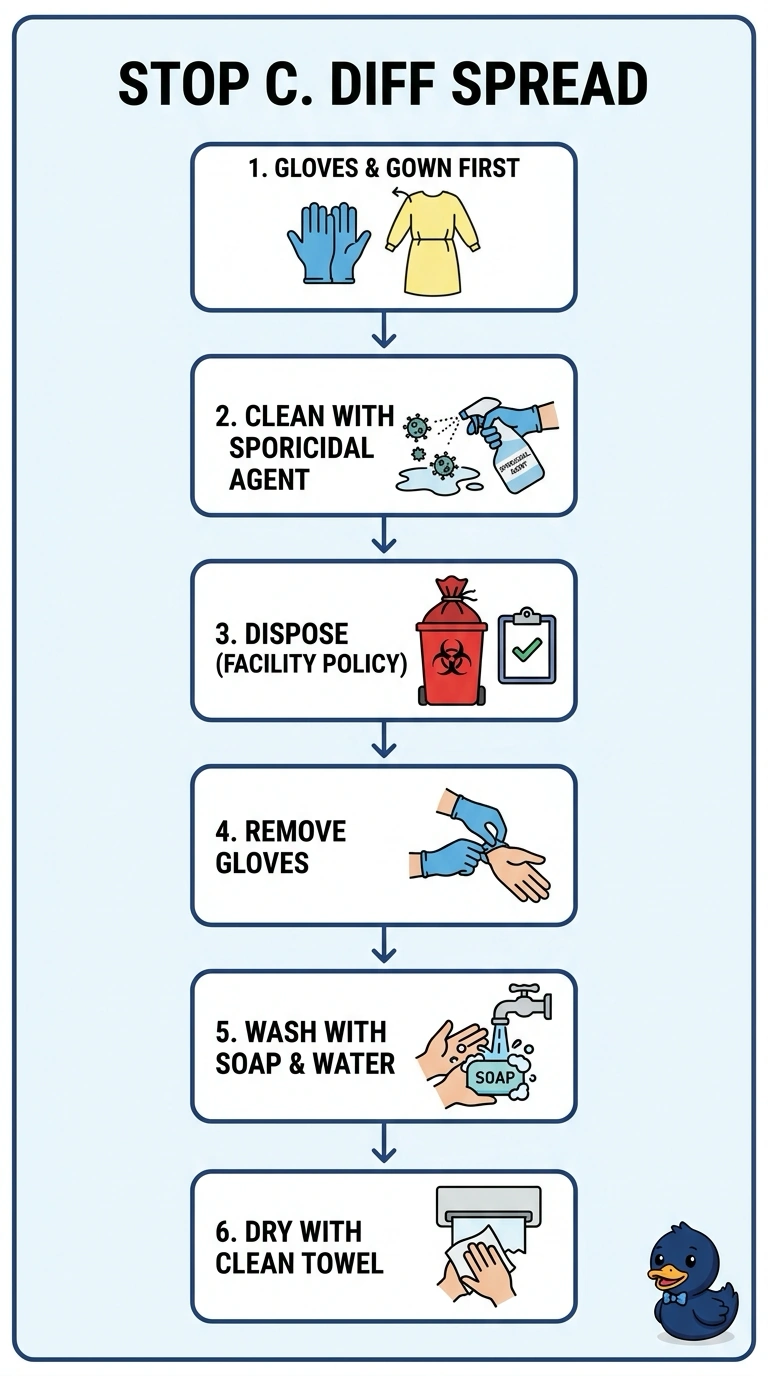
You’ll need to wash your hands with soap and water, since alcohol-based sanitizer doesn’t reliably remove C. difficile spores. Treat the spores like stubborn glitter: clean the couch and floor with a sporicidal agent before the next patient’s setup.
Full Explanation
Break the chain at two points after this contamination: hands and surfaces. Clostridioides difficile forms spores that can persist on environmental surfaces. Alcohol-based hand rub does not reliably inactivate or remove these spores, so soap and running water are preferred; washing helps physically remove spores from the skin. The environmental step requires a product with sporicidal activity, used according to its label, including the required contact time. A routine daily-care cleaner may leave viable spores on the couch. Washing with soap while using a standard cleaner addresses hand hygiene but not the surface; pairing alcohol-based hand rub with a sporicidal product does not address hand hygiene as recommended here. Fresh gown and gloves do not replace hand hygiene after glove removal. On the exam, C. difficile is a reason to favor soap and water over alcohol-based hand rub. Consider both links: what you did to your hands and what you did to the couch.