
A patient in a thermoplastic mask is set up for a head-and-neck fraction, but a comfort adjustment leaves the skin marks misaligned with the room lasers. The console parameters match the treatment chart, and policy requires the isocenter to be confirmed against the simulated position before beam-on. Which verification step should the therapist complete first to confirm the isocenter?
Select an answer to reveal the explanation.
Short Explanation
Matching parameters only shows the machine is ready; you still have to confirm the isocenter against the simulated position. It's like setting the right oven temperature while the tray sits on the wrong rack.
Full Explanation
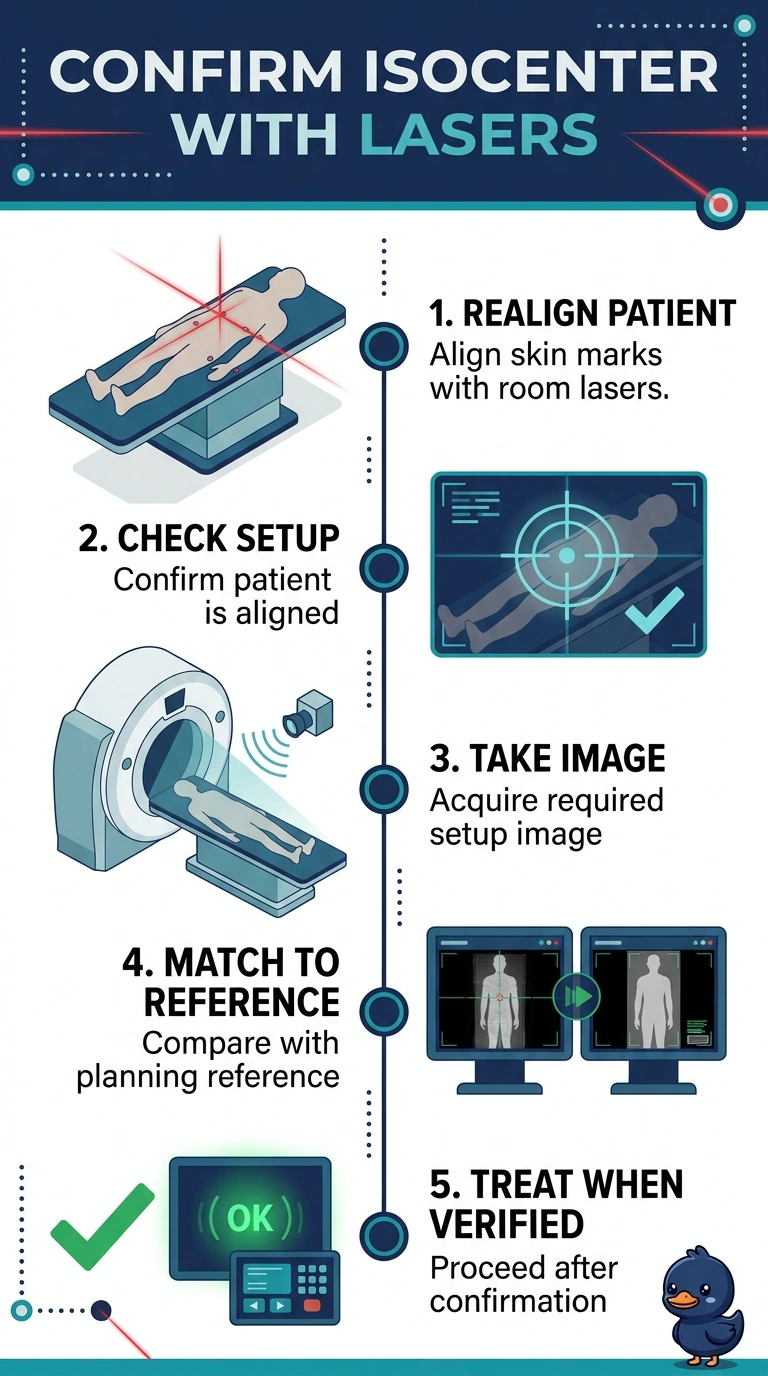
The correct step is to restore the planned external setup by aligning the skin marks with the room lasers, then use the required setup image to confirm that the isocenter matches the simulated position before beam-on. The comfort adjustment has displaced the marks, so the prior surface alignment cannot simply be assumed; the image provides the required confirmation against the planning reference. Acquiring an image and correcting the couch first is a familiar image-guided workflow, but it leaves the known mark-to-laser discrepancy uncorrected instead of first restoring the prescribed setup. Aligning the marks and treating from the laser intersection alone uses a standard setup reference but omits the required image confirmation; lasers do not independently verify the internal isocenter. Comparing today's image only with the prior fraction can support reproducibility, but it fails to verify the position against the simulated reference as policy requires. Exam caveat: follow the department's approved imaging and correction sequence, since protocols may specify additional verification or escalation when surface alignment and image guidance disagree. Practical check: before beam-on, confirm that the marks meet the lasers, the setup image has been reviewed against the simulation, and any required couch corrections are documented.