
A patient on contact precautions for a resistant skin organism finishes treatment and leaves drainage on the couch pad, mask, and headrest. The same accessories are needed for the next patient in fifteen minutes. Which infection-control steps should the therapist take to break the chain of infection at the treatment unit?
Select an answer to reveal the explanation.
Short Explanation
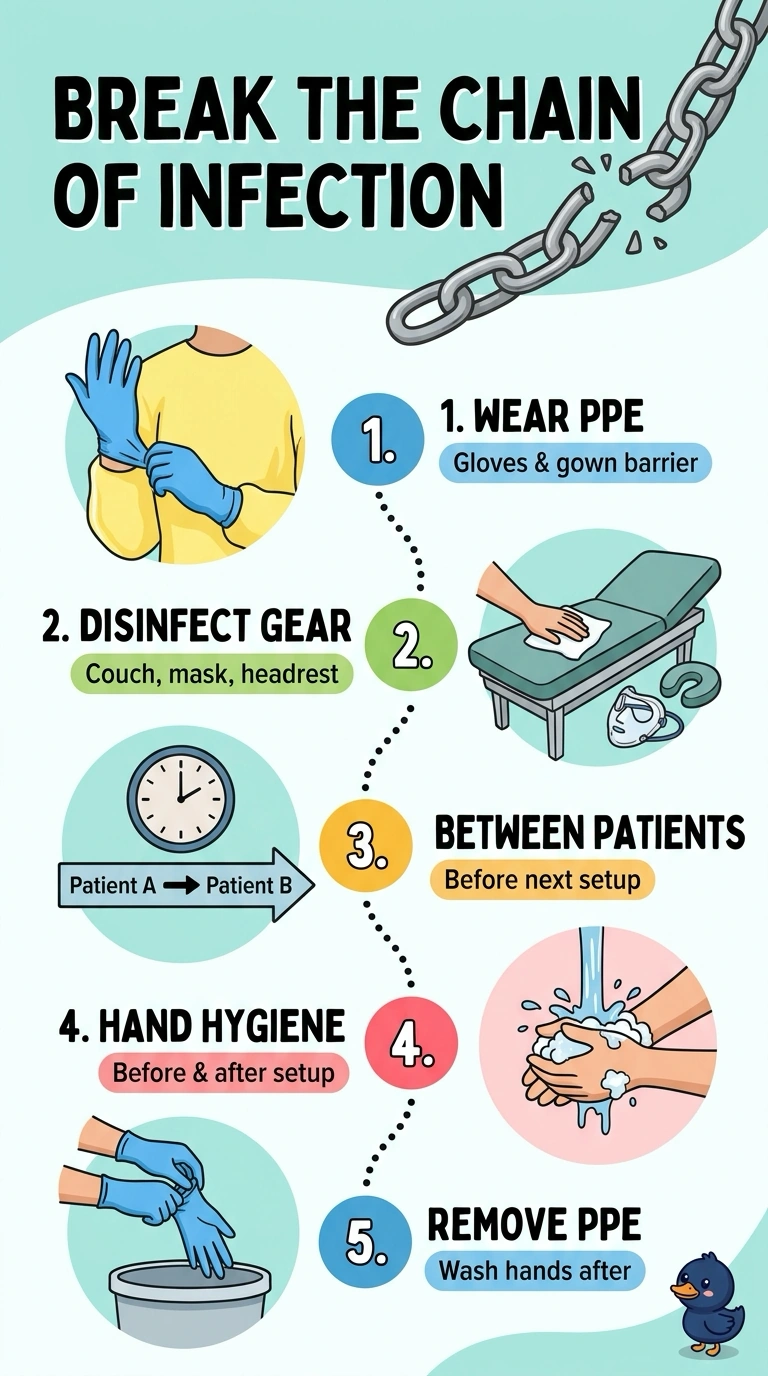
You’ll need gloves and a gown, disinfect the shared accessories between patients, and clean your hands before and after each setup. You’re closing every door the infection could use to reach the next patient; miss one step, and a link in the chain of infection remains open.
Full Explanation
The appropriate approach combines contact-precaution barriers with timely environmental cleaning and hand hygiene. Gloves and a gown protect you from contact with drainage and contaminated surfaces; disinfecting the couch pad, mask, and headrest between patients addresses contamination of the treatment unit; and hand hygiene before and after each setup helps prevent organism transfer. Wearing a gown only when drainage may soil clothing is inadequate for contact precautions, which call for a gown when you anticipate contact with the patient or contaminated environment. Wearing gloves and a gown and performing hand hygiene, but waiting to disinfect until after the next patient’s treatment, leaves contaminated accessories in use; they must be cleaned and disinfected before reuse, especially when visibly soiled with drainage. Wearing gloves and a gown and disinfecting between patients, but skipping hand hygiene before entering the treatment area, leaves a route for organisms on your hands to reach the patient or clean equipment. Exam caveat: gloves do not replace hand hygiene, and visibly soiled surfaces generally need cleaning before an appropriate disinfectant can work as intended. Practical check: confirm the product is compatible with each accessory and observe its required wet contact time before the next patient uses it.