
A patient receiving pelvic radiation reports new bruising and nosebleeds that started this week. Today's CBC shows white cells 5.8, hemoglobin 11.2, and platelets 64. Which laboratory finding should drive the therapist's action before today's fraction is delivered?
Select an answer to reveal the explanation.
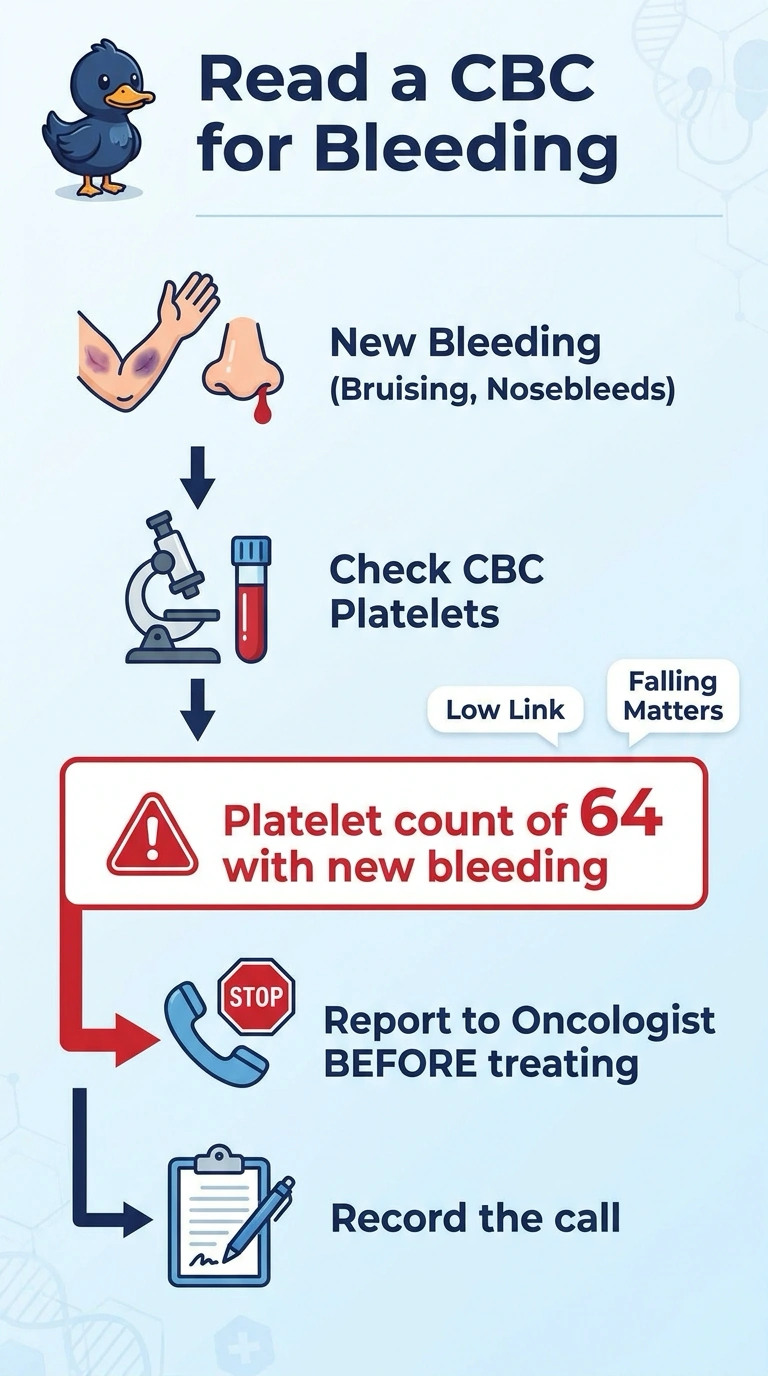
Short Explanation
When a symptom and a lab value line up, that pairing tells you what to do first. New bruising with a platelet count of 64 is a bleeding story rather than a fatigue or infection story, so the platelets are what you report before treating. You want that call made while the fraction is still pending.
Full Explanation
The platelet count of 64 × 10⁹/L is the laboratory finding that should drive action: thrombocytopenia can impair hemostasis, and the new bruising and nosebleeds make the result clinically significant. The therapist should report both the count and bleeding to the radiation oncologist before delivering the fraction so the team can assess bleeding risk and determine whether treatment should proceed. A threshold-based protocol is a useful routine check, but relying on a cutoff and proceeding because the count is above it fails to account for the patient's active bleeding; symptoms can change the significance of a count. Notifying the oncologist for new bleeding is appropriate, but the question asks which laboratory finding drives the action. The platelet result, not symptoms alone, identifies the relevant abnormality and should be included in the report. Reviewing prior CBCs is also useful, but waiting until after the fraction to involve the oncology team misses the required pre-treatment timing and delays review of an abnormal count accompanied by bleeding. Exam caveat: platelet thresholds for holding or modifying radiation vary by institution and clinical context, so the count alone does not dictate a universal treatment decision. Practical check: confirm the result and units, review the trend and bleeding severity, and promptly follow local escalation procedures before treatment.