
A tumor board reviews a 61-year-old with a 2.4 cm, node-negative, hormone-responsive breast tumor who hopes to keep the breast, and the team weighs surgery, radiation and systemic therapy. Which comparison of these options best supports recommending breast-conserving therapy for this patient?
Select an answer to reveal the explanation.
Short Explanation
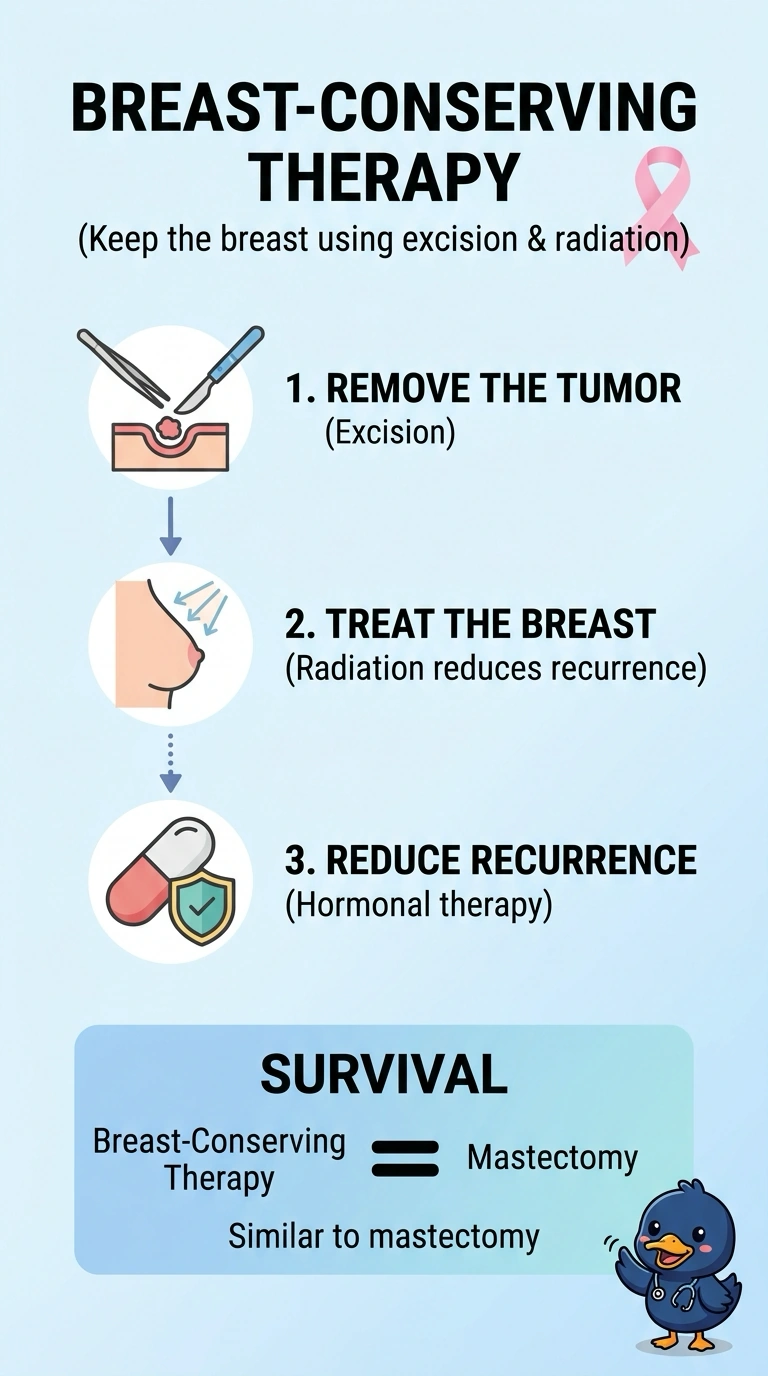
Lumpectomy removes the tumor, and whole-breast radiation helps prevent it from returning—like adding a safety net after surgery. For hormone-responsive disease, hormonal therapy can lower recurrence risk further, while breast-conserving therapy offers survival similar to mastectomy and lets you keep your breast.
Full Explanation
For appropriately selected patients with early breast cancer, breast-conserving therapy—lumpectomy followed by whole-breast radiation—offers survival similar to mastectomy. Radiation reduces the risk of recurrence in the conserved breast compared with lumpectomy alone, although selected patients may be candidates for radiation omission after individualized assessment. For hormone-responsive disease, adjuvant hormonal therapy is commonly recommended to reduce recurrence risk; nodal status alone does not determine whether it is appropriate. Treatment recommendations depend on factors including tumor characteristics, margins, patient health and preferences. The tested concept is that breast conservation with radiation can provide survival comparable to mastectomy, with systemic therapy considered according to the tumor and patient.