
A patient with limited health literacy is starting a course of breast radiotherapy and nods politely whenever staff walk through the daily routine. Before the first fraction, the therapist needs solid evidence that the patient has actually processed the routine rather than just agreeing to it. Which communication method best verifies the patient's understanding?
Select an answer to reveal the explanation.
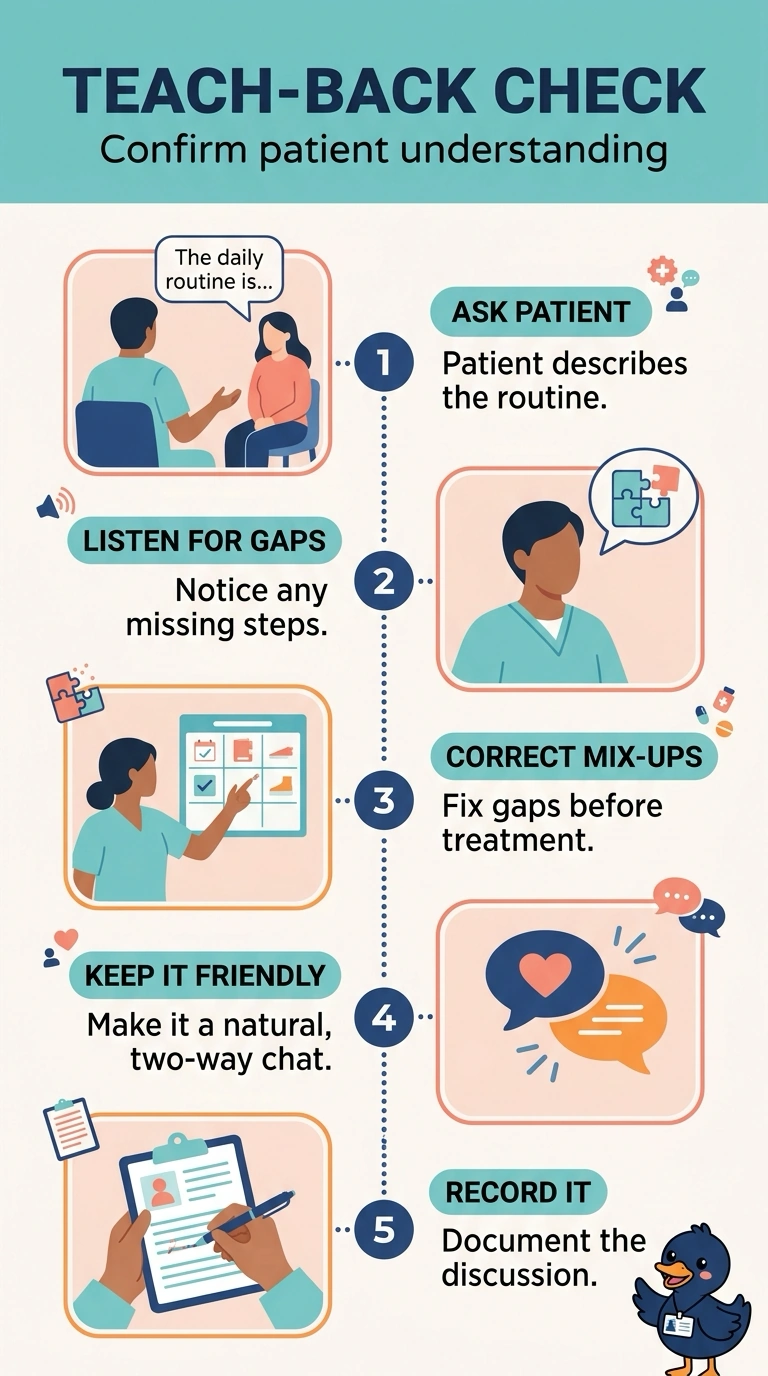
Short Explanation
A polite nod doesn’t confirm that you’ve understood, so you’re asked to explain the daily routine in your own words and the therapist fills in any gaps. Teach-back is like repeating a safety checklist before using a machine.
Full Explanation
Teach-back works by asking a patient to restate the routine, which gives the therapist an opportunity to identify misunderstandings before treatment starts. When the steps come back in the patient's own words, gaps, mixed-up order, and unfamiliar terms may surface, and the therapist can clarify them while the information is relevant. Supplying a printed handout alone relies on written material, which assumes the page gets read and understood. Asking the patient to say that everything is clear relies on agreement, which may not show whether the details were understood. Waiting until the second week delays the check until after early treatments. Teach-back is a confirmation step rather than a test, so keep the tone collaborative and never imply the patient failed. A practical check is to ask the patient to walk you through the first visit from arrival to departure and note anything left out.