
A monthly constancy check on the treatment machine returns an ionization-chamber reading outside the tolerance listed in the department QA manual, and afternoon treatments begin in an hour. The therapist must decide what to record and who to tell. Which action correctly evaluates and documents this out-of-tolerance QA result?
Select an answer to reveal the explanation.
Short Explanation
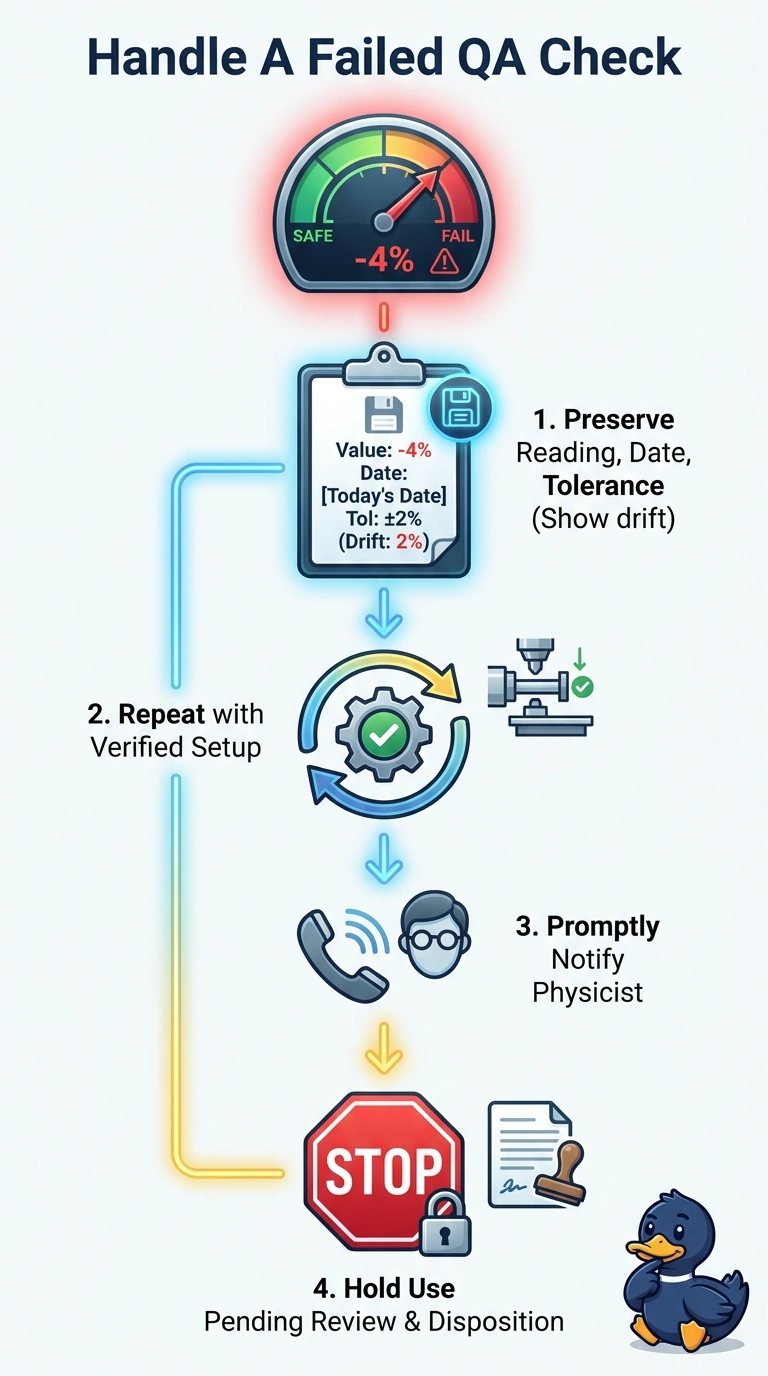
Treat the first reading like a warning light: keep the original value, date, and tolerance in your paper trail, then repeat the check with a verified setup. Promptly tell the physicist and hold the machine pending review; don’t use it until the review is complete.
Full Explanation
The correct action preserves the original out-of-tolerance result and its context, then checks for a setup or measurement error using a verified repeat. Promptly notifying the physicist and holding the machine pending review ensure that the finding is assessed before the machine is used again; a normal repeat alone does not clear the initial failure. Allowing use as soon as a repeat is in tolerance bypasses the required review, even when the original result is retained and the physicist is notified. Holding use and preserving the failed result, but waiting until the end-of-day QA report to notify the physicist, delays assessment when treatments are due in an hour. Prompt notification and holding use are appropriate, but documenting only the repeat and omitting the initial reading removes evidence of the out-of-tolerance event and leaves an incomplete record. Exam caveat: follow the department’s specified tolerance, repeat procedure, and escalation pathway rather than assuming a repeat supersedes a failed result. Practical check: verify that the QA log retains the initial and repeat readings, date, tolerance comparison, notification, and disposition authorized by the physicist.