
In the nuclear medicine hot lab, an unshielded multi-dose vial on the prep counter measures 60 mR per hour at 30 cm, and the survey at the lab doorway reads the same level. The adjoining corridor carries visitors and clerical staff all day. Which posting and survey routine correctly matches this lab's measured radiation level?
Select an answer to reveal the explanation.
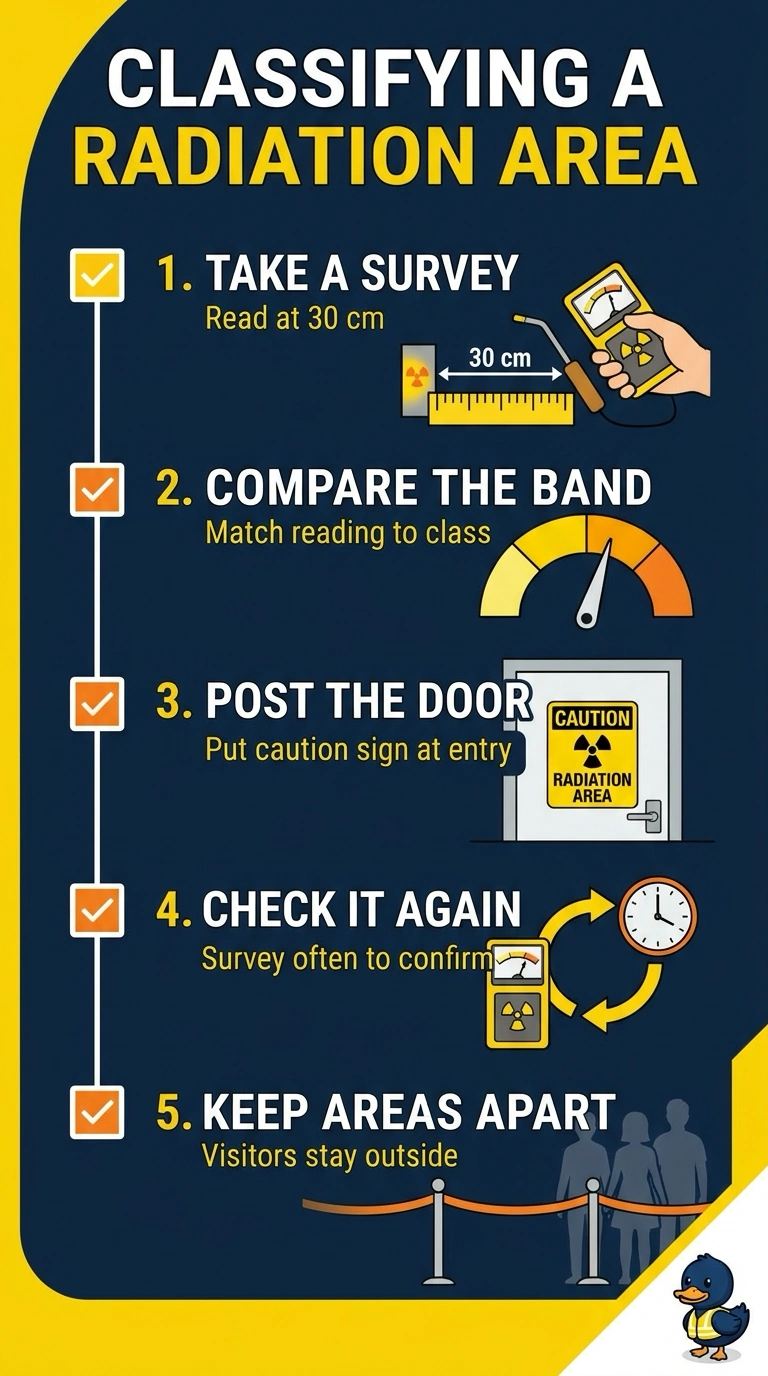
Short Explanation
You classified the space from what the survey actually measured, which is exactly how area classification works. A dose rate in that band needs a clear warning at the boundary plus regular checks. Neither wipes nor a live screen replaces the posting you're required to hang at the door.
Full Explanation
Classification follows the measured radiation level at the boundary rather than the material involved, so a doorway reading of 60 mR per hour sits below the threshold for a high radiation area while still exceeding the level that makes a radiation area posting necessary, and posting the entrance tells anyone at the boundary what exists just inside. Routine surveys then confirm the level has not climbed between checks, the combination the rules expect for an area controlled for external dose. Treating the space as a high radiation area over-classifies it and pulls in access controls and heightened monitoring that a level below that threshold does not require; wiping for contamination addresses surface spread, a different hazard than the penetrating dose a survey meter reports; and a fixed monitor plus a directional sign leaves the boundary without the caution posting, so a person entering gets no clear warning. Exam caveat: thresholds are quoted at a stated distance, so note whether the reading was taken at 30 cm or at one meter before comparing it. Practical check: record the doorway dose rate first, then match it to your facility's area thresholds.