
During a head and neck setup, a patient suddenly reports an itchy throat and chest tightness, and the therapist hears stridor with each breath. The therapist has stopped the beam and entered the vault alone. Which response best manages this suspected anaphylactic reaction?
Select an answer to reveal the explanation.
Short Explanation
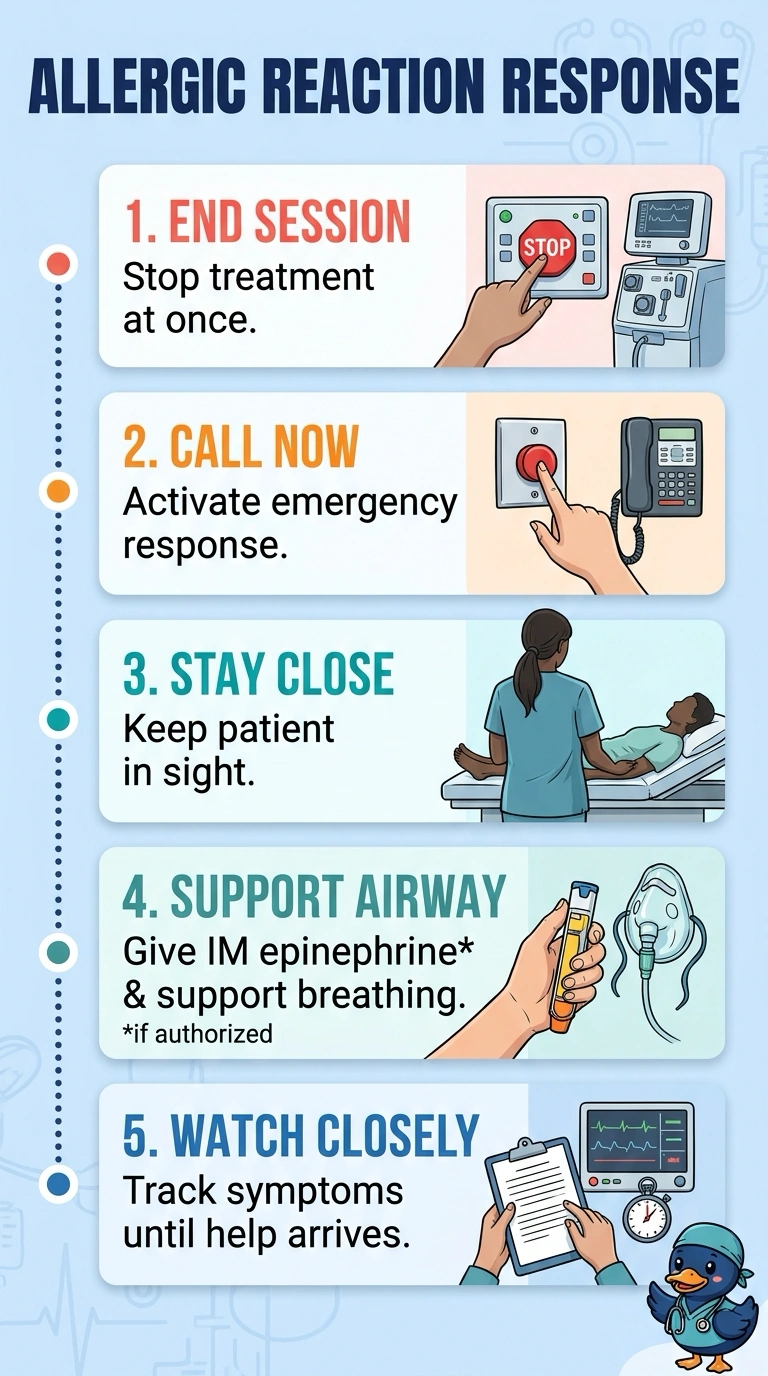
Stridor is your smoke alarm for an airway emergency, so you don’t wait and see. Activate the emergency response, give IM epinephrine if your protocol authorizes it, and stay with the patient to support their airway and circulation.
Full Explanation
Stridor with throat itching and chest tightness suggests anaphylaxis with evolving airway compromise, so your response must be immediate. Activate the emergency response, give IM epinephrine promptly if your protocol authorizes you, and stay with the patient to support airway and circulation. Reassurance and continuous observation are helpful, but reassurance and observation without explicit airway and circulatory support may miss deterioration and do not address it. Calling the attending physician for urgent assessment is appropriate, but that call does not replace activating the emergency response and mobilizing the broader team. Activating the emergency response and supporting the patient while an authorized clinician assesses the reaction may seem cautious, but waiting for that assessment before giving indicated epinephrine can delay first-line treatment during a rapidly worsening reaction. Exam caveat: follow local authorization and emergency protocols; do not let uncertainty about your role or paperwork delay activating help or seeking an authorized responder. Practical check: after stopping treatment, call for emergency assistance, state the suspected anaphylaxis and your location, and confirm that epinephrine and airway support are being brought while you remain with the patient.