
A patient's sibling waits at the counter and asks how the daily treatments and the skin reaction are going, saying the patient has already told them everything. You must reply in a way that follows the ARRT Standards of Ethics and protects the patient's privacy. Which response best applies the confidentiality principle of the ARRT Standards of Ethics?
Select an answer to reveal the explanation.
Short Explanation
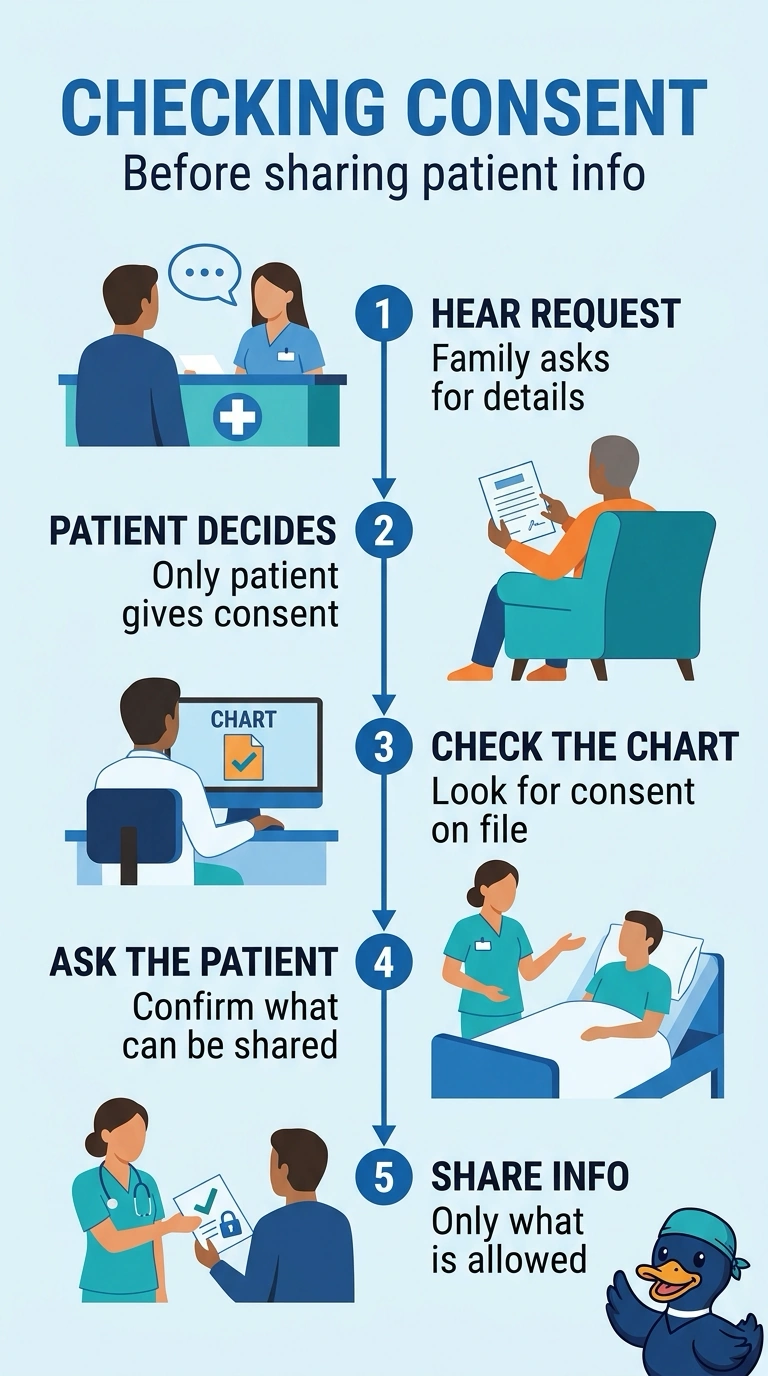
The Standards of Ethics put the patient's control of their own information ahead of a family member's curiosity. Checking authorization protects you even when the story sounds completely convincing, so it's worth the extra minute. That consent check keeps the conversation on solid ground.
Full Explanation
Authorization is the hinge of the confidentiality expectation: patient information is released only with the patient's permission, and that permission is confirmed rather than assumed from a warm relationship with the family. The ARRT Standards of Ethics expect you to protect information entrusted to you in the course of your work, and that duty applies at the front counter as much as in the treatment room. Verifying the authorization on file shows that the sibling is entitled to the details, and it keeps you accurate with both the patient and the person asking. Partial disclosure fails because trimming dose and response still releases protected content without documented consent, so the boundary has already been crossed. Treating an emergency contact listing as permission fails because that field only says who to call in a crisis, and it says nothing about which topics the patient approved. Blanket refusal fails because it denies information to someone the patient may have formally approved, ignoring the respect and cooperation owed under the standards. Expect the exam trigger to be whether permission was confirmed, because that phrase separates the best response from the plausible ones. In practice, look for the authorization in the chart before you say anything.