
During a break in a pelvic fraction, a patient of childbearing age who received scatter dose to the ovaries asks whether any injury could be passed on to children she has later. Which category of radiation effect does this question describe?
Select an answer to reveal the explanation.
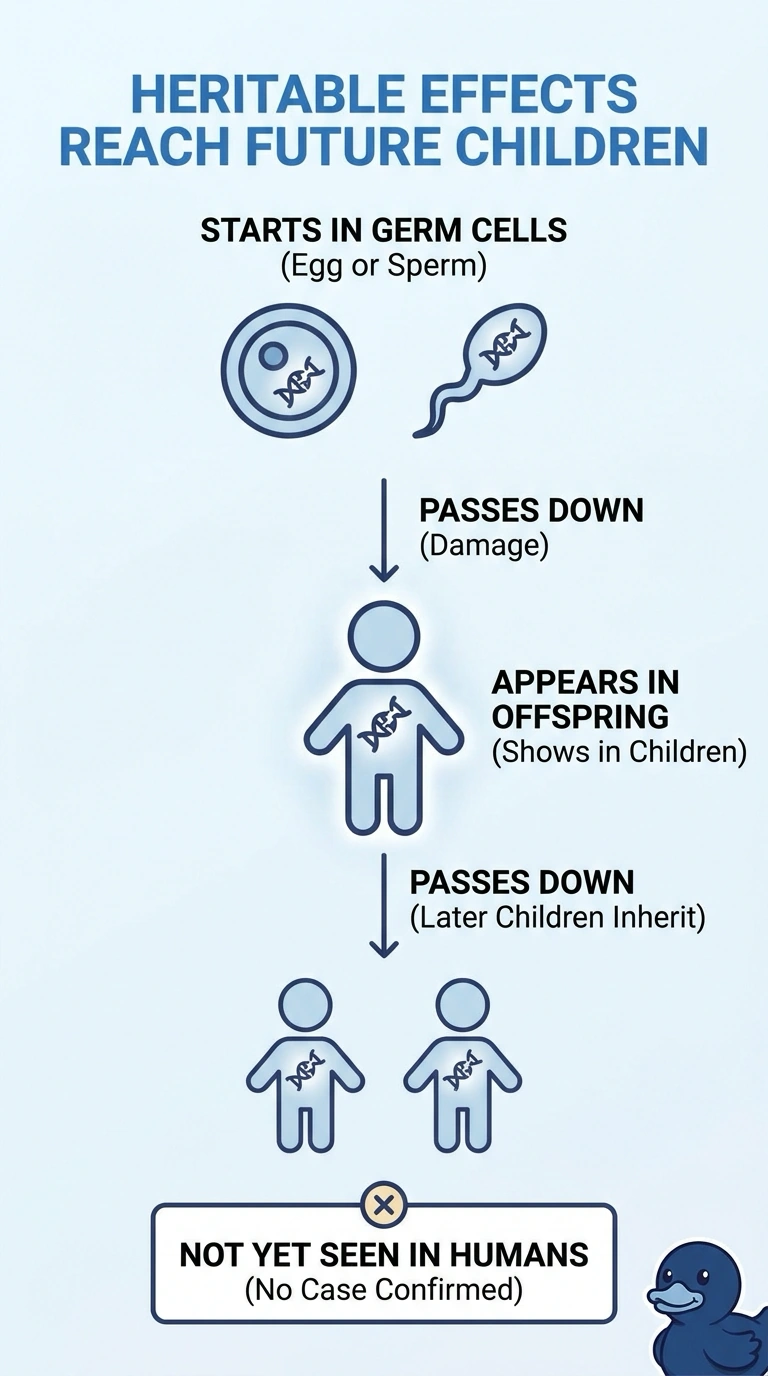
Short Explanation
When you’re asked whether radiation injury could affect future children, you’re thinking about heritable effects, which involve reproductive cells rather than injury limited to the exposed person. Somatic effects, carcinogenic effects, and acute effects describe outcomes in the exposed person, so they don’t address inheritance.
Full Explanation
Heritable effects require damage in a reproductive cell, so an egg or sperm carries a genetic change into a person who was never exposed; this inheritance pathway is what defines the category. Somatic effects stay with the exposed individual and may appear as changes in that person’s body, so they do not describe injury passed to future children. Carcinogenic effects are a specific outcome in which a new cancer develops in the irradiated person, concerning that person’s own future health rather than the health of their children. Acute effects involve bone marrow or intestinal injury that appears days after a large dose, so the timing and the exposed person’s injury—not inheritance—define them. An exam caveat is that no radiation-related heritable effect has been confirmed in humans, although animal studies show mutations at high doses. As a practical check, confirm pregnancy status, document the conversation, and describe the risk to future children as theoretical rather than established.