
While a planning CT is running with IV contrast, a patient develops widespread hives, a hoarse voice, and an oxygen saturation of 89% two minutes after the injection starts; the line is still infusing, the emergency cart is in the room, and the physician is down the hall. Which response best manages the reaction and communicates the critical findings?
Select an answer to reveal the explanation.
Short Explanation
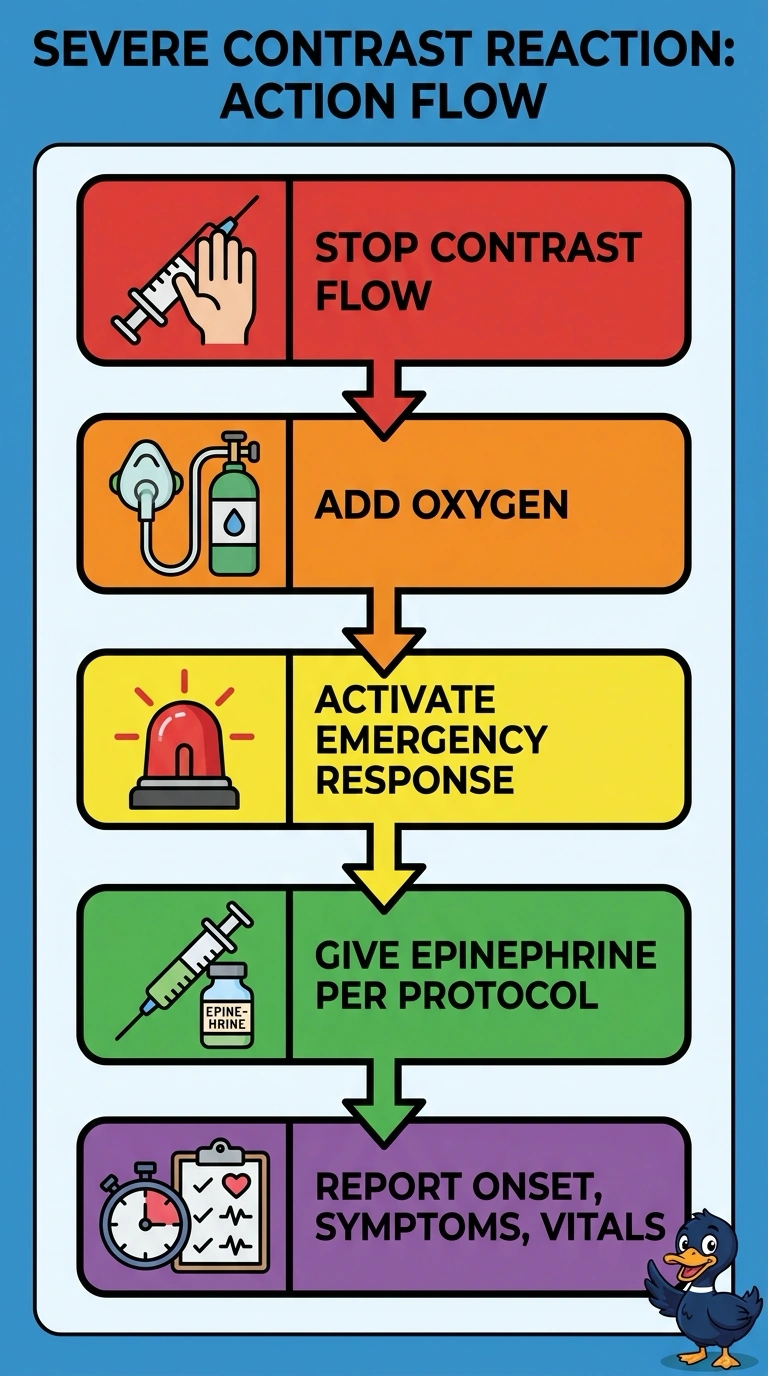
You’re right to treat this as an emergency: stop the contrast, give oxygen, activate the emergency response, and administer IM epinephrine per protocol. Report when it started, the symptoms, and your patient’s vital signs so the team can assess the reaction’s severity and progression.
Full Explanation
The response that stops the contrast, provides oxygen, activates the emergency response, gives IM epinephrine per protocol, and reports onset time, symptoms, and vital signs is correct. Widespread hives, hoarseness, and an oxygen saturation of 89% shortly after contrast begins indicate potentially life-threatening anaphylaxis, requiring prompt treatment and clear communication. Stopping the infusion, giving oxygen and epinephrine, and activating the emergency response but omitting onset time leaves out a key datum for judging the reaction’s timing and course. Calling the physician directly while providing treatment and a complete report does not activate the emergency response; with airway symptoms and hypoxemia, relying on one clinician can delay additional support. Omitting vital signs while reporting onset time and symptoms with treatment and escalation withholds objective severity information needed for triage and ongoing management. Exam caveat: antihistamines may help skin symptoms but do not replace IM epinephrine as first-line treatment for anaphylaxis and should not delay it. Practical check: state when contrast started and symptoms began, give current vital signs and any changes, and confirm that emergency responders have been activated.