
On your lunch break in the department's shared cafeteria, you hear a therapist describe a patient's diagnosis, treatment site, and unusual daily setup to two coworkers from another unit. The therapist mentions no patient name and says that keeps the discussion private. Which response best applies the ARRT Standards of Ethics to this conversation?
Select an answer to reveal the explanation.
Short Explanation
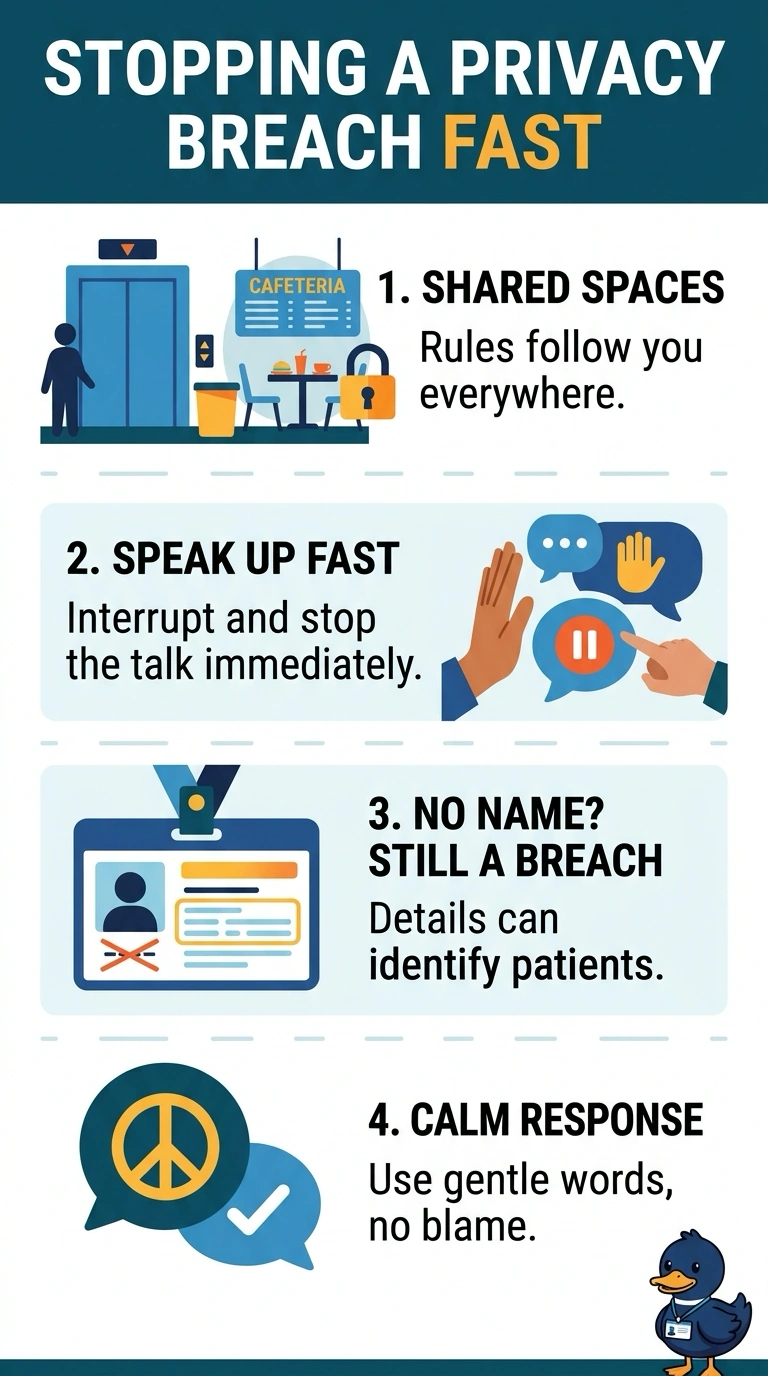
You did the part that matters most first: stopping the disclosure where it's happening, which is what the Standards of Ethics expect. A diagnosis plus a treatment site can point straight to one person even with no name attached. Once others have heard it, it's a disclosure whether or not a name was used.
Full Explanation
The ARRT Standards of Ethics call on you to protect confidential information and to act in ways that preserve the profession's public trust, so the right move is to correct the breach where it is happening. Speaking up immediately stops further disclosure and shows the group that identifiable case details are off limits in shared spaces, which is the honest, professional response the standards ask for. Waiting until later to raise it delays that correction and lets the conversation continue; escalating straight to a privacy officer treats a staff conversation as a reportable incident and skips the first, simplest control; asking a supervisor to cover it at a future staff meeting postpones the fix to a date when nobody may recall what was said. The ethical principle at work is that confidentiality follows the information itself, not just the name attached to it. Exam caveat: the standards emphasize protecting confidentiality and acting with integrity, so a response that both stops the leak and stays professional is usually the keyed answer. Practical check: before you speak, ask whether the patient would be comfortable overhearing you.