
During a CT simulation with iodinated contrast, a patient on the table develops widespread hives, hoarse speech, and audible wheeze within minutes. The treatment team is present and the physician is down the hall. Which action takes priority in managing this allergic reaction?
Select an answer to reveal the explanation.
Short Explanation
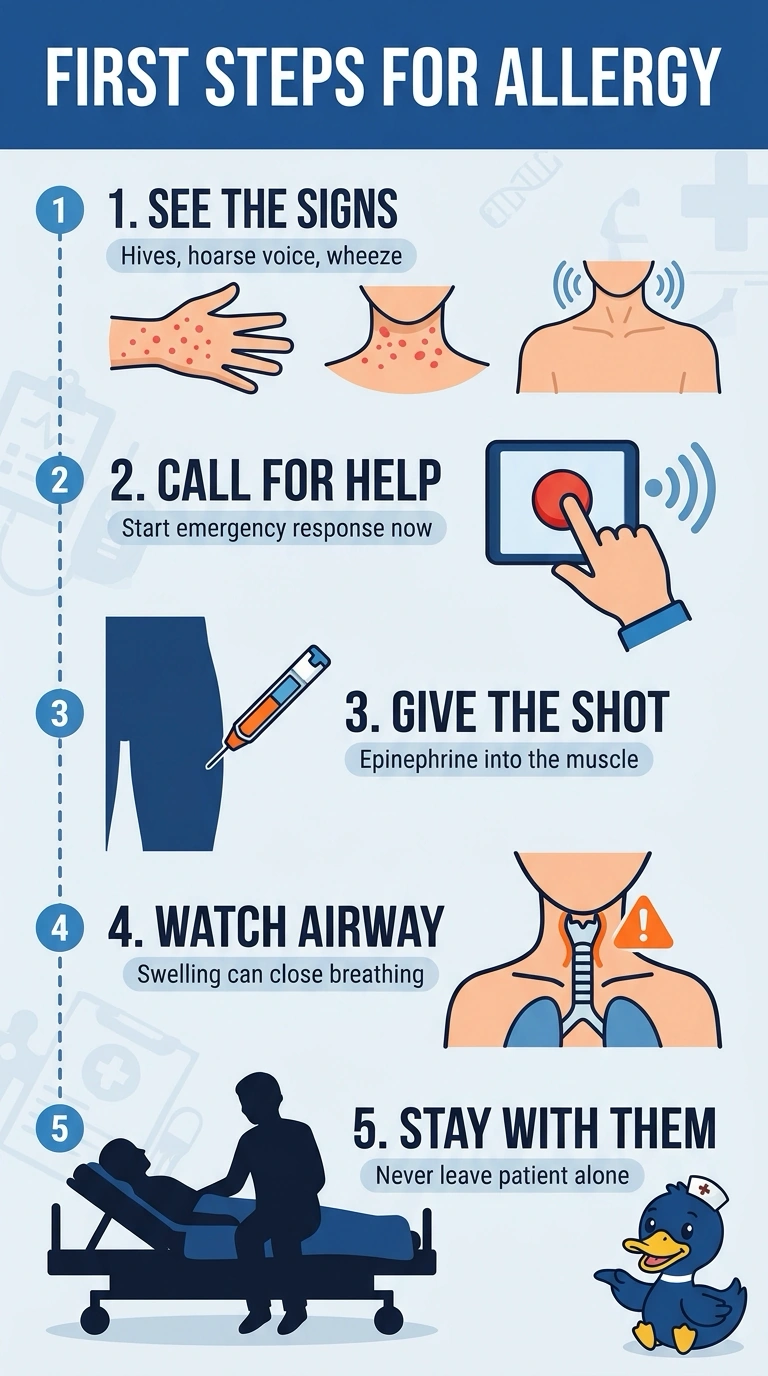
When you hear hoarseness and wheezing, treat them as red flags that the reaction may threaten the airway. Like a fire alarm, they call for immediate action: activate the emergency response and give intramuscular epinephrine without delay, while arranging supportive care.
Full Explanation
Widespread hives with hoarse speech and wheeze after contrast administration indicate a severe allergic-like reaction with possible airway compromise. Prompt intramuscular epinephrine is first-line treatment; activate the emergency response and provide supportive care, including airway and breathing support, oxygen as indicated, and monitoring. Positioning the patient supine with legs elevated can support circulation when tolerated, but this patient’s breathing symptoms make positioning according to respiratory status important, and positioning does not replace epinephrine. Antihistamines may help skin symptoms but do not treat airway compromise or shock; corticosteroids are not a substitute for prompt epinephrine. Obtain vital signs and notify the physician as part of the response, but do not delay epinephrine to do so. Follow the facility’s emergency protocol and continue monitoring until the patient is transferred to appropriate emergency care.