
Midway through a chest fraction, the patient on the table turns pale, sweats heavily, and reports feeling faint; the physician is down the hall and the emergency cart is outside the vault. Which immediate response best manages the deteriorating patient while help is on the way?
Select an answer to reveal the explanation.
Short Explanation
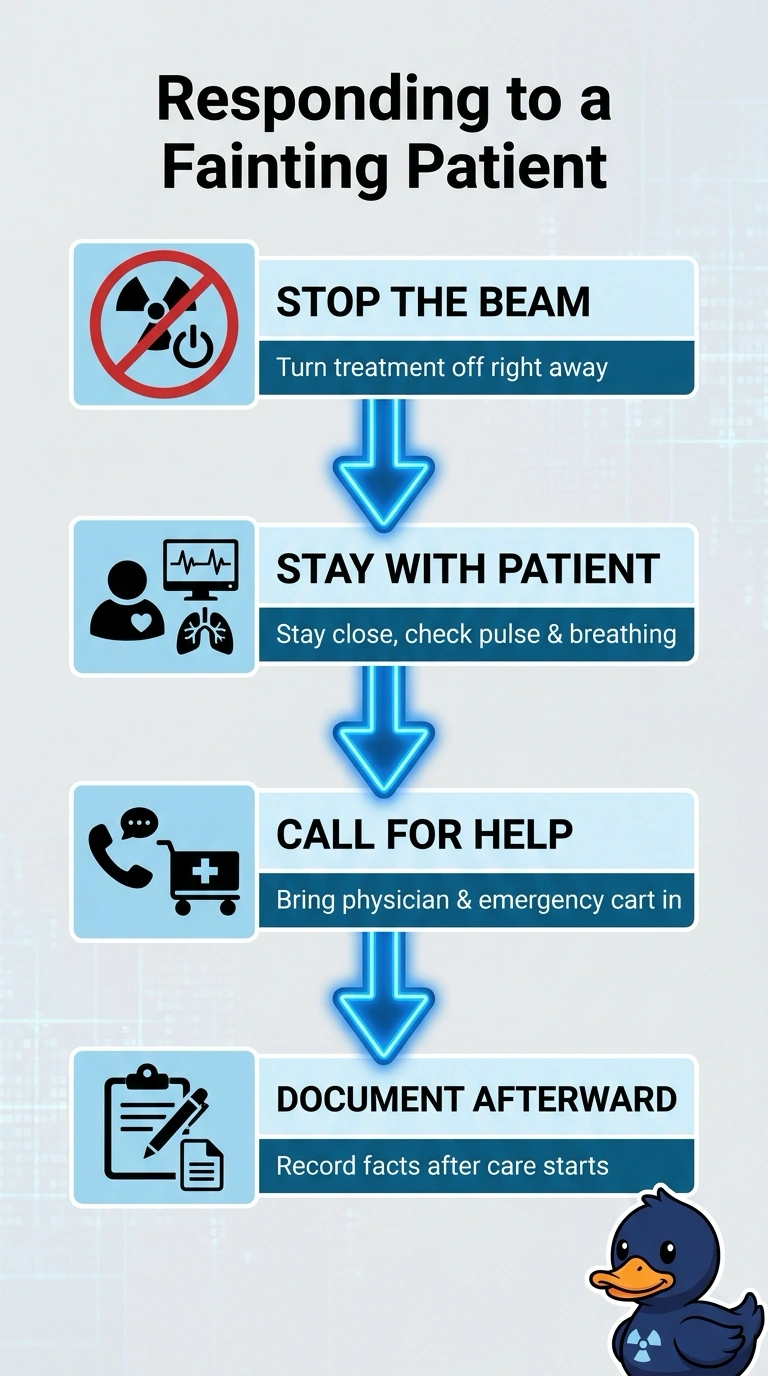
Stop the beam, stay with your patient, check their vital signs, and call the physician and emergency cart. You’re the safety net at the bedside—your assessment and call for help can happen in parallel.
Full Explanation
A patient who is pale, clammy, and faint on the couch may have reduced cerebral perfusion, so stop the beam and keep attention on the patient while summoning help. Checking responsiveness, breathing, pulse, and blood pressure at the bedside gives the arriving physician useful information, and calling the physician and emergency cart while remaining with the patient lets assessment and communication proceed in parallel. Reassurance without assessment may miss signs of deterioration. Recording the episode for the next visit delays escalation for someone who may be getting worse. Stepping out to the console to call for help leaves the patient unattended. Stop the beam, summon help, assess the patient, and document afterward. Make sure someone remains with the patient while help is being called.