
A patient in the fourth week of treatment to the chest has weeping, tender skin in the fold beneath the breast where two skin surfaces rub together. The course must continue daily, and the team also needs to know when this finding should reach the nurse. Which care plan best manages this treatment side effect?
Select an answer to reveal the explanation.
Short Explanation
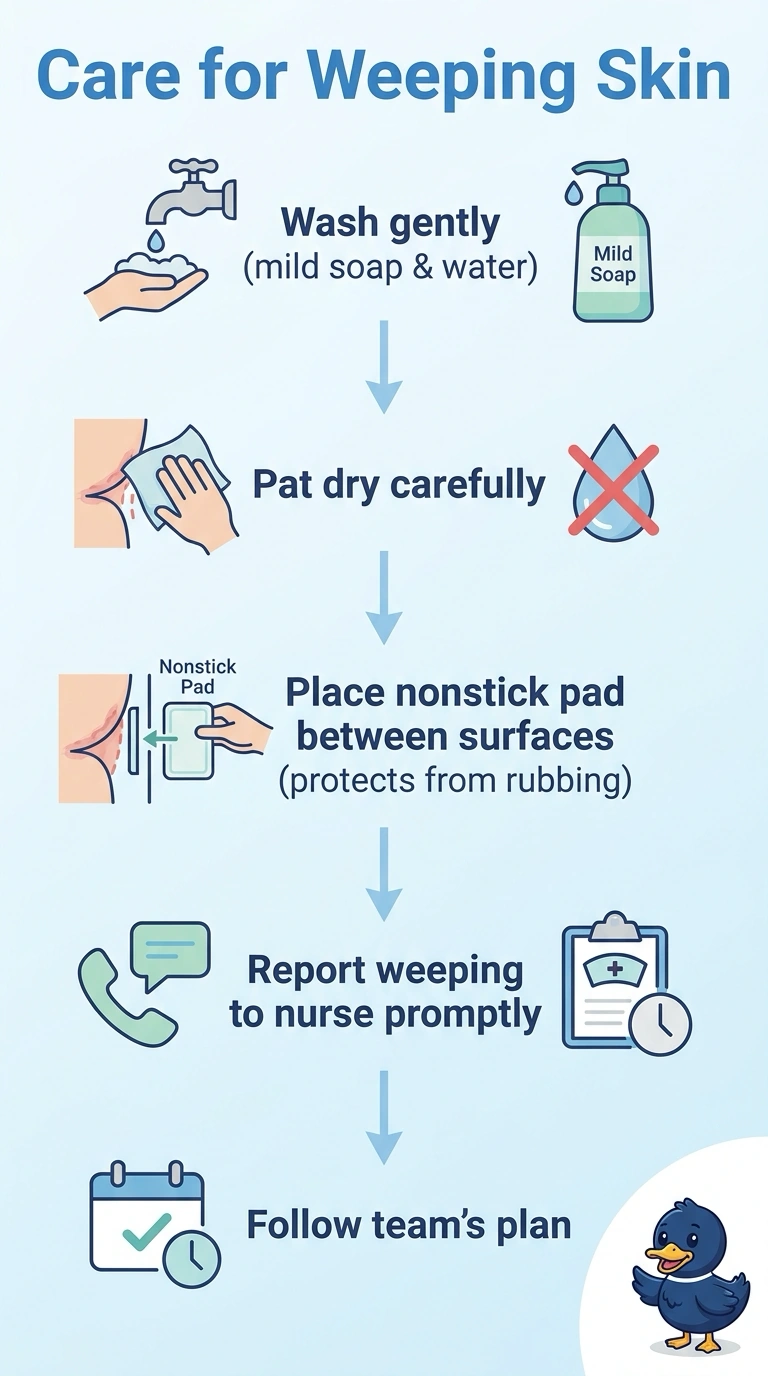
Gently wash the fold, pat it dry, and place a nonstick pad between the skin surfaces to reduce rubbing—like adding a soft buffer where skin meets skin. Since the area is weeping, report it to the nurse promptly so your care team can assess it and recommend next steps.
Full Explanation
The correct plan protects fragile, moist skin while allowing the surfaces in the fold to separate: gentle washing and patting dry limit further trauma, and a nonstick pad helps absorb moisture and reduce friction. Promptly telling the nurse matters because weeping skin during chest treatment may represent moist desquamation and needs assessment and guidance on dressing and skin care. A brief treatment pause can sometimes be considered for significant skin reactions, but it is not the plan here: the course is to continue daily, and a pause should not be substituted for that requirement. A prescribed barrier ointment may be appropriate in some settings, yet applying it alone does not provide the requested physical separation of the rubbing surfaces; products should also be used according to the treatment team’s instructions. Recording the finding for a later review delays the required prompt notification, even though the cleansing and pad are appropriate. Exam caveat: moist desquamation in a skin fold is not managed identically in every clinic; dressing choices and any treatment changes depend on local protocol and clinician assessment. Practical check: confirm that the nurse has been notified, ask which dressing or topical product is approved, and verify that the fold is gently cleaned and kept dry without disrupting the daily treatment schedule.