
Mid-fraction, the therapists stop the beam when a patient with dementia becomes agitated and starts thrashing their arms. One therapist holds the patient's arms at their sides until a second staff member arrives, and the thermoplastic mask stays secured as always. Which statement correctly distinguishes restraint from immobilization in this setup?
Select an answer to reveal the explanation.
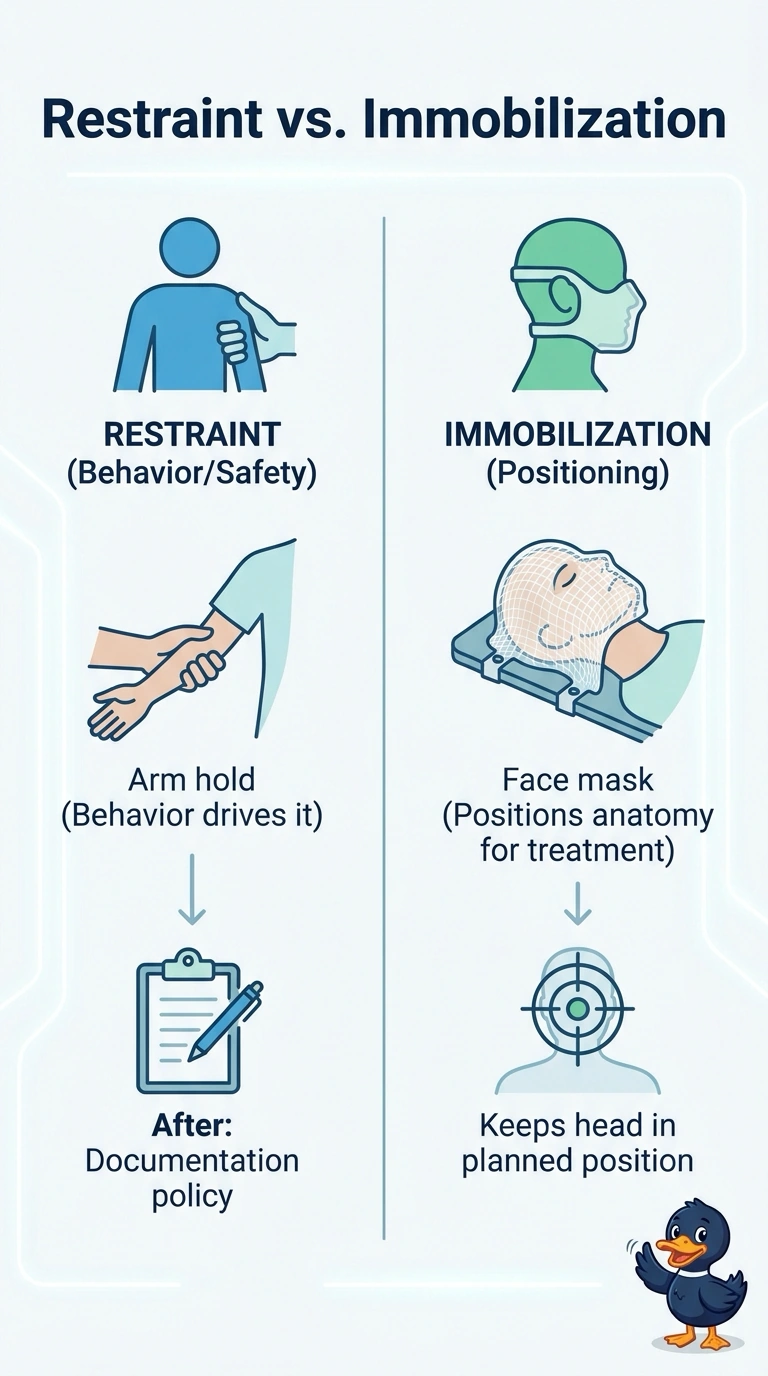
Short Explanation
The arm hold is a restraint because you’re using it to manage behavior and prevent harm; the mask is immobilization because it keeps your patient positioned for treatment. It’s the difference between stopping a risky action and keeping something steady so the work can be done accurately.
Full Explanation
The distinction between restraint and immobilization depends on the purpose and circumstances of the intervention. The arm hold is used because the patient is thrashing, so it restricts movement to manage behavior and safety and may meet the definition of a physical restraint. The thermoplastic mask is part of routine treatment positioning and keeps the head and neck in the planned position. Calling both actions immobilization ignores the reason for the arm hold; calling the mask a restraint confuses a positioning device with a behavior-management intervention. Patient objection alone does not determine whether an intervention is a restraint. Applicable restraint definitions, orders, and documentation requirements depend on the setting, law, and facility policy; follow the requirements that apply to the treatment facility.