
A patient receiving daily pelvic radiation is set up on a four-field plan whose approved record places the treatment isocenter 1.5 cm anterior to the skin mark. Today's orthogonal images show the target 0.5 cm lateral to that planned point, and a couch shift is applied. Which verification step confirms that the corrected setup now treats the planned isocenter?
Select an answer to reveal the explanation.
Short Explanation
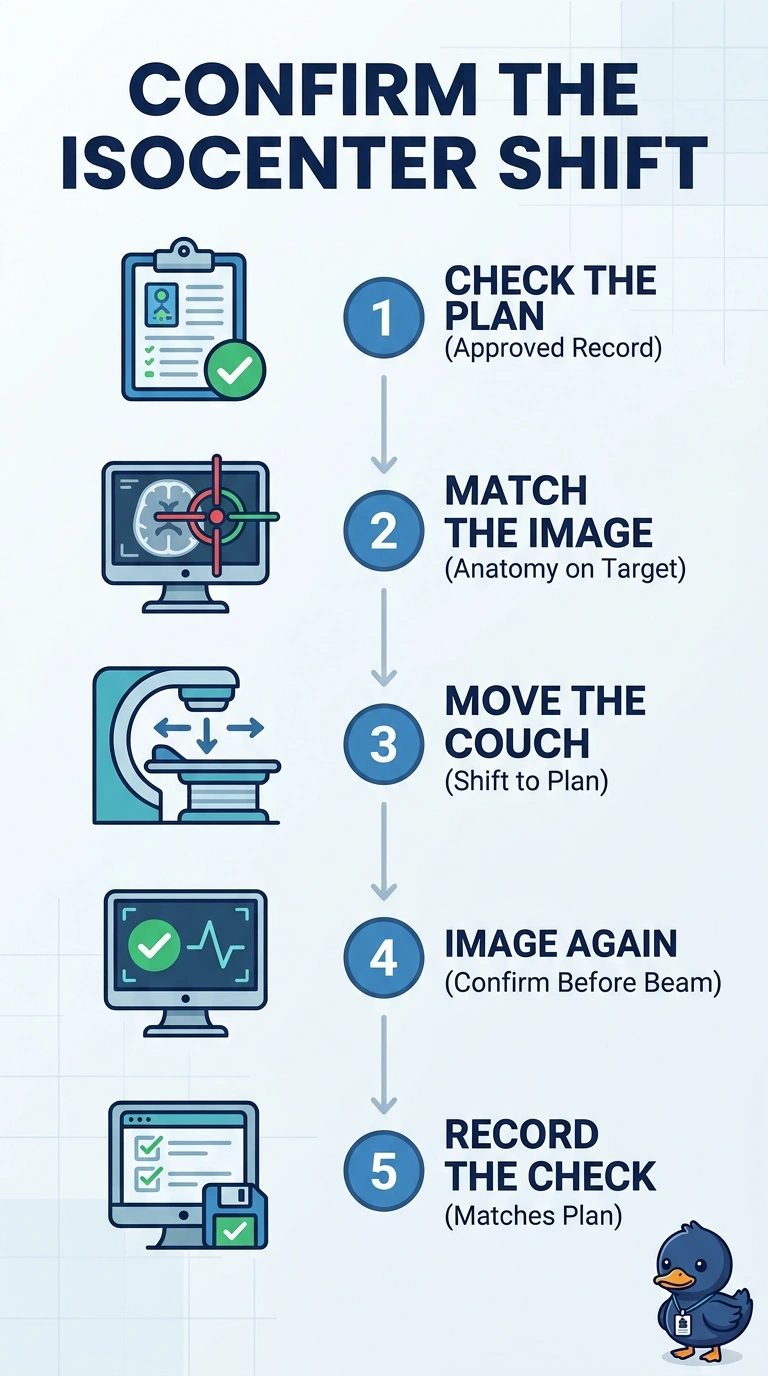
You need a fresh image after the couch shift to show that the target now matches the planned isocenter. Skin marks and setup notes can guide you, but they cannot confirm where the target is—like signing for a package you never opened.
Full Explanation
The approved plan defines the isocenter that every field aims at, and imaging after the couch shift confirms whether the target now lies on that planned point before treatment. This closes the loop by showing where the target ended up and matching it to the approved record that authorizes the dose. Aligning skin marks with wall lasers and recording the setup note checks surface references, but marks can shift or be drawn incorrectly while the target remains displaced. Measuring source-to-skin distance at the anterior mark and comparing it with simulation checks a surface distance, which can match even when the target is still off laterally. Treating the original image as confirmation of the correction relies on a picture taken before the shift and does not independently show the corrected setup. Exam caveat: departments may accept discrepancies within a specified tolerance, so know the action level used by your program. Practical check: before treatment, confirm that the recorded couch shift agrees with the approved plan and that the post-shift image places the target on the planned isocenter.