
During monthly linac QA, output constancy agrees with the previous baseline, MLC leaf positions sit within tolerance, and the isocenter lasers pass. The light field extends past the radiation field edge on both lateral sides beyond the applicable tolerance, while the longitudinal edges line up. What should the therapist do before the linac is cleared for patient treatments?
Select an answer to reveal the explanation.
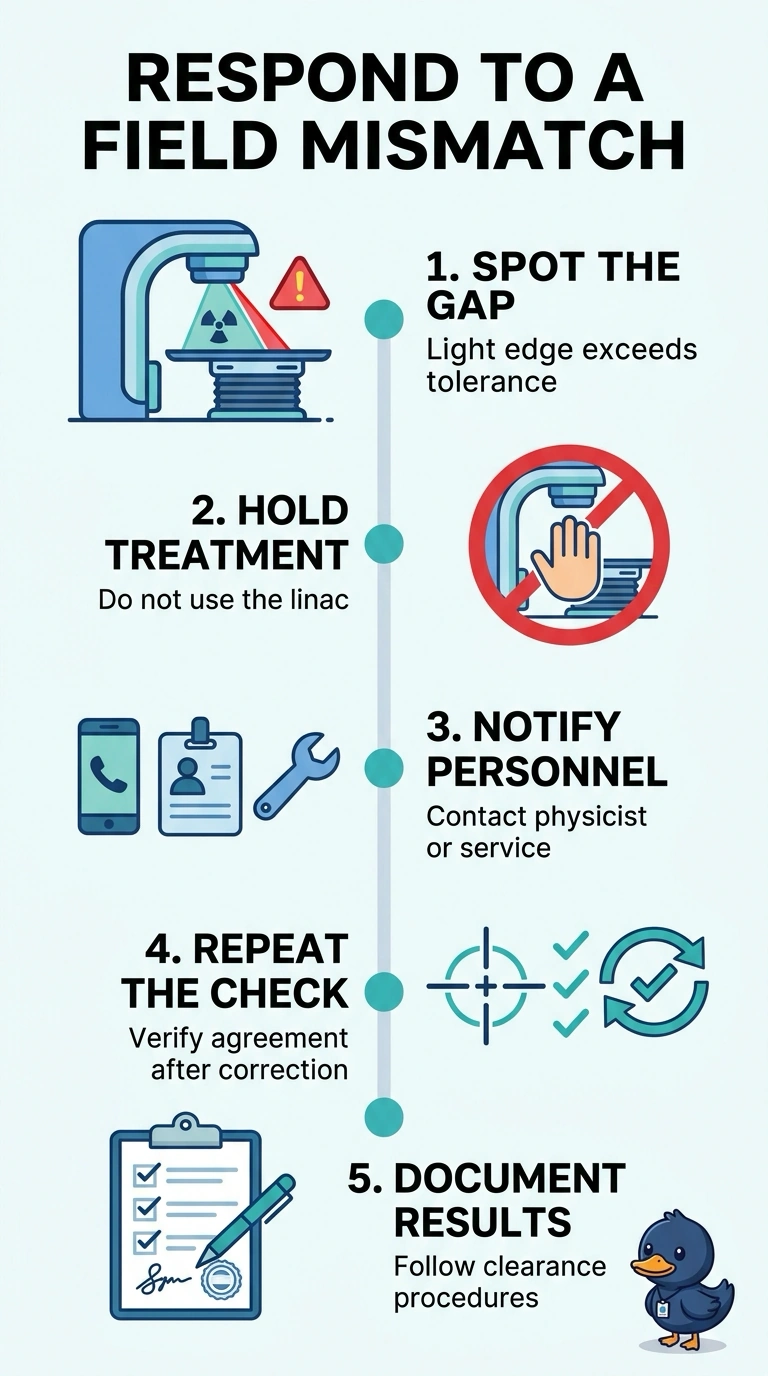
Short Explanation
Because the light field extends beyond the radiation field past tolerance, you should withhold the linac from treatment, document the discrepancy, and notify the qualified physicist or service personnel. Think of it as a warning from the equipment: don’t attempt an unauthorized adjustment; let qualified personnel assess the issue before treatment resumes.
Full Explanation
The light and radiation fields disagree beyond tolerance at both lateral edges, so this QA finding must be addressed before clinical use. Document the discrepancy, withhold the linac from treatment, and notify the qualified physicist or service personnel, who can assess the field alignment, determine any corrective work, and arrange required retesting. Agreement in output, MLC position, and lasers does not resolve this independent field-congruence failure. Continuing treatments with imaging guidance fails because imaging is not a substitute for meeting the stated QA tolerance, and it would leave an unresolved fault in clinical use. Holding the linac and contacting qualified staff while recording the finding only in the next routine QA summary fails because documentation should be timely and traceable, not deferred. Holding the linac but placing it in a routine service queue and awaiting the next scheduled review fails because it does not ensure prompt notification and assessment of the finding. Exam caveat: distinguish a light-field/radiation-field mismatch from output constancy, MLC calibration, or laser alignment; passing those checks does not clear this failure. Practical check: verify and record the applicable tolerance, measurement setup, and lateral-edge readings, then follow local escalation and return-to-service procedures after qualified personnel investigate and required QA passes.