
A thoracic plan places a large volume of lung in the high-dose region, and the patient's smoking-related lung function leaves little room for serious late injury. With the total tumor dose held constant, which fractionation strategy best protects the late-responding lung tissue?
Select an answer to reveal the explanation.
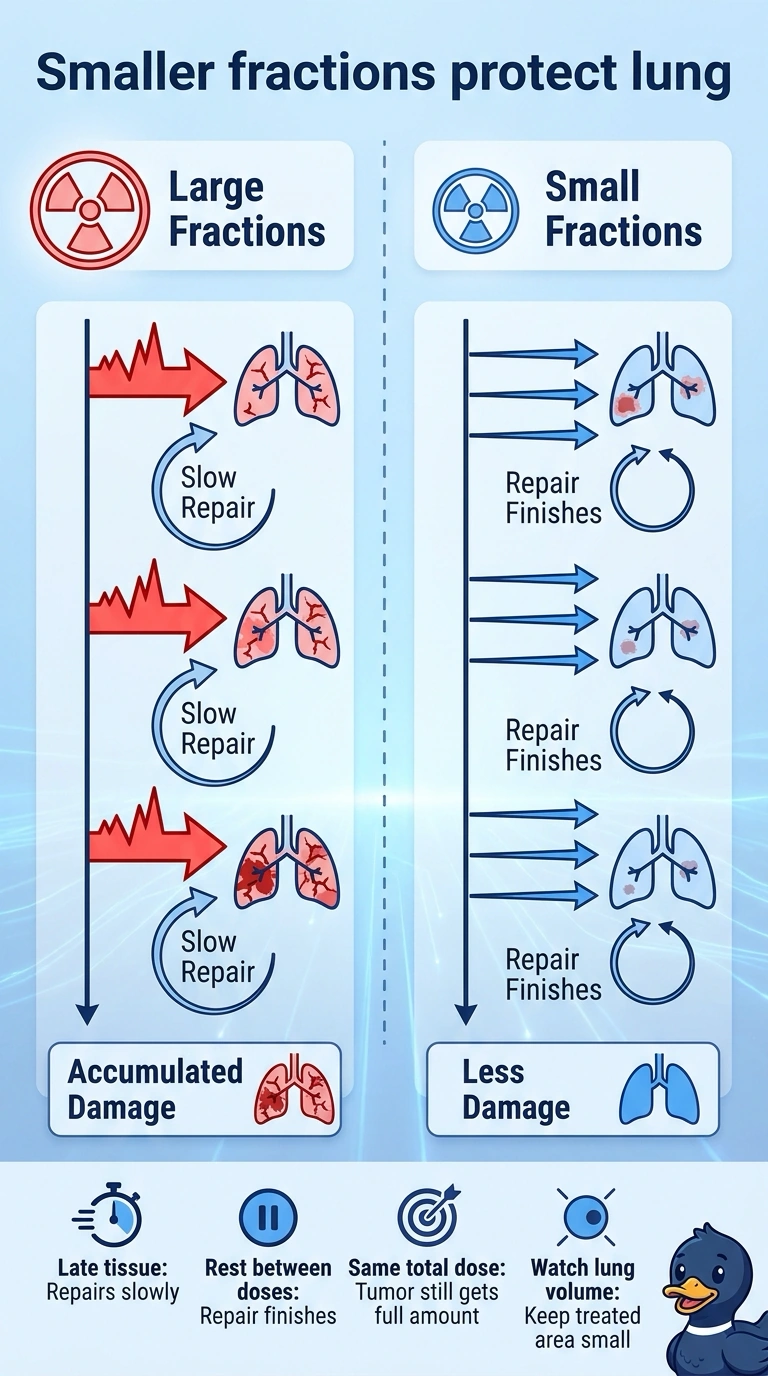
Short Explanation
You can best protect late-responding lung by splitting the same total dose into smaller, more numerous fractions, giving tissue time for repair between treatments. Moderate hypofractionation uses larger fractions, while conventional fractions or more frequent weekly treatments do not provide that same reduction in fraction size.
Full Explanation
Late injury to lung is the key concern because lung is a late-responding tissue with relatively limited tolerance for large fractions. With total dose held constant, dividing treatment into smaller, more numerous fractions allows more repair of sublethal damage in normal tissue between treatments and generally reduces late effects. Moderate hypofractionation uses fewer, larger fractions; although it can shorten treatment and may suit other settings, the larger fraction size raises late-lung injury risk. Conventional daily fractions at the usual size preserve the total dose and remain a standard approach, but they do not reduce fraction size to provide the additional late-tissue sparing sought here. Giving the usual fraction size more often each week shortens the conventional course, but a shorter calendar course is not the same as improving repair between fractions and offers no specific late-lung protection; it may reduce recovery time. Exam caveat: this comparison assumes total dose and other relevant factors are held constant; actual toxicity also depends on lung dose-volume distribution, prior treatment, and the clinical regimen. Practical check: review the lung dose-volume histogram and verify that the proposed fraction size and cumulative dose suit the patient’s pulmonary reserve.