
At the weekly review for a prostate cancer patient, the record shows a hemoglobin that has drifted down to 11.2 g/dL, normal white cell and platelet counts, normal kidney studies, and a PSA that has fallen from 14 to 5 ng/mL across the treatment course. The patient reports mild tiredness but is eating and drinking well. Which laboratory finding is most directly related to the prostate cancer burden?
Select an answer to reveal the explanation.
Short Explanation
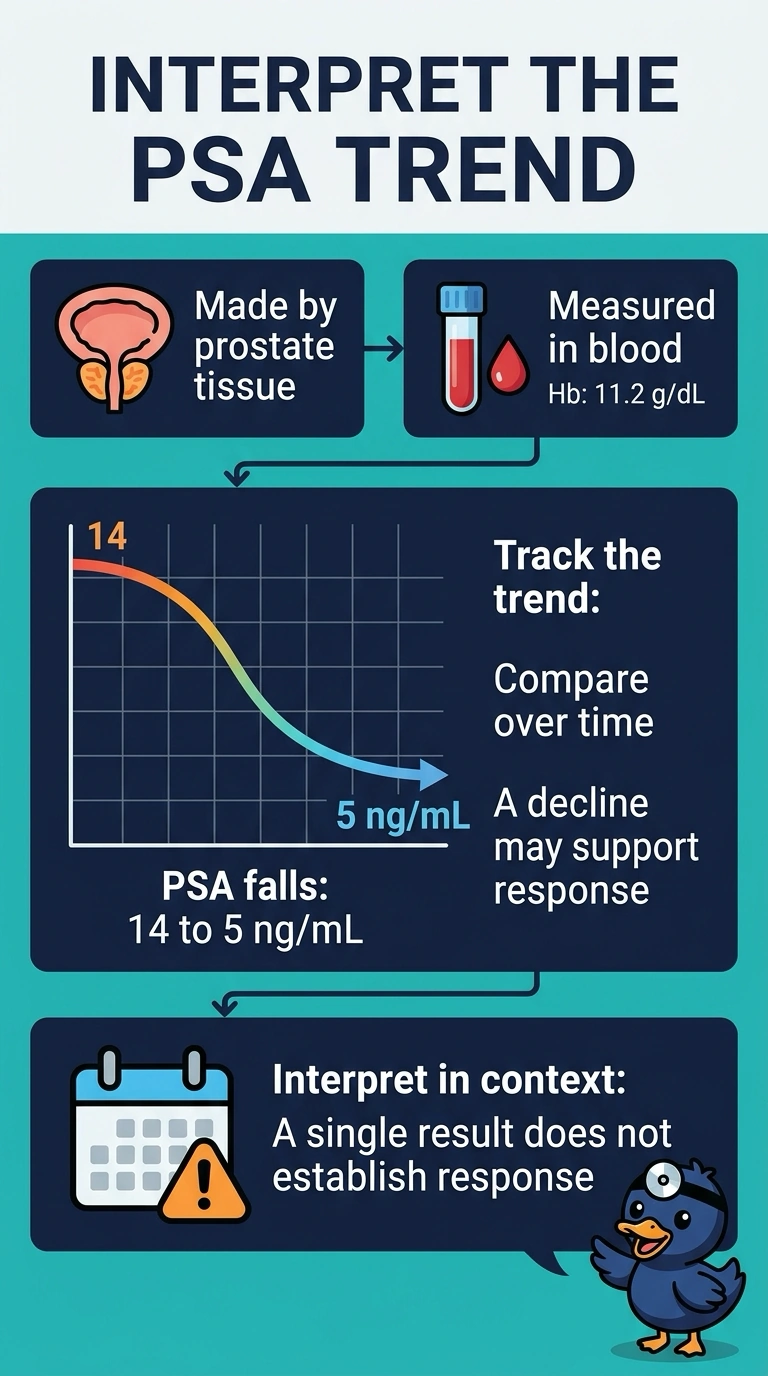
Your weekly chart answers two different questions, and only one of these values is a marker related to prostate cancer. A falling prostate-specific antigen (PSA) trend may support a response, but it must be interpreted over time; the blood counts and kidney studies do not directly measure tumor response.
Full Explanation
The falling PSA is the finding most directly related to prostate cancer burden in this record. PSA is produced by prostate tissue, and serial measurements are commonly used to monitor disease activity and response to treatment; the decrease from 14 to 5 ng/mL is consistent with a biochemical response, though it does not by itself prove that all disease has resolved. Hemoglobin is clinically useful for identifying anemia and following possible cancer- or treatment-related effects, but a mild decline is nonspecific and does not directly measure prostate tumor burden. Alkaline phosphatase can help assess bone involvement in prostate cancer, especially when skeletal metastases are suspected, but it is not among the reported results here and is not a substitute for the available disease marker. Creatinine and related renal studies can reveal urinary obstruction or impaired kidney function in advanced disease, but normal results primarily indicate preserved renal function; they do not quantify the cancer burden. Exam caveat: PSA interpretation depends on treatment context, timing, and trends, and some therapies can alter PSA independently of tumor size. Practical check: review the PSA trajectory alongside treatment dates, symptoms, examination, and imaging when indicated rather than interpreting a single value in isolation.