
A planning CT is being simulated for an abdominal target that sits against loops of small bowel, and the radiation oncologist wants the bowel lumen clearly visible on every slice for contouring. Which imaging preparation should be used before the scan to outline the bowel?
Select an answer to reveal the explanation.
Short Explanation
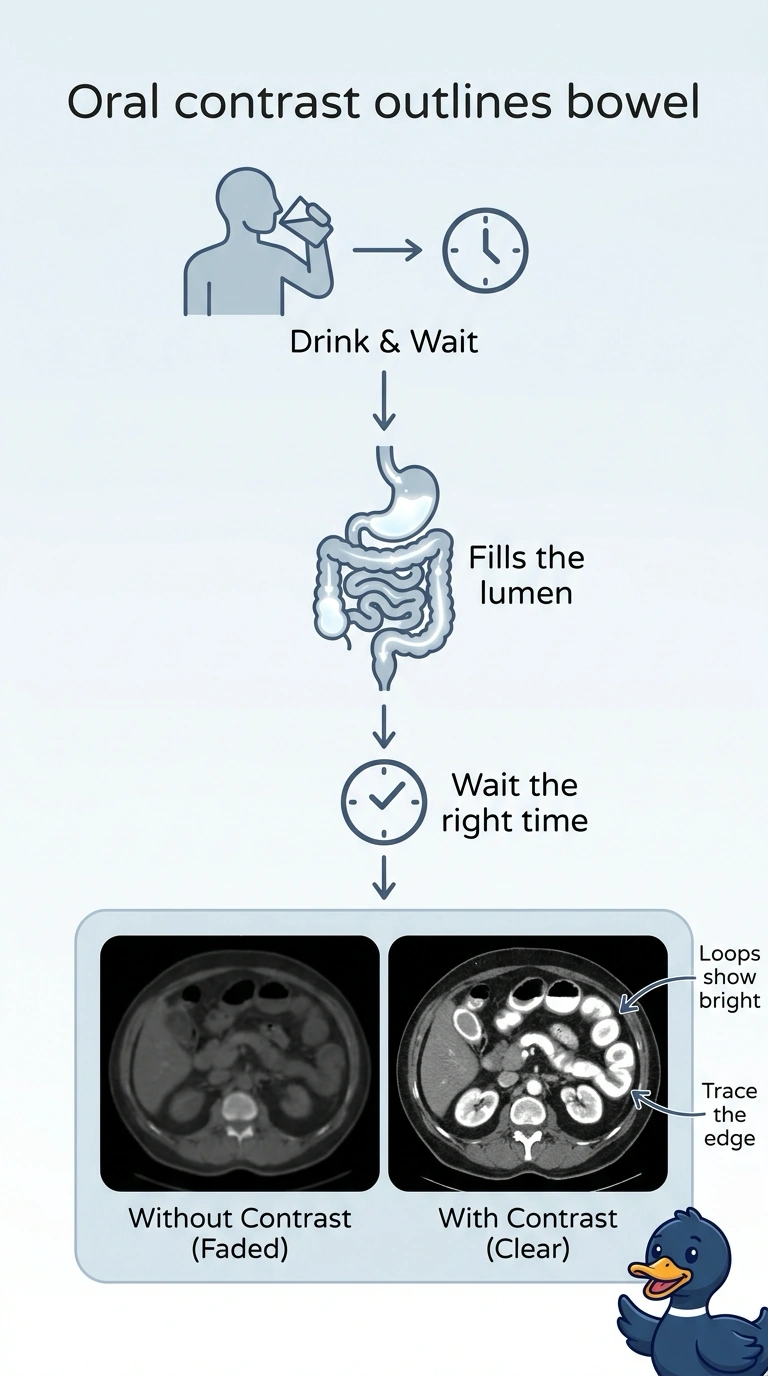
You’ll want oral contrast before the scan—it fills the small-bowel lumen and makes it stand out on each slice, like adding a bright outline for easier contouring. IV contrast highlights vessels and may enhance bowel walls, while rectal contrast fills only the rectum.
Full Explanation
Positive oral contrast can fill the bowel lumen and make it more conspicuous on CT, helping distinguish bowel contents from surrounding structures during contouring. The degree of filling and visibility varies, so it cannot be guaranteed to appear clearly on every slice. Intravenous contrast enhances blood vessels and may also enhance bowel walls, but it does not directly fill the bowel lumen. Rectal contrast fills the rectum rather than the small-bowel loops in this scenario. A full bladder can displace some pelvic bowel, but it does not outline the bowel lumen. Contrast protocols vary, and dense oral contrast can cause artifacts or affect CT numbers; follow the department's protocol and the treating team's instructions.