
A patient with known lymphoma is admitted with new leg weakness, saddle numbness, and inability to void, and MRI confirms an epidural mass compressing the spinal cord. The team wants radiation planning started today. Which reason justifies treating this spinal presentation as an emergency?
Select an answer to reveal the explanation.
Short Explanation
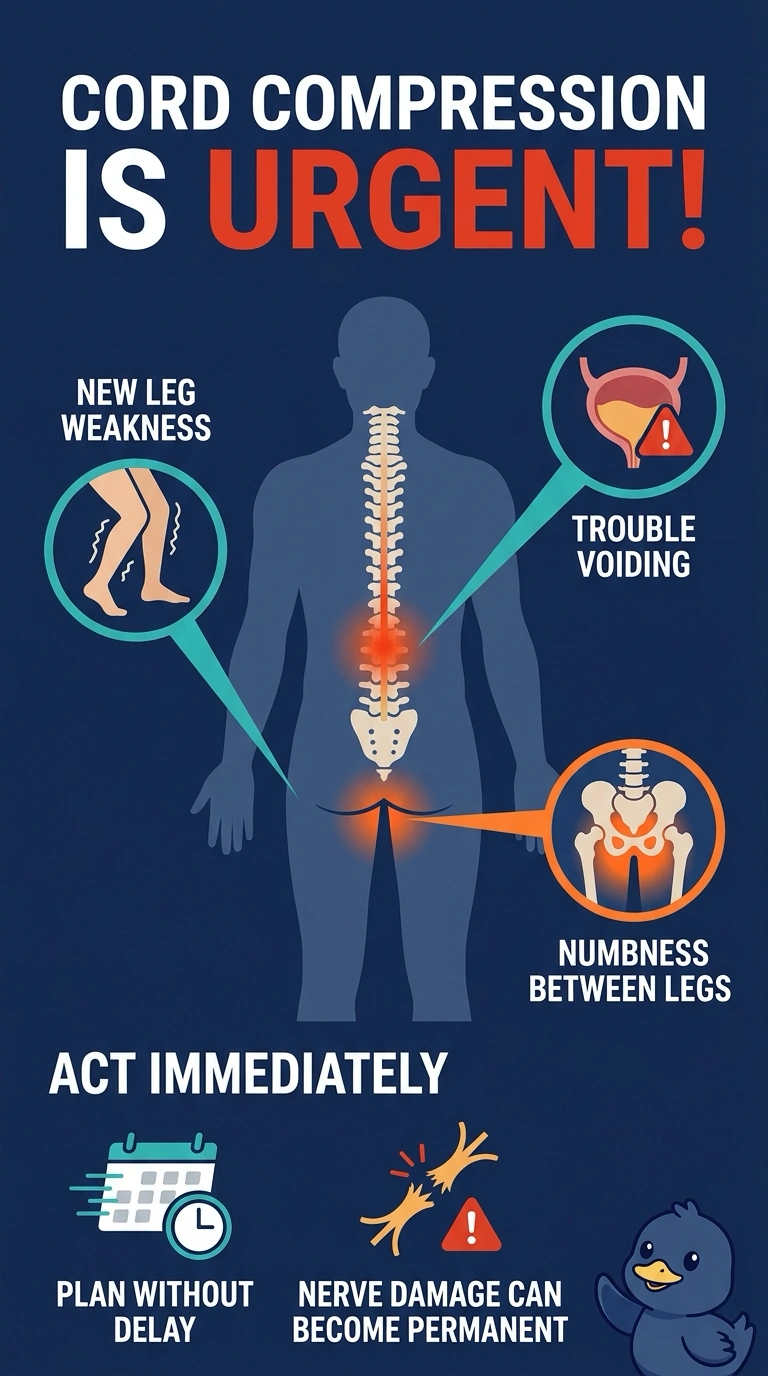
The urgency here is neurologic rather than painful, because new weakness and lost bladder control show the cord is being compressed and function is impaired. A garden hose pinned under a rock keeps losing flow until you lift the rock, and nerves behave similarly. It is the neurologic deficit that makes this an emergency requiring prompt treatment.
Full Explanation
Radiation for epidural disease becomes urgent when the cord or cauda equina is already failing, because sustained compression can cause nerve injury that may be permanent. New leg weakness, saddle sensory loss, and urinary retention are warning signs of neurologic compromise, and that is the fact driving today's planning. The stabilization rationale is a legitimate reason to hurry treatment, but no fracture, height loss, or instability is described here, so it answers a different question. The pain-relief rationale describes standard palliative intent for a symptomatic vertebral lesion, yet it ignores the deficits that make waiting unsafe. Lymphoma can involve the cerebrospinal fluid, but that does not by itself justify whole-spine radiation in this scenario; field extent does not explain why this presentation is an emergency. On exam day, treat every stated symptom as a decision variable, because the detail mentioned once is usually the one the item is built on. A quick practical check: ask what changes if the team waits a couple of days.