
Halfway through an upper abdomen fraction, the patient on the couch, drowsy from premedication, suddenly begins to retch and vomit while the beam is running and you are alone at the console. Which immediate response best protects a patient who vomits during treatment?
Select an answer to reveal the explanation.
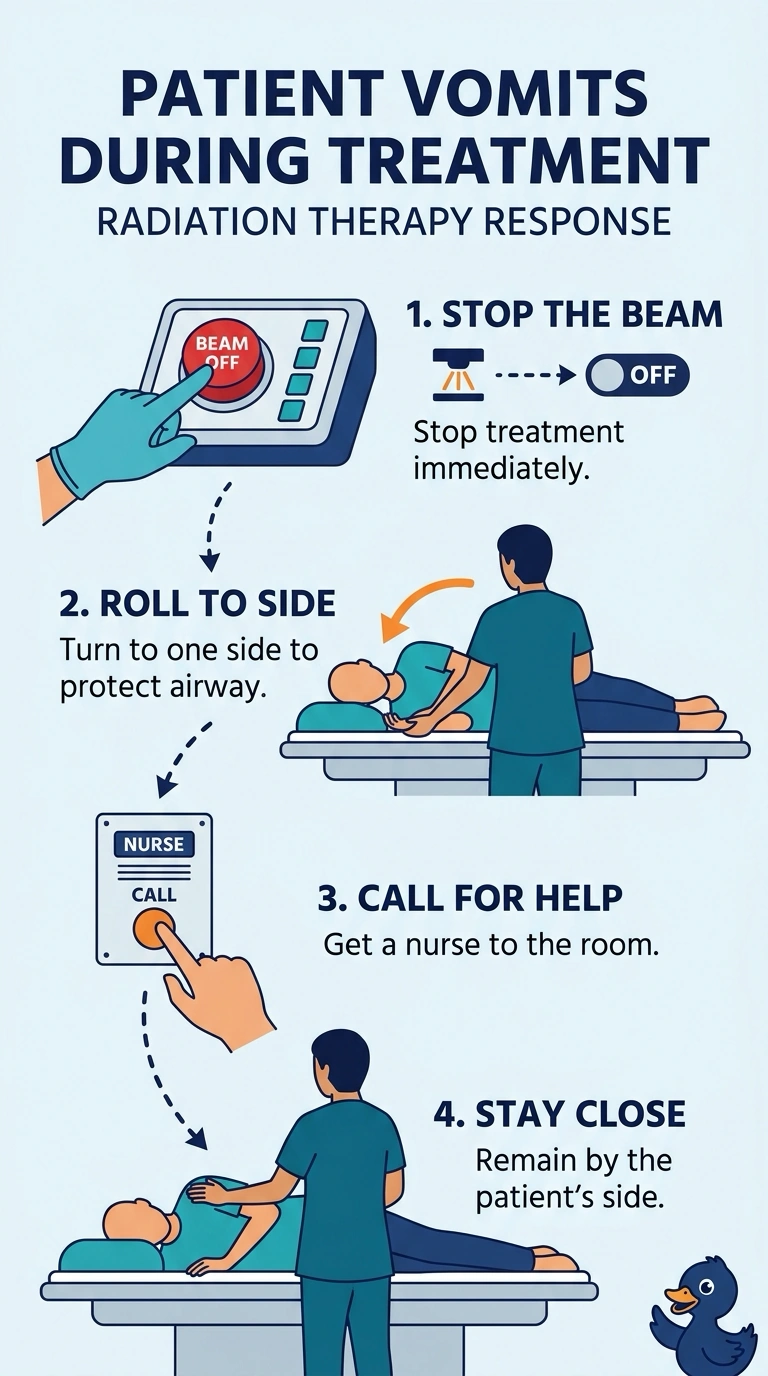
Short Explanation
Retching with the beam on is an airway risk as much as a comfort problem, so you stop the exposure first. Then you'll roll the patient onto the side and call for help, because aspiration is like water finding the lowest crack.
Full Explanation
Vomiting during an exposure is an airway emergency as much as a comfort issue, so the first move is to terminate the beam and deliver no further dose while the patient is distressed and mispositioned; turning the patient onto the side lets gravity keep aspirated material out of the lungs, and calling for clinical help brings the extra hands and equipment an episode like this may need. Resuming treatment once symptoms settle handles the exposure and the positioning, but it skips the escalation that this scenario requires, so the therapist is left managing a medical event alone. Staying at the console to talk the patient through the episode and page for help secures assistance, yet it never gets anyone into the room to place a drowsy, vomiting patient in the recovery position. Sitting the patient upright with a basin is a common comfort measure for someone who is fully alert, but a patient sedated by premedication cannot hold that posture reliably, so the side-lying position protects the airway instead. On the exam, expect questions that ask for the order of actions, because beam termination, airway protection, and escalation always come before charting. A practical check: once the patient is stable, record the interruption, the monitor units delivered, and the time help was requested.