
During a weekly chart check, the record already documents the patient identifier, date, machine, energy, and the treated field. The therapist must confirm that the number of treatments delivered matches the physician's order before the next session. Which pair of record entries should be checked to verify that?
Select an answer to reveal the explanation.
Short Explanation
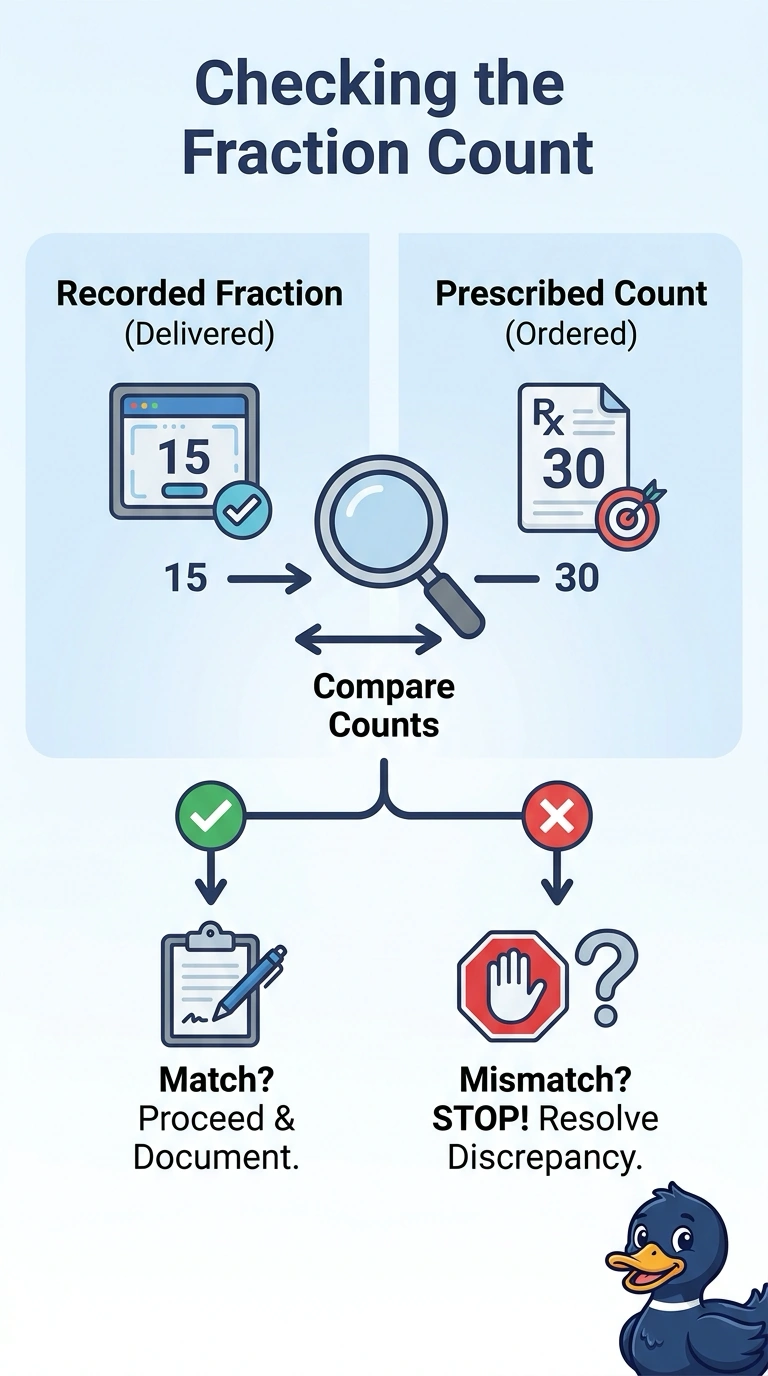
Compare the recorded fraction number with the number of fractions prescribed to confirm how many treatments you’ve delivered. You’re matching the treatment tally to the planned total before the next session.
Full Explanation
The recorded fraction number identifies the treatment in the series that was delivered, while the prescribed number of fractions states the planned course total. Comparing these entries verifies whether the number of treatments delivered matches the physician’s order before the next session. Matching the documented field size and source-to-surface distance with the original simulation printout checks setup geometry, which supports accurate delivery but does not establish how many treatments have been given. Confirming that the physicist’s plan approval date precedes the recorded course start date checks an administrative sequence, not treatment count. Reviewing whether the daily machine output check stays within its established tolerance is a machine quality-assurance check, not a measure of the patient’s progress through the course. One caveat is that chart layouts vary, and some centers record the running fraction count on a separate summary sheet. Before proceeding, check the recorded fraction number against the prescribed number of fractions and resolve any discrepancy.