
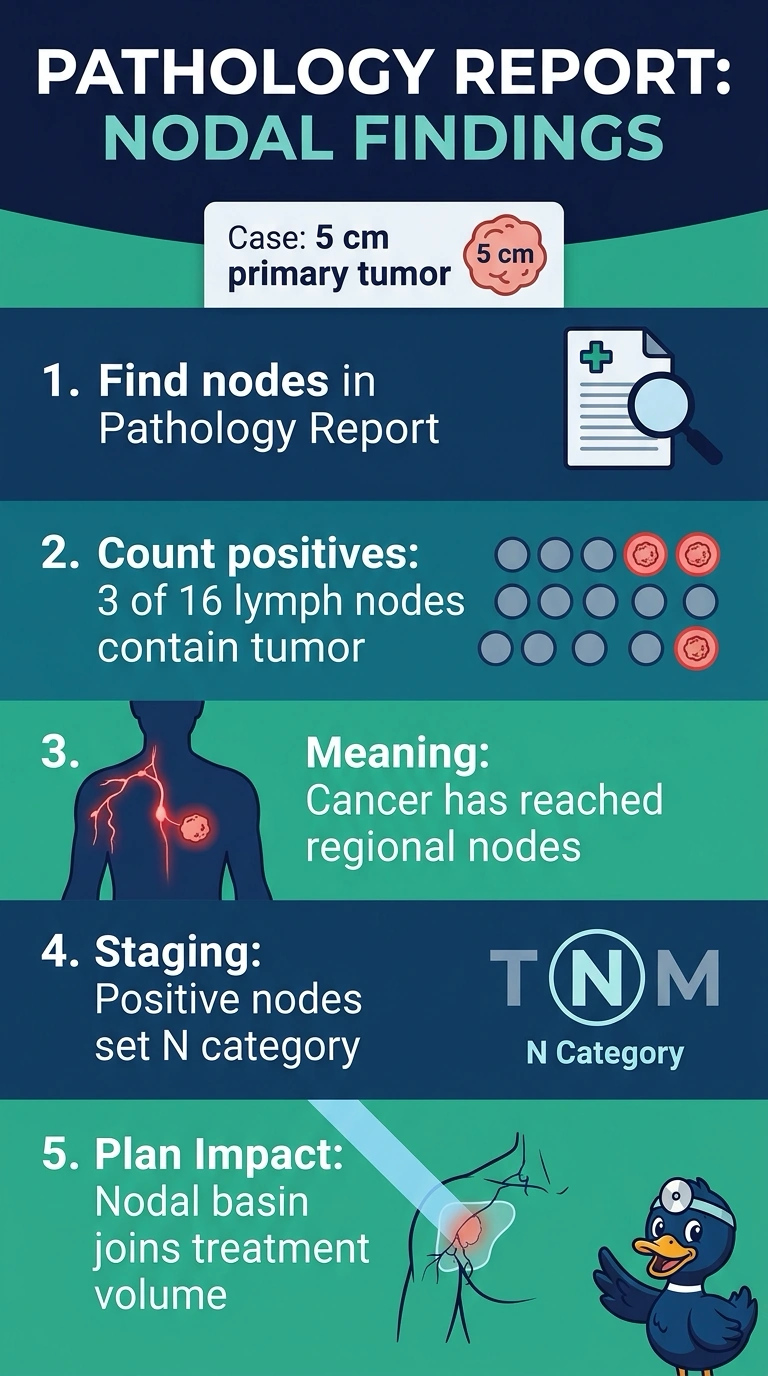
Before treatment planning, a therapist reviews the operative and pathology reports for a patient with colon cancer. The report describes a 5 cm adenocarcinoma invading through the muscularis propria into pericolonic fat, lymphovascular invasion present, all surgical margins clear, and 3 of 16 lymph nodes positive for metastasis. Which finding in the pathology report documents regional nodal involvement for this plan?
Select an answer to reveal the explanation.
Short Explanation
Node status is the only item on that list placing tumor cells inside a lymph node, which is exactly what nodal involvement means. Depth of invasion and lymphovascular invasion describe how the primary tumor behaves, while margins describe the surgery itself. It's like filing each line into the right staging category before you choose.
Full Explanation
The pathology report is organized into findings that map to distinct parts of staging, and nodal involvement is documented only when tumor cells are identified inside a regional lymph node, so a positive count among the nodes examined is the line that places the patient in an N category and extends the treatment volume to a nodal basin. Invasion through the muscularis propria into pericolonic fat is a local extension finding that drives the T category, describing how far the primary grew rather than whether it spread. Lymphovascular invasion is a risk marker showing that tumor cells entered channels within the primary specimen, which signals the possibility of spread without proving that any node contains disease. Margin status addresses the completeness of resection and informs decisions about further local treatment, so it speaks to the surgery rather than to regional involvement. One exam caveat: reports may also describe extranodal extension inside a positive node, which refines prognosis instead of changing the basic finding of nodal disease. Practical check: record both the number of nodes examined and the number positive, because a thin node yield limits how confidently the report supports node-negative disease.