
A patient with adenocarcinoma of the mid-rectum is simulated prone on a belly board, and the physician's note states that the primary lesion sits above the dentate line and is confined to the rectal wall. The therapist is asked to confirm the nodal basin covered by the elective target volume. Which lymph node group is the first-echelon drainage for this mid-rectal tumor?
Select an answer to reveal the explanation.
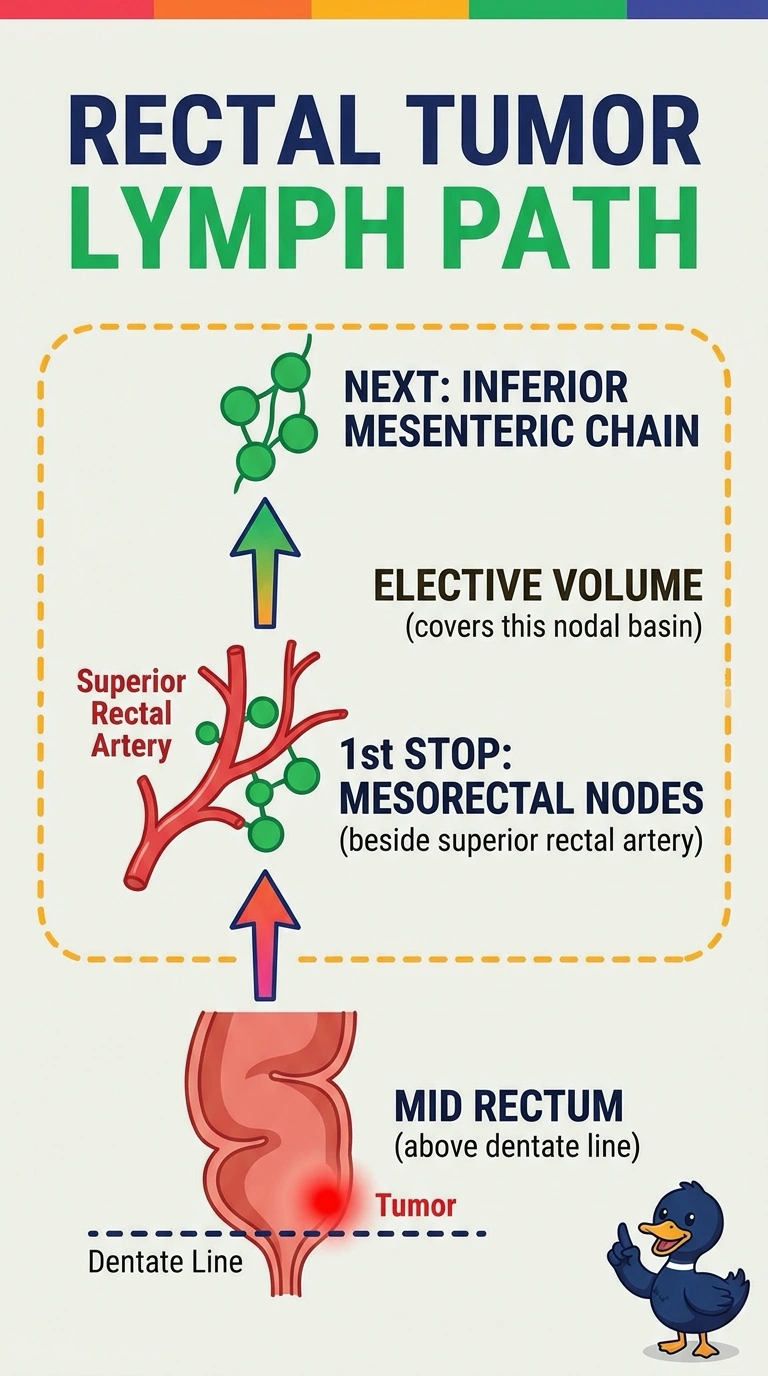
Short Explanation
For a mid-rectal tumor, you can follow the drainage to the mesorectal nodes beside the superior rectal artery; they are the first-echelon basin. The other listed groups may be relevant to rectal cancer, but they lie beyond that initial basin or are not first here.
Full Explanation
The mesorectal nodes beside the superior rectal artery are the first-echelon basin for this mid-rectal primary: lymph from the rectal wall generally travels through the mesorectum toward the superior rectal and inferior mesenteric pathways. The tumor’s stated location above the dentate line and confinement to the rectal wall support identifying the mesorectal basin as the initial nodal group. Presacral nodes are a recognized regional basin for rectal cancer and may be included in treatment planning, but they are not the first-echelon basin in this scenario. Internal iliac nodes are clinically relevant pelvic nodes and may be considered for elective coverage, but they are not the initial basin identified here. Inferior mesenteric nodes can receive lymphatic drainage farther along the superior pathway, but are downstream of the initial mesorectal basin. Exam caveat: rectal lymphatic drainage is not perfectly uniform, and tumor level, nodal disease, or other anatomic features can affect which basins require treatment. Practical check: confirm the tumor’s level and relationship to the dentate line in the operative, endoscopic, or imaging documentation, then compare the intended elective volume with your institution’s rectal contouring protocol.