
Before today's fraction, the console record shows the field label and fraction size from an earlier plan, while the current signed prescription lists a different treatment site and dose. The patient is on the table and ready. Which identity, site and prescription verification must happen before beam-on?
Select an answer to reveal the explanation.
Short Explanation
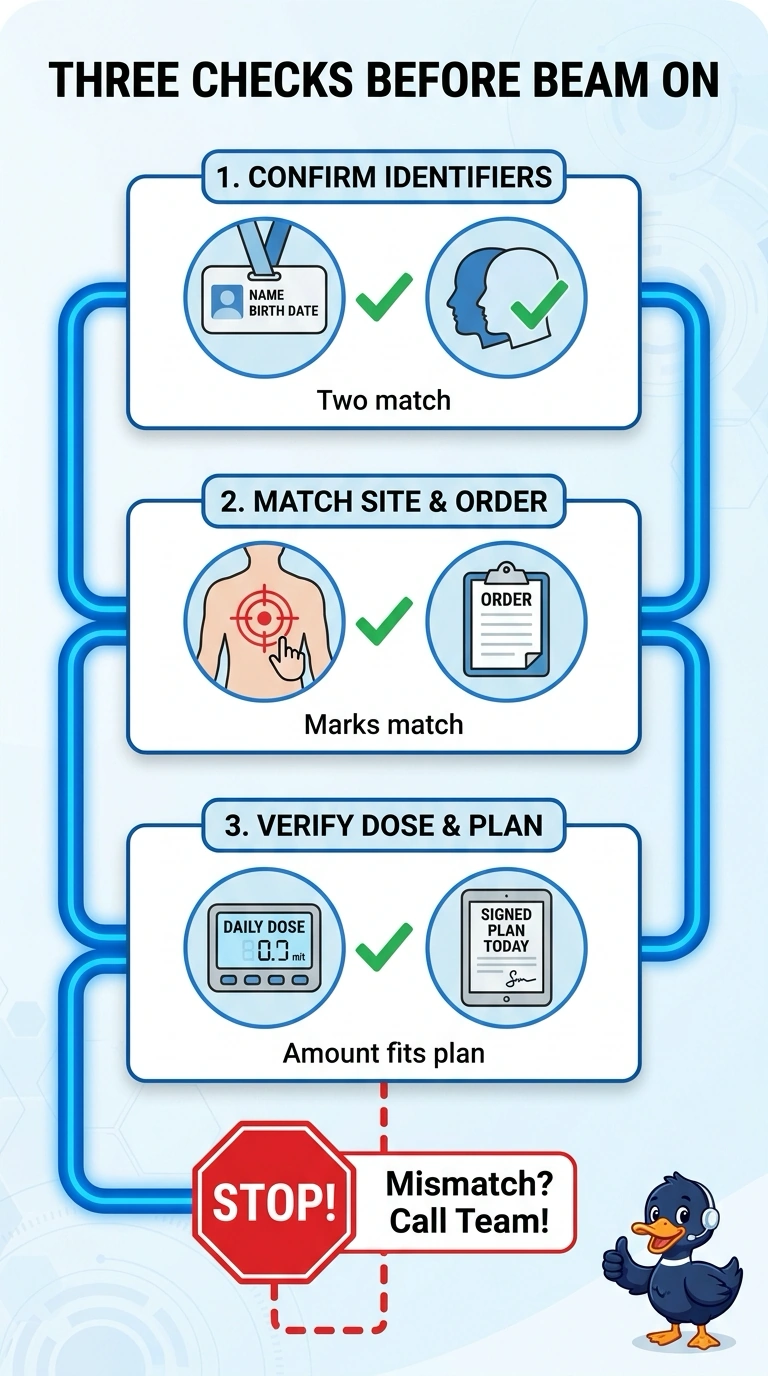
You’re right to pause and check the documents that authorize today’s treatment. Two identifiers confirm the person, and matching the table site and dose to both the signed prescription and plan confirms the setup. Like checking a boarding pass, the right name is not enough—you still need to verify where you’re going.
Full Explanation
Before beam-on, the team must establish that the person on the table is the intended patient and that the setup agrees with the current authorized treatment information. Confirm two identifiers, then match both the table site and dose to the signed prescription and plan. The console record may reflect an earlier plan, so its displayed field label or fraction size cannot substitute for reconciling today’s treatment. Confirming two identifiers and comparing the table site and dose only with the signed prescription leaves out the plan cross-check, which can reveal a setup or plan-selection discrepancy. Comparing the table site and dose only with the signed prescription also fails to reconcile the plan. Comparing the table site with both the signed prescription and plan checks the site but leaves the dose unchecked, a critical prescription parameter. Matching the table site and dose only to the approved plan omits comparison with the signed prescription; agreement with a plan alone does not establish that treatment matches current authorization. Exam caveat: record-and-verify systems support safe delivery, but a released console record does not resolve a conflict with current signed documentation. Practical check: pause beam-on, confirm the patient with two identifiers, and reconcile the table site and dose against both the signed prescription and plan; escalate any discrepancy before treatment.