
A patient on 3 liters of nasal cannula oxygen and a pole-mounted infusion pump stands for the first time after a fall and becomes lightheaded. The patient can bear weight with one helper, and the infusion must continue without interruption. What should the helper do first to support the patient while keeping the infusion running?
Select an answer to reveal the explanation.
Short Explanation
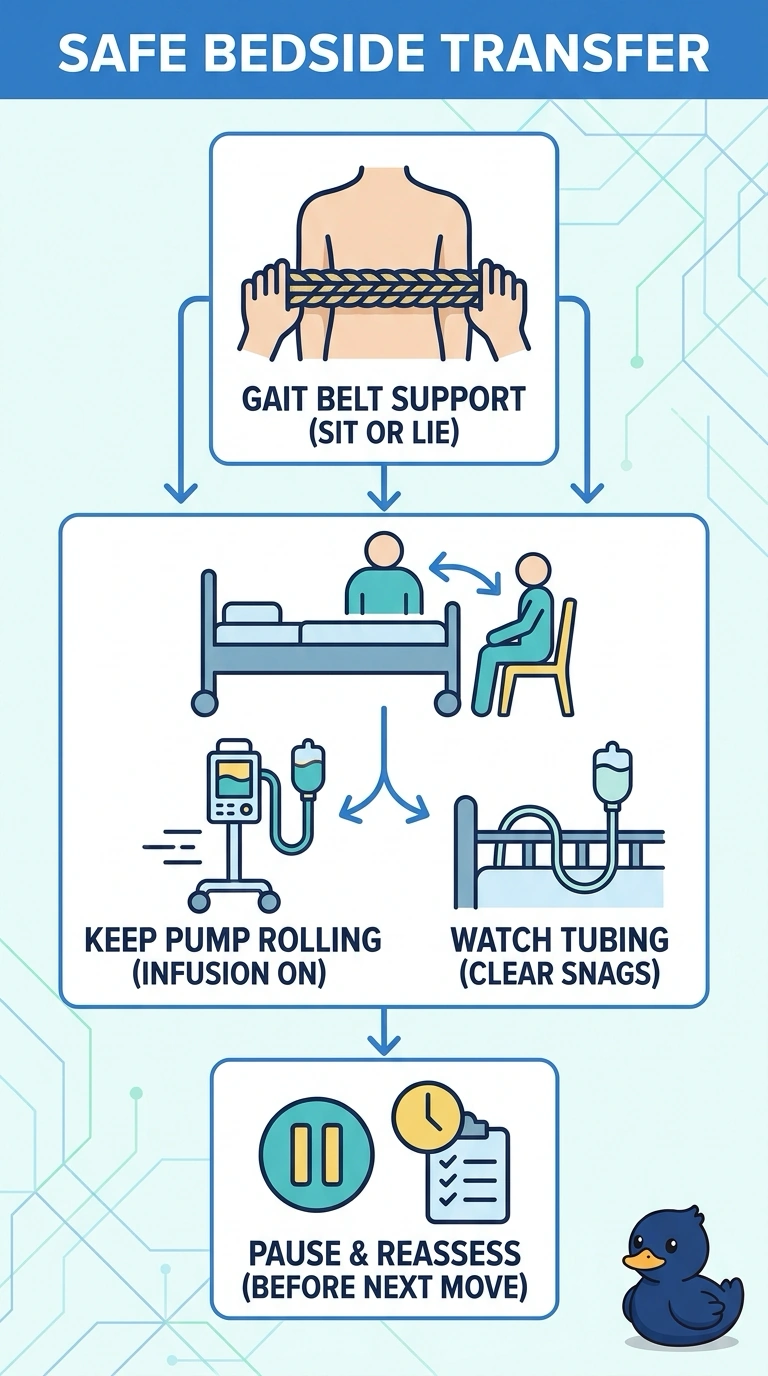
A gait belt can provide a secure hold as you help the patient sit or lie down. Keep the pump running and the tubing clear, then reassess the patient before trying another transfer. Do not leave the patient unsupported while managing the equipment.
Full Explanation
The correct approach is to use the gait belt to control the patient’s descent to a seated or lying position, while keeping the pump moving and tubing clear so the infusion continues. Lightheadedness during a first stand may signal instability; promptly reducing fall risk takes priority over completing the planned transfer. Once the patient is safe, reassess symptoms and relevant observations before deciding on further movement. Keeping the patient upright while checking symptoms and blood pressure may be a familiar response to possible orthostatic intolerance, but it delays the immediate protective action of lowering the patient. Guiding the patient directly to a chair with another helper managing equipment is a reasonable assisted-transfer technique in other circumstances, but it continues the transfer while the patient is symptomatic rather than first stopping and stabilizing them. Lowering the patient to a wheelchair while maintaining the infusion is appropriate, but immediately resuming the transfer to bed skips the required reassessment before another move. Exam caveat: follow local policy for falls, orthostatic symptoms, and escalation; a sudden or persistent change may require urgent clinical review. Practical check: once the patient is seated or lying down, confirm the infusion is still running, inspect the tubing for tension or kinks, and reassess the patient before mobilizing again.