
While a postoperative chest wall field is being delivered, the linear accelerator stops mid-fraction and the console shows an unfamiliar error code. The record system indicates that part of the planned monitor units has been given and the patient is still immobilized on the couch. Which steps and record entries follow this equipment malfunction?
Select an answer to reveal the explanation.
Short Explanation
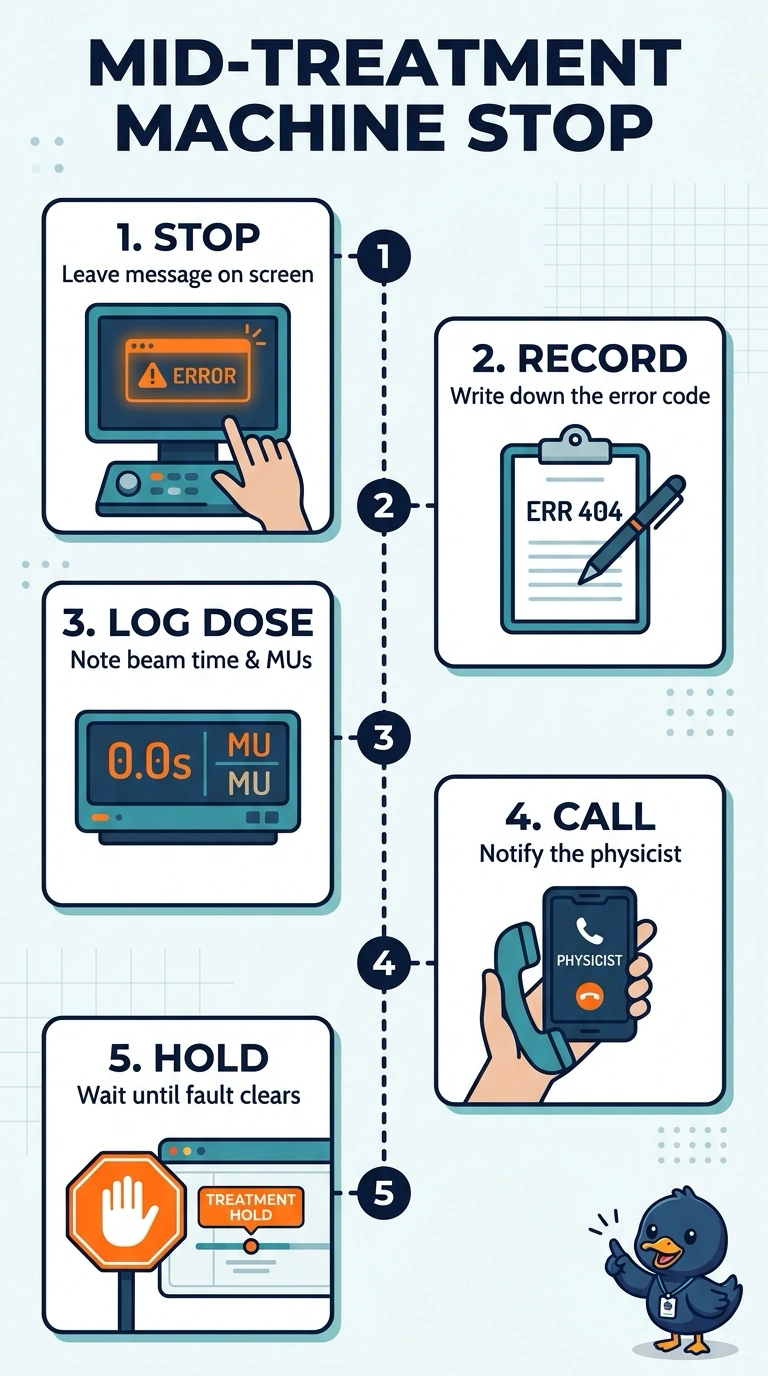
When the machine stops mid-fraction, you need to preserve the treatment details and keep the patient safe while the fault is assessed. Record the error code, beam time, and monitor units delivered, notify the physicist, and hold the fraction; that complete delivery record supports a safe review. You don’t need to guess about the unfamiliar code or continue treatment on your own.
Full Explanation
After an unexpected stop, record the displayed error code, beam time, and monitor units delivered, notify the medical physicist, and hold the fraction until the malfunction and treatment status have been assessed. This documents what dose was delivered and supports a safe decision about whether or how to complete treatment. Recording the error code and delivered units, notifying the physicist, and holding for review is incomplete because it omits the beam time, a specifically required delivery detail. Recording the error code, beam time, and units but notifying the oncologist instead does not meet the requirement to alert the physicist, who is needed to investigate the equipment error. Recording those details and notifying the physicist, then resuming after clearance, does not follow the instruction to hold the fraction; any decision to resume or make up treatment must follow the applicable clinical and departmental process. Exam caveat: local procedures may require additional notifications, documentation, and authorization before resumption, but an unfamiliar error code is not a reason to guess or treat before the fault is resolved. Practical check: reconcile the console’s delivered-monitor-unit record with the treatment record and confirm that the patient remains safely immobilized while the team follows the local malfunction protocol.