
A patient breathing 2 liters per minute of oxygen through a nasal cannula from a cylinder on a wheeled stand must move from the transport chair to the treatment table. She is unsteady, her oxygen must keep running, and you are the only staff member available. What is the safest action before the transfer?
Select an answer to reveal the explanation.
Short Explanation
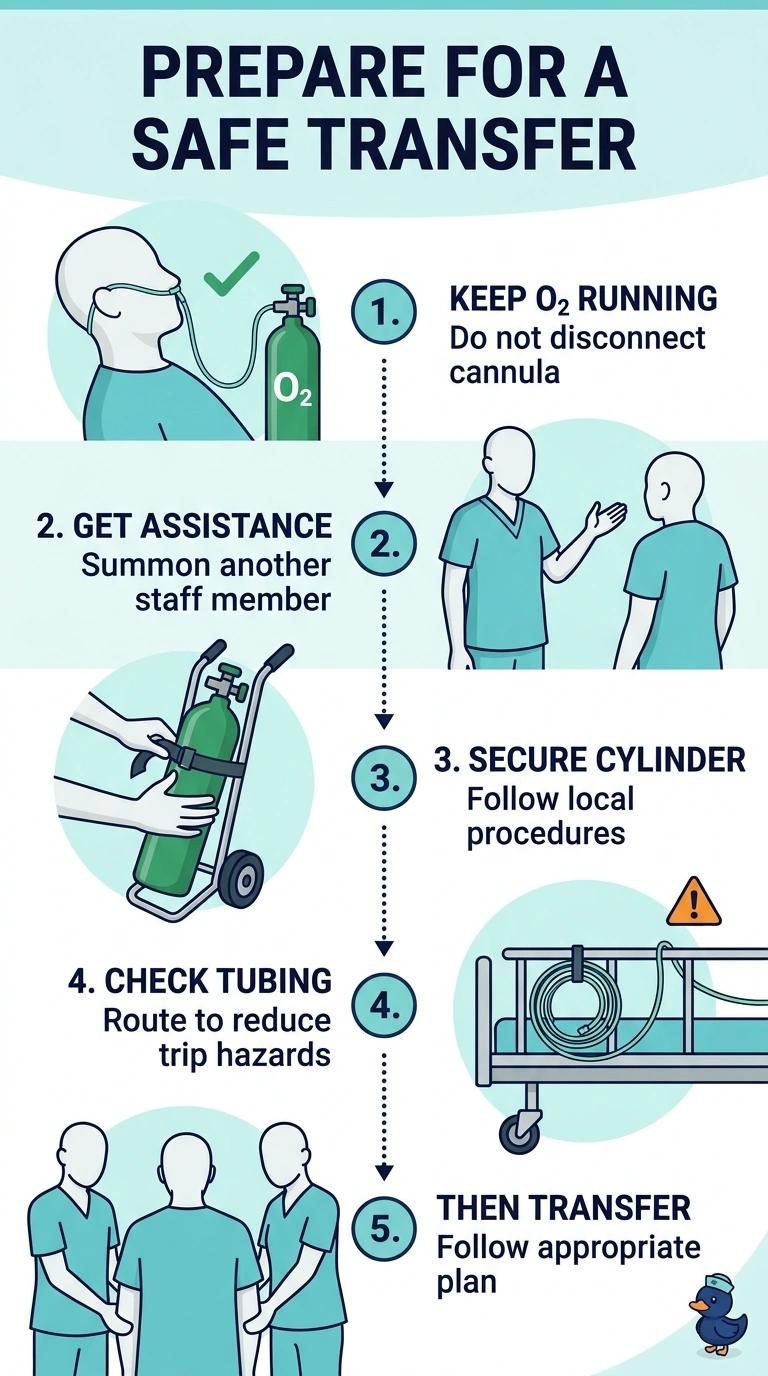
Because she is unsteady and you are alone, you should not begin a transfer that requires you to manage both her and the oxygen equipment. Keep her oxygen running and summon help before proceeding; you’ll be better able to protect her and maintain oxygen flow with another staff member present.
Full Explanation
Keeping the prescribed oxygen flowing while summoning another staff member is safest because it addresses both hazards before movement begins: the patient is unsteady, and no second person is available to guard or assist. The cylinder and wheeled stand also need to be managed so the tubing does not snag, pull, or interrupt oxygen flow during the transfer. A gait-belt stand-pivot is a familiar technique for a patient who can bear weight and follow directions, but it still requires adequate assistance; close guarding by one person does not resolve the stated unsteadiness or provide a second set of hands for the oxygen equipment. A transfer board may be used for a seated lateral transfer when the patient can cooperate and the surfaces can be positioned safely, but it does not make a solo transfer appropriate for this unsteady patient while the oxygen source and tubing also require attention. A powered sit-to-stand aid can reduce lifting demands, yet it is intended for patients who can safely participate in standing and must be used with the assistance specified by facility policy and the device instructions; the aid does not automatically make a one-person transfer safe here. Exam caveat: equipment availability or a familiar technique does not override a stated need for assistance, and device staffing requirements vary. Practical check: before proceeding, confirm that help is present, oxygen flow remains at the prescribed rate, and the cylinder is secured with tubing routed clear of the transfer path.