
During simulation a patient mentions an aunt who had cancer, notes that she herself has never had a screening test, then asks what her family history means for her own risk. Which explanation of cancer risk factors and screening should the therapist give at this point?
Select an answer to reveal the explanation.
Short Explanation
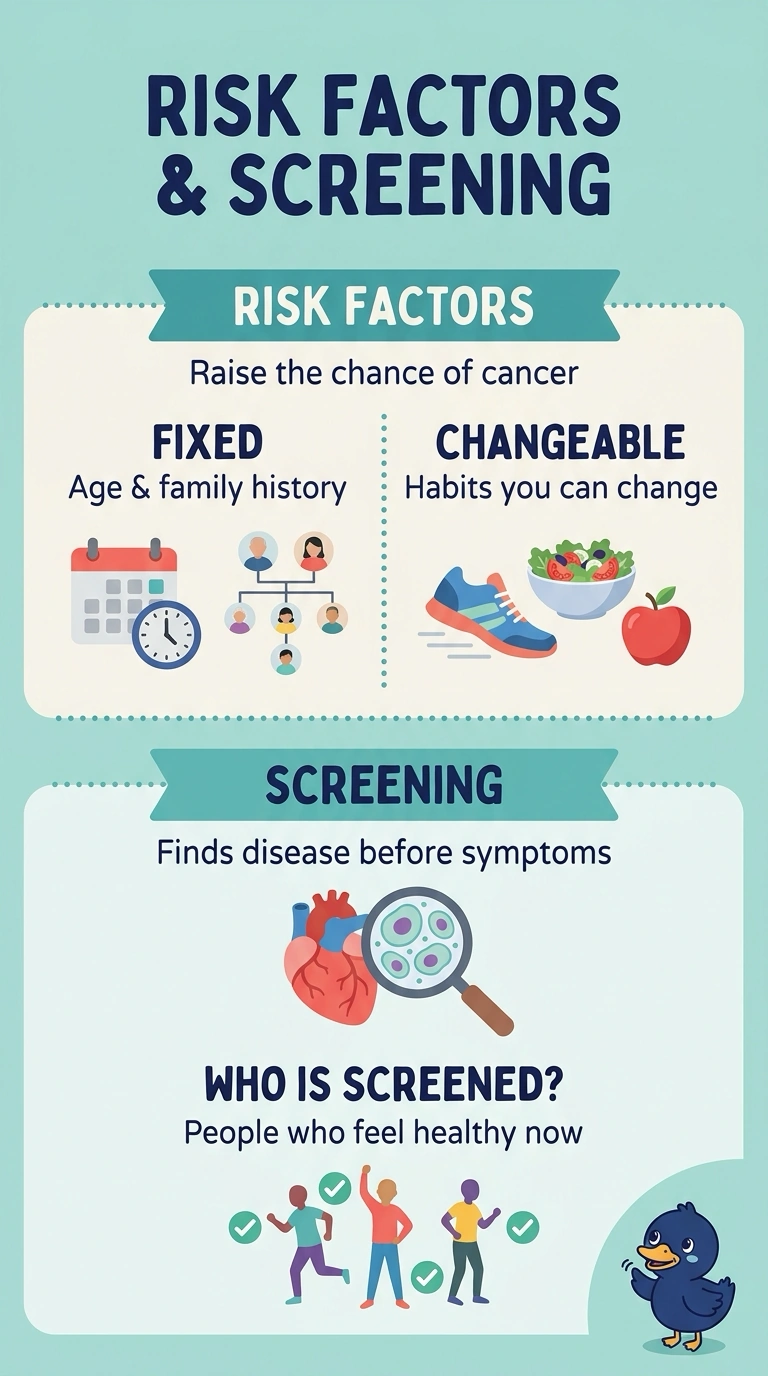
You’re right to distinguish likelihood from detection: family history is a non-modifiable risk factor, while screening looks for disease early in someone without symptoms. Symptom evaluation, estimating future risk, and monitoring for recurrence each serve a different purpose.
Full Explanation
Family history is a non-modifiable risk factor: an aunt’s cancer may inform your risk assessment, but it does not mean you have cancer. Screening looks for disease early in people who do not yet have symptoms, which is the purpose that fits this situation. Evaluating suspicious symptoms is diagnostic testing, not screening an asymptomatic person. Estimating future cancer risk is risk assessment; family history can inform that assessment, but screening looks for signs of disease rather than estimating risk itself. Monitoring known cancer for recurrence after treatment is surveillance, not screening for an initial cancer in someone without symptoms. Exam caveat: everyday speech sometimes uses “screening” loosely, but clinical questions distinguish screening, diagnostic testing, risk assessment, and surveillance by their purpose and the patient’s status. Practical check: clarify whether you have symptoms, a prior cancer diagnosis, or only a family history before explaining what a test is intended to do; individualized screening decisions should be made with the appropriate clinician.