
A patient in week three of pelvic radiation reports loose, crampy stools after meals and looser clothing at the weekly check-in. The nurse asks you to reinforce nutrition advice while the assessment note is open. Which dietary counseling point best controls the symptom pattern and protects the patient's weight?
Select an answer to reveal the explanation.
Short Explanation
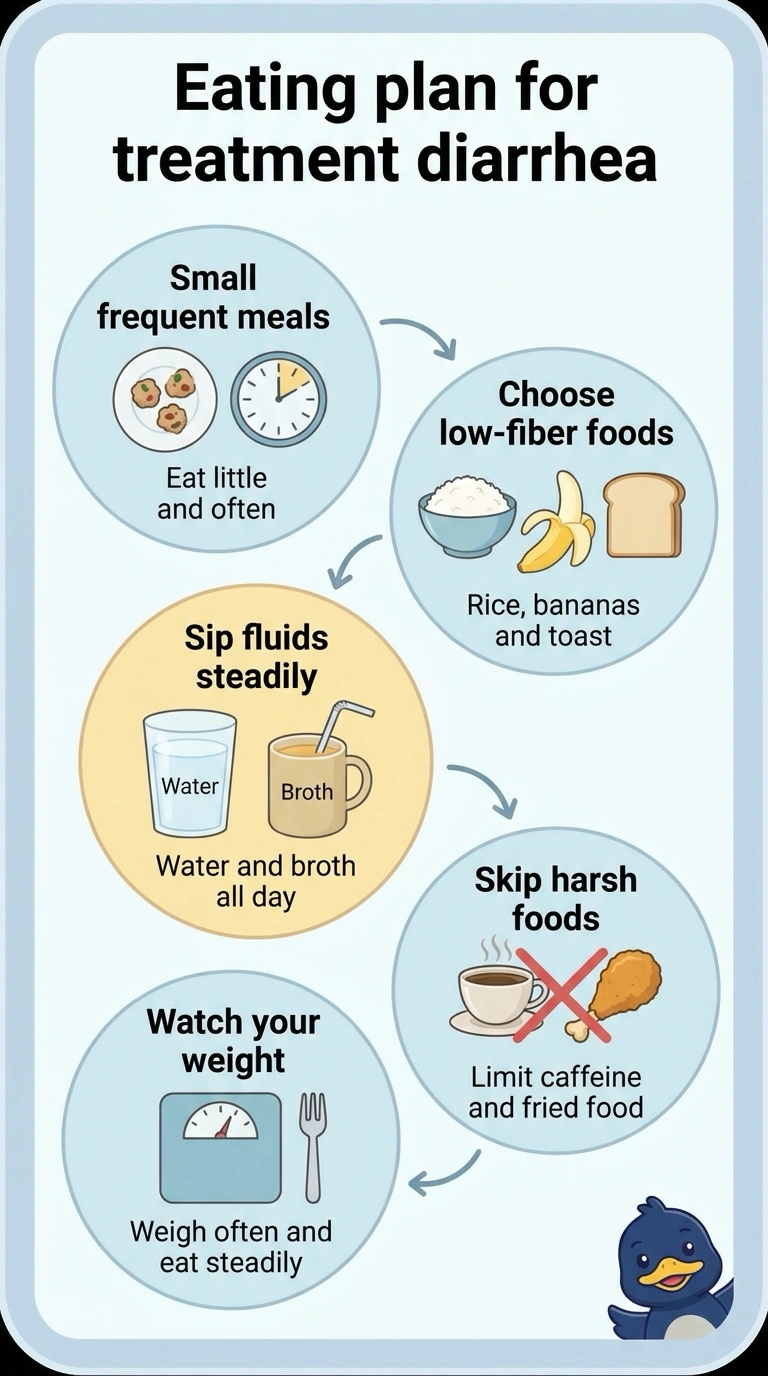
You can match the advice to the stool pattern instead of relying on a generic printout. Gentle, low-fiber portions in small frequent meals give an irritated bowel less to handle while helping you protect weight and comfort. Like settling a fussy stomach after a stomach bug, bland food little and often can be easier than one big plate.
Full Explanation
Loose, crampy stools after meals during pelvic irradiation point to an irritated bowel, so small, frequent meals of low-fiber foods with steady fluid intake best fit the symptom pattern. Smaller portions move less material through inflamed tissue at once, which can ease cramping while helping the patient take in enough energy to protect weight. Bran and raw vegetables add fiber and bulk; that approach may suit constipation, but it can further loosen stools and aggravate discomfort here. Milk and yogurt can provide calories and protein, but loose stools may coincide with temporary lactose intolerance, making dairy a possible trigger for more cramping. Three large meals and a snack may aim to maintain weight, yet larger meal volumes can burden an irritated bowel and worsen symptoms. During an exam, remember that questions may assume the patient already limits caffeine and alcohol, so focus on the meal pattern rather than a single forbidden food. A practical check is to ask what the stools look like and how often they occur, then assess whether meal size and food texture match the patient's symptoms.