
During a source inventory with the storage safe door open, a calibrated meter 30 cm from the exposed source reads 12 mrem per hour, and staff must enter the room to complete the check. Wipe tests show no removable contamination, and the department wants an audible warning if levels rise. Which posting and monitoring arrangement applies to this area?
Select an answer to reveal the explanation.
Short Explanation
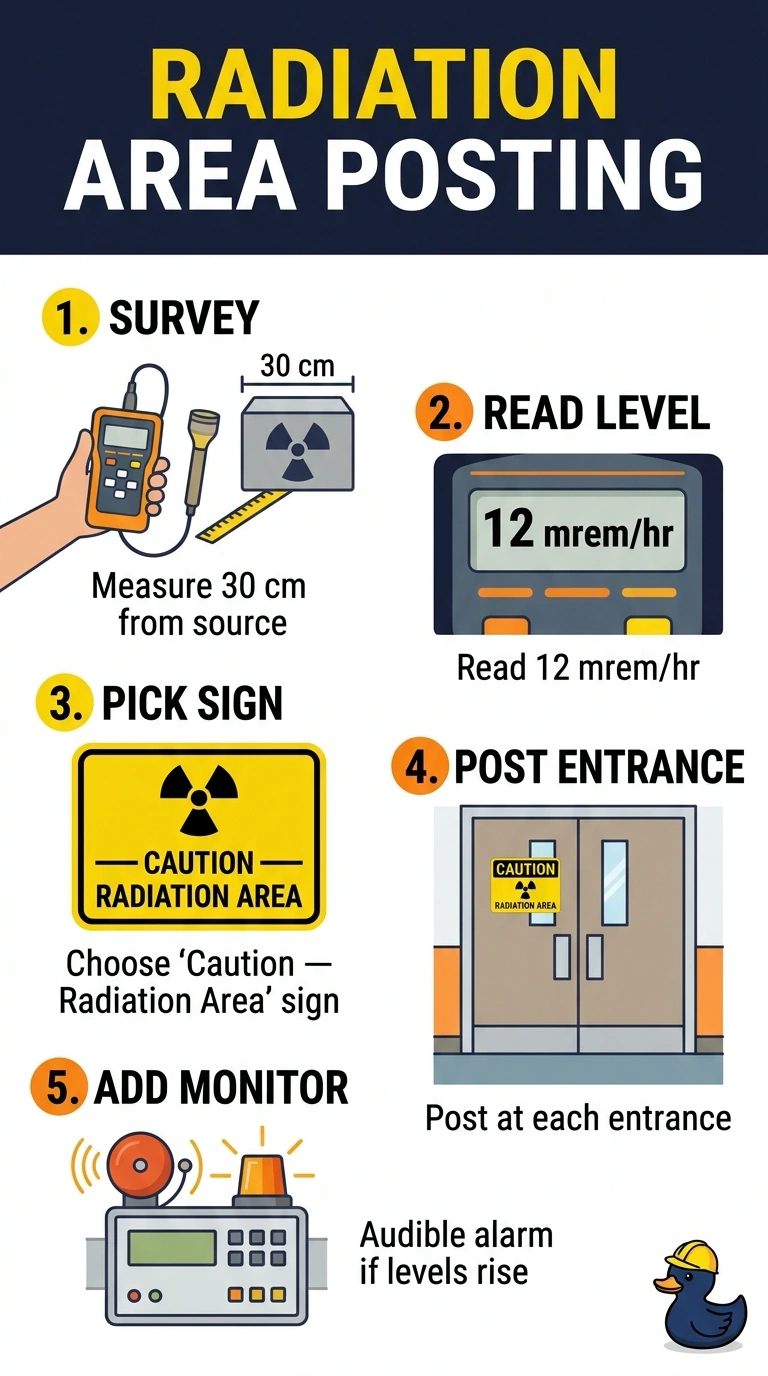
That 12 mrem per hour reading puts you in a Radiation Area, so you should post a Caution — Radiation Area sign at the entrance and install an audible area monitor. Wipe tests are a separate check—like checking for dust on a surface—and don’t change the posting requirement.
Full Explanation
The measured dose rate of 12 mrem per hour at 30 cm exceeds the usual threshold for a Radiation Area, which is more than 5 mrem in any one hour at that distance. It is below the usual High Radiation Area threshold of more than 100 mrem in any one hour at 30 cm, so a Radiation Area posting is appropriate. The department also specifically wants an audible warning if levels rise, making an audible area monitor the fitting arrangement. A negative wipe test addresses removable contamination; it does not change the external radiation level or remove the need for radiation-area controls. The High Radiation Area posting is a recognized sign for areas meeting its higher dose-rate criterion, but that criterion is not met here. A visual-only area monitor can provide useful indication, yet it fails the stated need for an audible warning. Audible alarms on personal electronic dosimeters are useful for alerting their wearers, but they do not substitute for the requested audible area monitor. Exam caveat: apply the applicable regulatory definitions and local radiation-safety procedures, since thresholds and posting details may vary by jurisdiction. Practical check: verify the survey instrument calibration and measurement geometry, then confirm the installed monitor’s alarm function and setpoint with the radiation safety officer.