
Heritable effects in humans and effects on a developing embryo are separate ideas that patients often mix together when they ask about radiation and future children. Which statement about the genetic effects of radiation is the accurate one to explain?
Select an answer to reveal the explanation.
Short Explanation
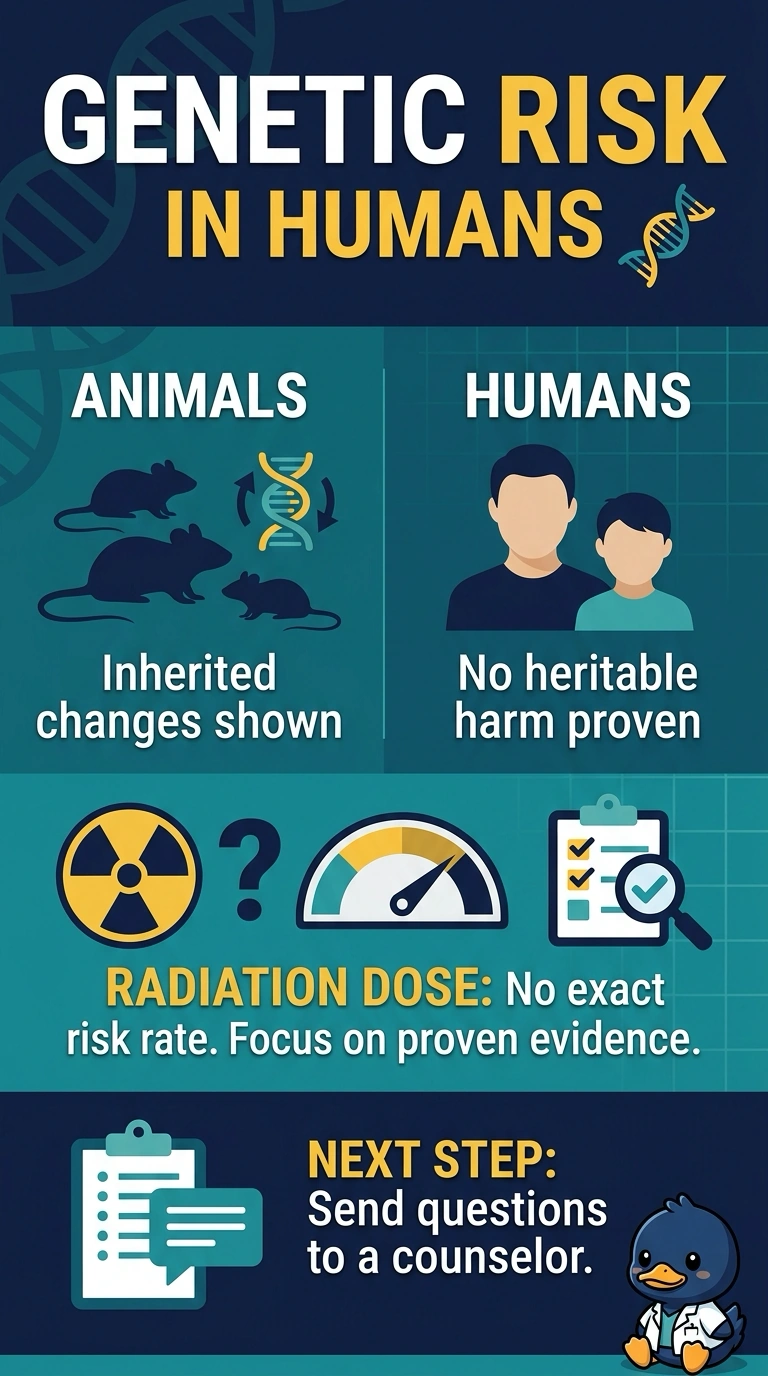
When you counsel, keep heritable effects separate from harm to an embryo exposed during pregnancy. Human evidence has not demonstrated inherited effects, while animal research has shown them, so you can give a clear evidence-based answer without promising more than the data support.
Full Explanation
The accurate statement distinguishes radiation effects on an embryo exposed during pregnancy from heritable changes passed to later generations. Human studies have not demonstrated heritable effects, whereas animal research has shown inherited changes; this reports the evidence without claiming animal findings establish the same risk in humans. Counseling about fetal developmental effects during pregnancy and noting the lack of demonstrated inherited effects in human studies addresses an important distinction, but it omits the stated animal evidence for inherited changes. Using animal studies to discuss inherited changes is appropriate, but saying human cohorts confirm effects in offspring contradicts the evidence described here. Separating fetal exposure from gonadal exposure is useful, but human studies do not support estimates of inherited risk as though such effects had been demonstrated; animal results cannot be presented as confirmed human outcomes. Exam caveat: “not demonstrated” does not mean “proved impossible,” and animal evidence should not be conflated with human evidence. Practical check: when counseling, clarify whether the concern is exposure of a current pregnancy or possible transmission to future generations, then identify which evidence comes from human studies and which from animal research.